Trump has signed an executive order to cut the financing of public media institutions NPR and PBS, an old desire of the Republicans

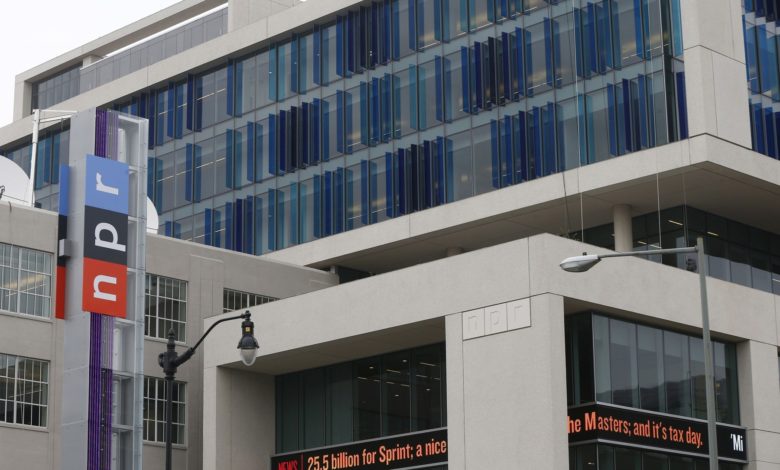
The government money is a small part of the NPR and PBS budgets, which also generate revenues through sponsorships and donations. Most of the government funds go to local positions, write Reuters and New York Times.
Donald Trump has signed an executive order aimed at reducing financing for national Public Radio (NPR) and Public Broadcasting Service (PBS) positions, the White House announced, marking the last test of the US President to use federal funding as a lever against institutions that he does not see with good eyes.
The order instructs Corporation for Public Broadcasting, which distributes funds to PBS and NPR positions, to “cease their direct financing”, according to the text published by the White House on Thursday evening.
The Trump administration has labeled news positions as partisan and biased.
“The CPB Council will cancel the direct financing existing to the maximum extent allowed by law and will refuse to provide future funding,” the order shows.
What does it mean to cut the financing
Both NPR and PBS have previously stated that Trump's effort to reduce their financing would interrupt the essential media services and have a “devastating impact” on Americans who are based on them for credible local and national news, including in emergency situations.
The government money is a small part of the NPR and PBS budgets, which also generate revenues through sponsorships and donations. Most of the government funds go to local positions, which are based on this money to finance their newsrooms and to pay for programs, writes New York Times.
The proposal of the Trump administration to cancel the financing of public broadcasting comes against the background of the pressure sustained on the NPR and PBS from the Congress Republicans, who have intensified the attacks on the broadcasters.
The executive directors of both organizations testified in front of Congress last month, during a heated hearing, which was largely on partisan lines: the Republicans attacked the executive directors for what they considered to be liberal prejudices, and the Democrats claimed that the procedure was a waste of time.
The Trump administration has labeled several institutions in the academic and media industry – from Harvard and Colombia universities at NPR and PBS – as left, Marxiste, biased and Woke, and threatened with funds.
In reply, the defenders of human rights have expressed concern about freedom of expression and academic freedom.
Fight against media institutions
Since taking over the mandate in January, Trump and his billionaire Elon Musk have started a cost reduction campaign that led to the abolition and attempt to abolish the various agencies and to dismiss over 200,000 federal workers.
The Trump administration also tried to close Voice of America, Radio Free Asia and Middle East Broadcasting Networks, whose news shows are funded. At the end of April, a federal judge ordered the Trump administration to stop these efforts.
Trump's Thursday's order also aims to suspend indirect financing for the NPR and PBS, requesting the CPB to ensure “that the licenses and permits of public radio and television stations, as well as any other beneficiaries of the CPB funds, do not use federal funds for the NPR and PBS”.
 What life looks like in the newsroom that has kept the hope of millions of Romanians and is now under threat of closure – report on Radio Free Europe
The CPB sued the White House on Monday, after Trump tried to dismiss three of the five members of his council.
The non-profit corporation was created by Congress in 1967 and offers funding for more than 1,500 public radio and television stations administered at local level.
Several media institutions have reported that the White House intends to ask the Congress to cancel the $ 1.1 billion financing for the CPB, the amount representing two -year financing.
NPR has more than 900 employees, according to its site. The exact number of employees from PBS was not immediately clear, although a media report stated that it had over 550 employees at the end of 2022.
The request is the latest Trump administration movement against media organizations.
The administration carries a legal fight with Associated Press because of its decision to exclude the press agency in the Presidential Press Group, thus violating decades.
Trump also personally sued CBS News and The Des Moines Register, and the Federal Communications Commission has launched investigations in the COMCAST, PBS and NPR.