“Thirty years ago people rode by rail, because they had to – today they want, because they want to be a means of transporting the first choice, he must increase their availability, attractiveness” – emphasized Alan Beroud, president of the board of PKP SA, during the conference “Competitiveness of rail transport – challenge and necessity”, which took place on April 28, 2025 in Wrocław, as part of the Polish presidency in the European Union.
Meeting participants – representatives of the Ministry of Infrastructure (event organizer), railway enterprises, industry organizations from EU countries – discussed the prospects of high -speed rail development; financing models and investments in railway infrastructure; challenges and benefits related to the liberalization of the railway market, as well as about the development of cross -border connections in Europe.
The Minister of Infrastructure Dariusz Klimczak, by opening the debate, pointed to the need to endure legal and administrative barriers.
“Deregulation is the key not only in the case of railways in the European Union, but in every aspect of the economy – and the railway is one of the important elements of the economy of each European countries,” argued Dariusz Klimczak.
The minister also emphasized that the resistant railway infrastructure strengthens the country's security when war is fighting behind the eastern border of Poland.
“This war taught us a lot, showed aspects that we must pay attention to. Today, the double meaning of railway infrastructure and its immunity, as well as cybersecurity, we talk at every meeting” – emphasized the Minister of Infrastructure.
He spoke about the need to change the regulations during the panel “multidimensional competitiveness of railways” by prof. Bogusław Liberadzki, former Vice President of the European Parliament and Member of Tran Committee.
“20 percent of applicable regulations in the case of individual railway lines are European regulations and 80 percent own. Bogusław Liberadzki.
In his opinion, a group of experts should be appointed, which aims to develop the strategy “how to pull the railway forward”.
The president of PKP SA expressed the opinion that the railway loses his competitiveness due to the rising prices of electricity.
“As many as 30 percent of rail costs consume the costs of electricity. At the current very high prices of this energy, we are not able to compete with other means of transport. We need that the European Commission will see it, because this problem requires solution. We hope that our voice will be heard and we will have an impact on how it will be processed in the European Union,” said Alan Beroud.
He added that the railway system – like the energy sector – should be designed in a long -term perspective.
“Thirty years old, fifty -year -old to create a skeleton to which the rest of the transport will be matched, both passenger and freight. We cannot look in the perspective of five years, because it will simply not come out to us,” Alan Beroud argued.
The head of DB AG Dr. Richard Lutz pointed out that the condition for the good functioning of the railway and the factor determining its competitive predominance over other means of transport is an efficient infrastructure. That is why German railways are planning large investments in improving infrastructure. Especially since the demand for rail services is growing in Germany.
“Germans are experiencing a renaissance of railways today, people want to travel by trains. But our infrastructure is overloaded, and this limits the possibility of development, and also negatively affects punctuality and reliability. We have already started restructuring. At the moment we are working on maintaining our cost attractiveness” – said the head of DB AG.
He added that railway infrastructure is also of great importance in the context of war in Ukraine.
“The tank weighs 62 tons, it is difficult to transport it with another means of transport than the railway. We talk about it at the government level. We have cargo operators who can transport military transports. It is comforting that the civil and military use of railways is similar to each other,” emphasized Dr. Richard Lutz.
Kristian Schmidt, director of Land Transport, EC – DG Move, pointed to the challenge that Chinese competition is for European railways. In his opinion, the example of the automotive market shows what mistakes Europe has made.
“We need to use the market potential to integrate. We lost the advantage towards China when we missed the launch of electric cars. We cannot repeat this mistake in the case of railways,” argued Kristian Schmidt.
According to him, the key question for the development of the railway is “can Europeans harmonize their actions and after decades of functioning on a diverse market, can they function well?”
Enno Wiebe, Secretary General of Union des Industries Ferroviaires Européennes (UniFe), also pointed to the challenge for competition with China.
“The Chinese are chasing Europe very quickly, they are very close to our standards and norms. Our advantage is innovation and quality,” said Enno Wiebe's opinion.
He also pointed to the need to simplify the regulations.
“Small and medium -sized companies are increasingly difficult to understand the regulations of the European market. We need to simplify the law, we must better harmonize processes and create tailor -made solutions,” said Enno Wiebe.
Francois Davenne, general director of the International Union of Railways (UIC), indicated that railways should focus on innovation to reduce costs and increase efficiency. He announced the implementation of automatically controlled trains, as well as the use of artificial intelligence.
“We need a 5G network, it is available all over the world, but we must make sure that these solutions are compatible,” Francois Davenne emphasized.
He also referred to Blackout, which recently happened in Spain.
“We are not able to prepare for something like that. It is difficult to put a lesson from what happened. Our systems are becoming more and more complicated, these are huge numbers of data. We are all working on increasing reliability, on the safety of railways,” said Francois Davenne's opinion.
Dr. Alberto Mazzola, executive director of the Community of European Railways and Infrastructure Managers (CER), pointed to differences in the prices of rail services.
“The price must be added a VAT of about 20 percent, then the traction tax, hence – when it comes to different member states – we have a lot of differences. I know that it is not easy to change these conditions, but I also realize that it is necessary” – argued Dr. Alberto Mazzola.
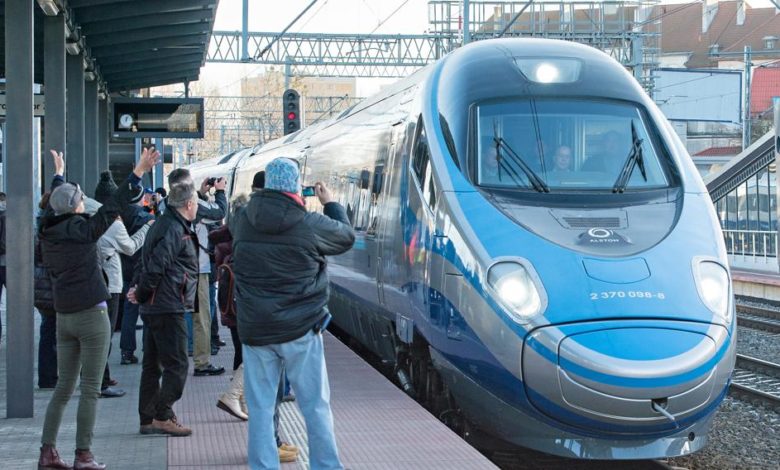
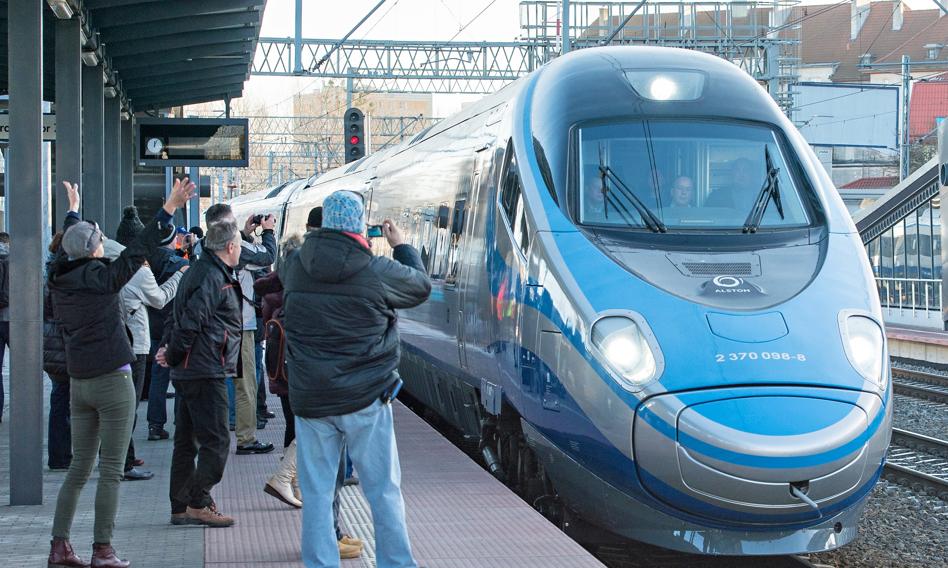
The president of PKP SA Alan Beroud emphasized during the panel “High speeds in Europe – challenges and perspectives” that high speeds (KDP), carrying out the transport of a large number of passengers in a short time, is a chance to better connect European countries with each other.
“High speeds is a beautiful idea that can connect Europe, build one strong body, because mobility is crucial,” said the president of PKP SA
And once again he recalled the example of Chinese railways in the discussion: “China has built 45,000 km >> High Speed since 2007
Piotr Rachwalski, a member of the management board of the Central Communication Port, emphasized that the efficient construction of high speeds requires good legal and environmental solutions.
“The traditional railway line turns at 250-300 meters, high speed railways need several thousand meters. This is associated with the need to buy land. But this is only one of the challenges, there are also environmental requirements, such as animal passages,” said Piotr Rachwalski.
Deputy Minister of Infrastructure Piotr Malepszak as the most important premises to build KDP pointed out, among others Situations in which a good rail connection is lacking when there is a need to transport high volumes and exhausted capacity and low modernization susceptibility of existing connections.
Anne E. Jensen, coordinator of the Ten-T Baltic-Adriatic corridor, emphasized that the funding process of KDP in Europe requires appropriate law.
“You will need a civil partnership company that will need to be provided with adequate financing. We must get money not only from taxes, but also to mobilize the financial system. He will allow us to create appropriate funds,” emphasized Anne E. Jensen.
Source of information: PAP Mediarom
Note: The sender is responsible for the material published by the Editorial Office of PAP Mediarom, indicated each time as a “source of information”.