There has been no such failure for years. Which led to paralysis in Spain

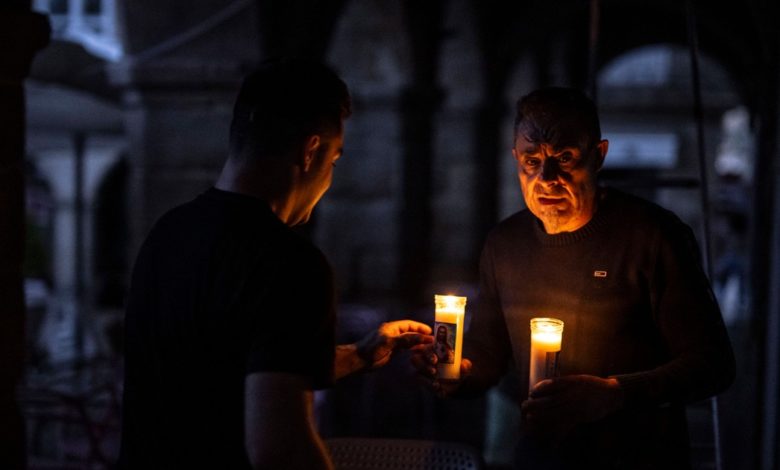
On Monday, April 28 in Spain and Portugal there was a complete power outfit. Trains got stuck in tunnels, office workers in elevators, and mobile telephony services have also ceased to operate. It was the biggest power outlet in Europe for two decades.
The catastrophic failure caused questions about the resistance of network infrastructure throughout the continent. They fall at a special moment – when European governments try to implement renewable energy systems as soon as possible and reduce carbon dioxide emissions from conventional energy sources.
The Spanish energy network broke shortly after 12.30 local time, soon after that the same happened in Portugal. Officials and engineers are still trying to determine the causes of failure and its potential effects on energy infrastructure in the long run.
What caused a failure?
Electricity supplies are based on a precisely balanced system. Demand and supply must be adapted to each other every second, and the frequency of the network – i.e. the speed at which the direction of electricity changes at this time – must remain stable. This is necessary to avoid damage to electrical equipment, and in the worst case – power outages.
According to the consulting company Aurora Energy Research at 12.33 local time on Monday, the frequency of the Spanish power network suddenly dropped from 50 Hz, which the network operator tries to maintain to 49 Hz.
A decrease by more than 0.1 Hz automatically excludes many power plants for safety reasons. Each power loss in Spain has an immediate impact on Portugal, which is largely dependent on the supply of electricity on the neighbor.
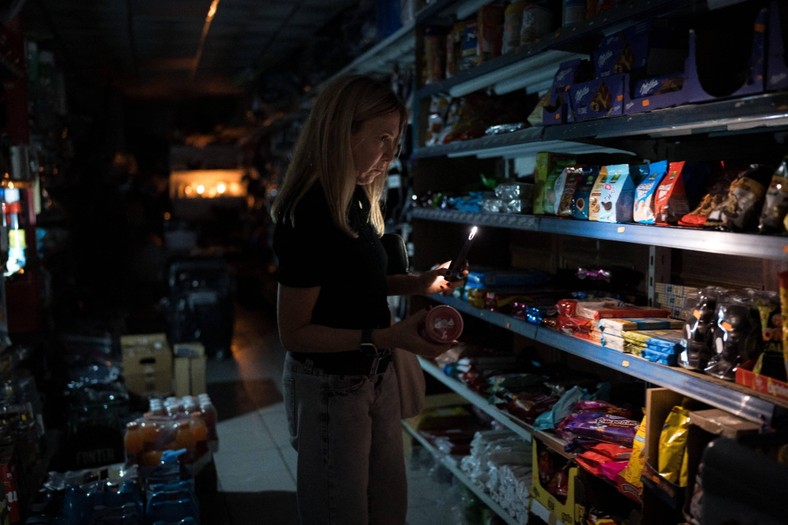
People doing grocery purchases during power supply breaks, Madrid, April 28, 2025.
It is not yet known what led to a decrease in frequency. On Tuesday, Eduardo Prieto, director of operational services of the Spanish Red Electrica network operator, stated that the reason for this was the unexpected loss of production power in southwestern Spain, where many solar power plants are located. Other theories indicate damage to electrical cables.
Frequency fluctuations are not unusual. Network operators usually cope with them, increasing or decreasing power using generators, breaking or using batteries. In this case, however, it was not possible to start additional production capacity quickly enough. Red Electrica excluded Cyberratak.
Did renewable energy sources affect the problem?
Without knowing the exact reason for the frequency drop, this cannot be said. The power system based on renewable energy sources, such as wind and sun, is, however, more complicated in management than the system dominated by traditional coal and gas power plants.
Renewable energy sources depend on the weather, but solar panels do not have large turbines that could help maintain the system operation if at some point a power failure occurs – this process is called “inertia”.
Aurora Energy Research said that it was the lack of this inertia that “contributed to instability.” Despite this, nuclear power plants and other energy sources, which were connected to the network at that time, should prevent failures, said Adam Bell from the British consulting company Stonehaven.
However, interruptions in electricity supply are also often found in systems dominated by traditional power plants – gas, carbon or nuclear. This is often caused by mechanical and technical failures.
Are energy networks in other countries more resistant?
The issue of resistance of energy networks raises more and more concern around the world. Countries are increasingly relying on electricity to meet the growing needs of the population, as well as supply electric cars, heat pumps, data centers and air conditioners.
The International Energy Agency based in Paris, which advises governments on energy policy, warned last week that cyber attacks and climate change may become more and more threat. Although renewable energy sources reduced dependence on unstable fossil fuel markets, the transformation of energy systems “brings new challenges” – said the agency.
To avoid problems with network instability, Great Britain has implemented 200-ton installations that imitate turbines in traditional power plants. Network operators also use technologies to measure inertia so that they can intervene if necessary.
In the balance of irregular deliveries, the greater use of batteries, as well as cables for importing and exporting energy to other countries can also help. The relatively poor connections of Spain with France have long been the subject of Madrid's complaints.
– Sometimes in the decision -making process we focus on adding more wind and sunny energy to the overall energy balance, which is great. However, you also need to think about spare sources of energy – said Javier Cavada, general director of Mitsubishi Power to Europe, the Middle East and Africa.
Will the failure entail consequences for energy transformation?
Power failures in Spain occurred at a sensitive moment of leaving fossil fuels. Some countries are still hesitating about the obligations regarding the reduction of emissions, some of them also have a problem using the appropriate technologies on a larger scale.
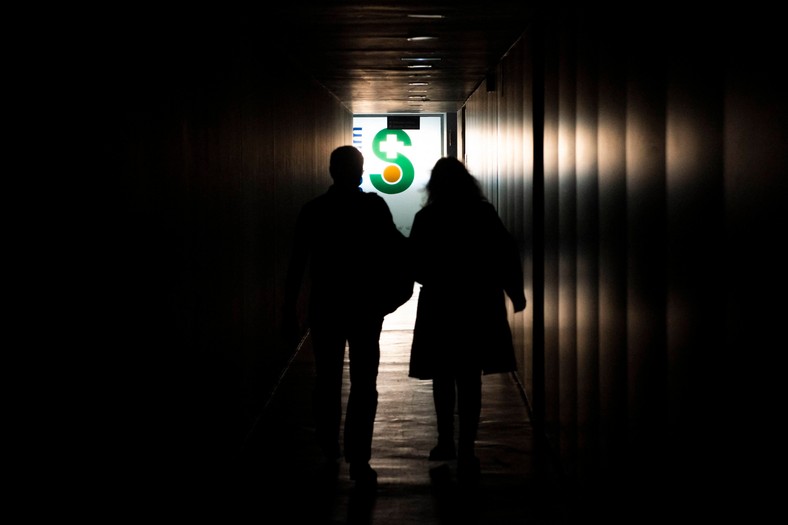
Hospital during Blackout in Spain, Albacete, April 28, 2025.
Although it has not been possible to determine the causes of the failure yet, Opponents of renewable energy sources probably take advantage of the situation in Spain as a warning. Cristian Busoi, Deputy Minister of Energy of Romania, said that the EU should rethink the plan to depart from gas by 2050. Dan Jorgensen, EU Commissioner for Energy, but tried to overthrow the legitimacy of such claims.
– One thing is clear: energy security should remain our priority. Connectivity, solidarity and pure energy from their own sources are of key importance to maintaining the immunity of our energy system – he said.
From positive aspects – breaks in energy supply can stimulate such necessary investments in the electricity transmission network. These expenses are needed to increase the share of renewable energy sources in the overall energy balance and system resistance. – Until now, research on energy networks has been seen by many as something for nerds and engineers, but this is not the case. To move forward, we must have safe and reliable energy networks – said Javier Pamos Serrano from Aurora.
What will happen next?
In addition to investigations at national level, an independent investigation will probably also be initiated on the causes of interruptions in the supply of electricity in Spain and Portugal. According to one of the officials of the European Commission, it will be managed by experts from member states not covered by a failure.
© The Financial Times Limited 2025. All rights reserved. It is not allowed to spread, copy or modify in any way. Onet bears the sole responsibility for the translation, the Financial Times Limited does not bear any responsibility for its accuracy or quality.