The earthquake testimonies of an anti-communist fighter: “They sold their souls from Russia on a kilogram of sugar and a liter of oil”

Anti-communist supporters who resisted in the mountains after the end of World War II led a hard and hard life. Handled by patriotism and the desire not to obey an oppressive regime, they stoically endured the cold, hunger and separation from loved ones.
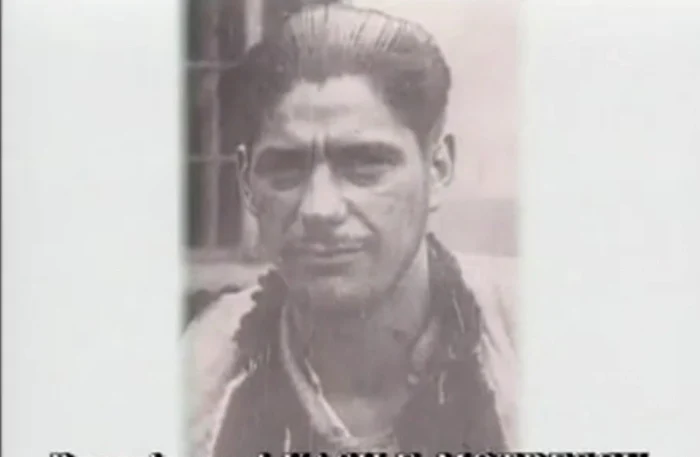
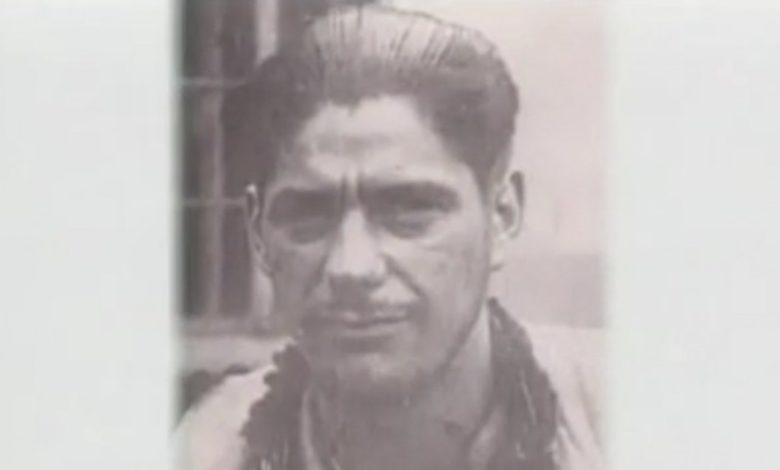
Vasile Motrescu Photo Pain Memorial
After the Second World War, Romania entered the communists. With the help of the Red Army and the Soviet agents, the Romanian “comrades” implemented the country's staging plan. After the falsification of the elections and the establishment of the communist regime in 1948, the fate of the country was sealed. There was the drama of political purges, “re -education” in the communist prisons, the collectivization, the forced relocation and the persecution of the intellectuals and of all those perceived by the communists as enemies of the people. In those moments, groups of patriots took the Calea Mountains and became a thorn in the Coast of the Communists. They were renowned anti-communist partisans, spread in several areas of the country. They were from all social categories, from former officers to peasants. Constantly hunting for security, always threatened by the spectrum of betrayal, they led a life of ordeal in the forest. However, the desire not to obey an oppressive regime and the hope that the West will come to Romania's aid made it resist with stoicism until death.
The son of some Bucovinian peasants decides to take the path of the cod
About the terrible life of these partisans we find out from the journal of one of the most important Anit-communist fighters in Bucovina. It was called Vasile Motrescu and left behind a journal with tearing testimonies about the life of a partisan. Motrescu was born on October 11, 1920, in the village of Vicovu de Jos, Suceava county. He was the son of poor peasants and had three more brothers. Although he had only six classes and only dealt with agriculture, Vasile Motrescu had a rich general culture, he loved to read and was very educated, as Gavril Vatamaniuc, the leader of another group of anti-communist partisans in Bucovina.
Vasile was taken in the army in 1942 and sent to the East Front. Manages to survive and returns home. In 1944, after the Soviets capture of Northern Bukovina, with military training and experience, Motrescu enters a group of partisans and fighting against Russian troops. “Starting with the spring of 1944, it has entered the first groups of anti-Soviet partisans-the former Macoveiciuc Group-under the protection of the Romanian-German command in Câmpulung Moldovenesc and trained in the Sadova commune school. In the autumn of 1944, it is necessary due to this activity to hide from the fear of Soviet troops.”says Theodor Bărbulescu and Liviu Taranu in the article “The daily existence of a” bandit “: the case of Vasile Motrescu”.
After Romania returns the weapons against the Germans, Motrescu returns home. He gets married and makes two children. After five years of tranquility, Vasile Motrescu's life changes permanently. The establishment of the communist regime transforms it into an enemy of the people. He had been an anti-Soviet fighter and the Security hunted him. It is hidden in the forests of the Răvăti area and then joins a group of partisans, led by Constantin Cenușă. Meanwhile, he was sentenced to the Iasi Military Court to 31 years in prison due to “the activity behind the Soviet troops in the spring of 1944”.
Partisan
In 1950 he was convinced by the family to surrender and conclude a convention with the Security. It is set to infiltrate into groups of partisans to give them to the authorities.
“Vasile Motrescu was used as an element covered in the group led by Ioan Gavrilă, who acted in the Făgăraş Mountains having the mission to provide information regarding the place where this group was and to create the conditions necessary to capture its members15. As Ioan Gavrilă himself, Vasile Motrescu has been in the last moment, capture. Repeated public instigation and association against public peace ”states the authors in the “daily existence of a” bandit “: the case of Vasile Motrescu”.
This time, Vasile Motrescu leaves permanently in the mountains. On May 29, 1952, he joined the group of Gavrilă Vatamaniuc. Armed with a flight (rifle with repetition produced in Czechoslovakia), it takes part in the actions of the group, spreads anti-communist manifests, attacks areas with security informants. “He also participated along with other groups in the area, in the actions taken against the authorities, threatening those who joined the new regime. He has initiated several attacks against cabins by forest workers – known as communist activists – or of sheep to procure supplies and various other things necessary in the mountains, leaving in these places threatening letters to the regime. “says Theodor Bărbulescu and Liviu Taranu. It is surprised by the gendarmes in 1954 in the forest of Bâtca Corbului and kills two of them. Then he left a manifesto to the communist authorities, which condemns the collectivization and Sovietization of Romania. It stays alone in the forests and eventually is betrayed. He is sentenced to death and executed on January 30, 1956.
“I was happy to delete God from the land of the living.”
From the journal left by Vasile Motrescu the posterity can realize the ordeal lived by the anti-communist partisans in the mountains. Alone, harassed, struggling with hunger and cold, Vasile Motrescu is not beaten, continues the anti-communist struggle, although sometimes he curses his days. Many times he could not ignite the fire, precisely not to be discovered by the authorities, and sleeps on the snow half dead from the cold and hunger. He hunted hard because he was afraid that the firearms would not be heard. He was getting to eat dry muffins with what he was getting.
“” I got up in the morning, I ate, I took a piece of muffins and three onions and left with the help of God after hunting because I finished the food for a long time, we struggle more with the roasted muffin, the cir Great head, I went from the cabin without feeling someone, hungry, sick and bitter, I started crying and at that time I was happy to [mă] God wiped from the land of the living, from the Black Baraca I went to the bear's coast and without anything I made a little fire to the feet. Besides all my trouble and pain, I burned the blanket. After I warmed up at 24 at night I went more to the hill, I was afraid not to see the fire on the road, I could not sit down because I went down the coast, a little on the hill made a little fire, I pulled the snow and having wood on the fire and tired I fell asleep as the deer without fire. “wrote Vasila Motrescu in his journal.
The Bukovina supporter was very faithful, he was making a black post every Friday, he was praying and reading the Scriptures. Faith helped him to resist in an increasingly hostile environment. The hardest was his holidays. He was sad because he could not spend Easter with his family and that he is harassed by his Romanian brothers. He considered them weak that he did not rise up against the communists.
“Easter spent in trouble, I am desperate and without any hope of the Lord's mercy, until God will endure and tighten me after the land of the living. I am in the sun and I think of the loved ones at home, as for any poor soul and they still enjoy at least freedom, and it is only a place. Despair, with the tense mind accusing and forgiving the life companions and all the enemies of my soul. These 4 years, still fulfilled on April 10 (…) At the top of the Gruet on a beech I found my name, since 1944, the autumn since we were running on these lands for the fear of the Russians and then I lived hard but not now. Then I was persecuted by the Russians, now I am from my Romanian brothers. Yes, they are persecuted by my traitors who have sold their country and their souls to the devils, on a KGR of sugar and a liter of oil and brought the country to suffering, because now it also feels the baby living in the Bolshevik heaven. “wrote Motrescu on Friday, April 3, 1953. It was Friday.
Someone brought him pasta, cream, soap, bacon and something to wear. Finally, Vasile Motrescu's ordeal would end in the Botosani Penitentiary, on July 29, 1958, at 9:30 pm, when he was executed by shooting. His whole family was harassed, put in prisoners and destroyed by the communists. One of his brothers returned from the prison. Vasile Motrescu's children were left to study only up to the level of four classes.