
The commercial war triggered by the United States with China has begun to affect the global maritime freight industry as well as airlines, market studies.
Commercial War began to affect the global maritime freight industry
According to Cirrus Global Advisors, the air freight industry could record an income contraction of $ 22 billion over three years if the White House maintains these high customs rates. “It is expected that the main carriers of goods and the sender of goods with high exposure on the Chinese markets will undergo significant pressure in the sense of decreased income. The same situation is in the sector of shipping”, Stresses the analyst Etoro Bogdan Maioreanu.
Before Trump's customs tariffs, the world has reached a “Height of globalization“, Because trade between regions increased to 49% of the total, while trade within the regions decreased to about 51%, approaching such a “Point of equalization“, Said Maja Marciniak, main economist in IATA, the International Air Transport Association. Therefore, any measures that undermine free movement of goods eventually affect companies, consumers and economies.
The macroeconomic uncertainty induced by Donald Trump's policies determines American airlines to withdraw their previous profits and income. Thus, Southwest Airlines, Alaska Airlines withdrew their financial forecasts for the whole year due to macroeconomic uncertainty, while United Airlines issued two orientations in a basic and recession scenario. The results of the first quarter of the American Airlines have exceeded Wall Street expectations, but showed a deterioration of profitability and a 3% decrease in the total number of miles traveled by passengers on internal flights. Also, the company has reduced its forecasts regarding the profit for 2025 due to the same concerns about the discretionary expenses of consumers due to the evolution of the commercial war.
“Their concerns are justified, because for the summer vacation only 46% of Americans intend to travel, 38% internally and 15% internationally, with some overlap between the two, according to the last Bankrate survey on summer trips in 2025. They cannot afford to travel, 23% mentions the lack of interest in traveling today, and 16% said they cannot get free from work or that it is too complicated to travel.”, Says the analyst Etoro Bogdan Maioreanu.
Willie Walsh, the general manager of IATA, compared the current situation with the consequences of the attacks of September 11, 2001 – significant, but with short -term potential. Although airlines do not panic, there are some concerns, because the demand for transatlantic travel for the second half of 2025 is decreasing. Reports appeared showing that the number of western European visitors in the USA decreased (-17%) in March 2025 compared to the same period last year.
Trans-Pacific commercial path, the central point of disturbances
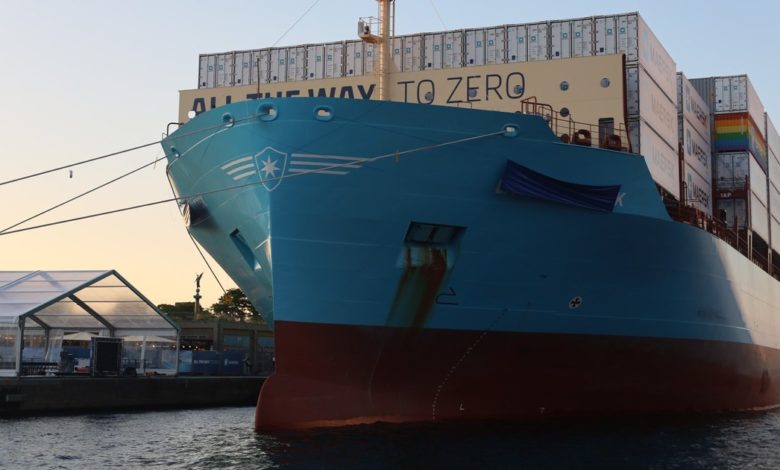
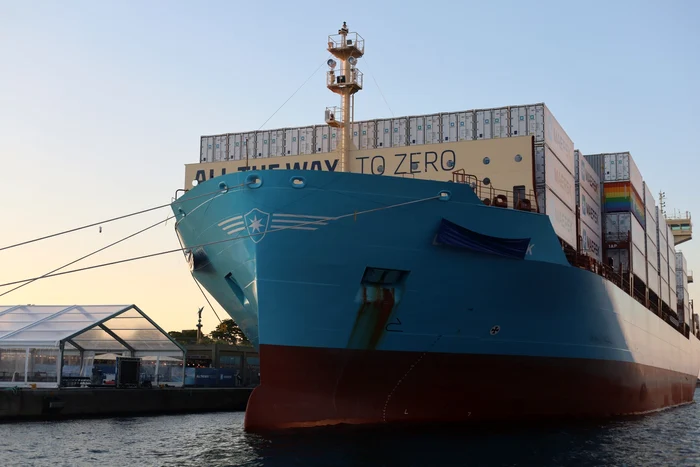
Trump's tariff war also pushes the sector of maritime transport into high uncertainty scenarios. The trans-Pacific commercial path, the most profitable historian for the maritime transport of containers, has become a central point of disturbances. Weekly volumes of processed containers in China increased by 6% compared to the previous month. According to the data of the China Ministry of Transport, Chinese ports processed 6.3 million containers in the seven days until April 20, which represents an increase of about 10% compared to the same period last year. Many buyers may rush their purchases before the de minimis tariffs enter into force on May 2, 2025 and also that Chinese goods are shipped to other destinations in South Asia, which are not currently affected by rates, where the demand is increasing.
Buyers have already rapidly imported Chinese goods after President Trump has alluded to customs tariffs. Customs data showed that China's exports have increased by 12.4% in US dollars in the last month, compared to the same period last year. But this situation will not last if the current rates are kept in force.
Carriers strongly dependent on Chinese exports
In the US, the ports of Los Angeles and Long Beach – which handle one third of the US container load – are preparing for a volume decrease of at least 10% from May. Carriers strongly dependent on Chinese exports, such as CESOCO, Hede, Matson, Sealead and TS Lines, are among those who could be the worst affected. Global giants such as Maersk, MSC and Hapag-Lloyd also face pressure on profit, because retrival rates and decreased demand reduce margins. For example, the German transport company Hapag-Lloyd reported a 30% cancellation rate for China to the United States, attributing the decaling of commercial tensions and high rates between the two nations. The decrease in volume reflects wider changes in global commercial models, and industry analysts notice that a sudden change in tariff policy could lead to short -term disturbance of the supply chain. Also, the Matson shares, which obtained one third of its volume for 2024 in China, decreased by almost 30% from the level before the “Liberation Day” announcement to the recent minimums of April 21.
Companies respond through a strict control of costs and suppliers and increasing agility. Hapag – Lloyd is now using smaller ships on the China – US route, while re -remlining the ability available to Southeast Asia (Thailand, Vietnam, Cambodia), where demand has increased after applying customs tariffs. Maersk extends options related to ports of origin for transport to the US by providing several Vietnam services and other Southeast Asia countries, helping customers move away from China-centered supply chains and diversify their supply sources.
“The latest news brings hope that the commercial war between the US and China could be resolved, the secretary of the US Treasury, Scott Bessent, saying that the current situation is unsustainable, and Trump also indicated the desire to conclude a new agreement with China, which induced some optimism on the markets. They will resume the transports that were stopped during the tariff war.the analyst shows.


