We were not interested in S -Bahn – why are Romanian trains among the slowest and oldest in Europe

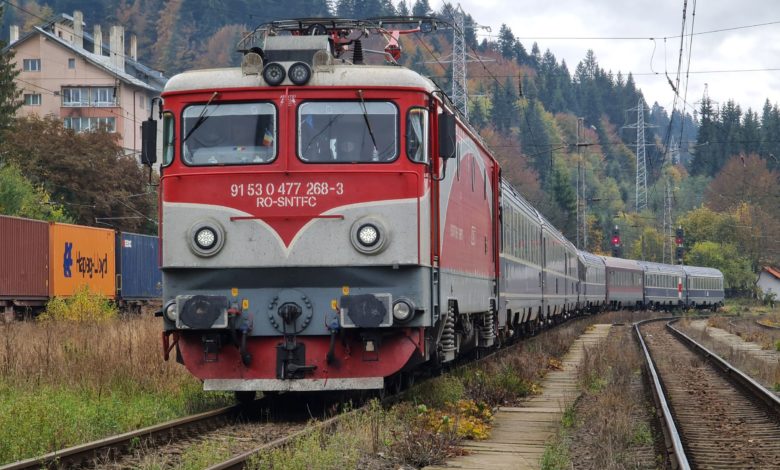
One of the most unpleasant roads you can make in Romania is a train trip, from Iași to Timisoara. It is not just a long trip, but also one in time, since the wagons are like in the 1990s, and the speeds are lower than then. Why did the Romanian railways arrive so bad? How are we not able to bring new trains?
Almost all the countries in the region have invested many billion euros in the railway and this is seen. Very little invested, and the number of travelers made annually on the railway reached 70 million/year, compared to 400 million in 1990.
The car park, on the other hand, is five times older than 30 years ago, and Romania has become a country of cars and many look at the train as “for the poor”.
Romanian has changed a lot in 30 years, cities have much more color, we have better sidewalks, visible street markings, many roundabouts and malls full of gigantic screens. But Romania did not change, however, when we talk about stations and many of them look deplorable, because only a few modernizations have been made (for example Arad).
In the North Railway Station the rain passes through the roof, in the Brasov train station half of the lines cannot be used due to the yard, and the sub -crossing tunnels are miserable in dozens of stations because they have not even been painted.
Other countries take seriously railway development
While Turkey has plans for how it will expand until 2053 the railway network, Romania does not know very clearly what it will do in 2026. Carelessness and dismissal are words that, unfortunately, make a “good house” with the rail domain from us.
Poland has, for years, trains that catch 200 km/h, the Czech Republic wants to reach 300 km/h, and Austria has invested billions of euros in new trains and has developed a European Night Trains that reach Paris, Amsterdam and Brussels.
The Polish state has supported several national rolling stock companies, bought trains and wagons from them-modernizing the national fleet-and created their frame to grow internationally. The Polish company PESA has become a giant that delivers trains in Germany, and Romania will buy over 80 trains from PESA.
In us, an old wagon factory recently closed in Arad, and Softronic, the important locomotive producer in Craiova, delivers especially in Sweden, the contracts with Romania being few (several locomotives modernized by PNRR).
The fall started after 1990 and accelerated after 1996
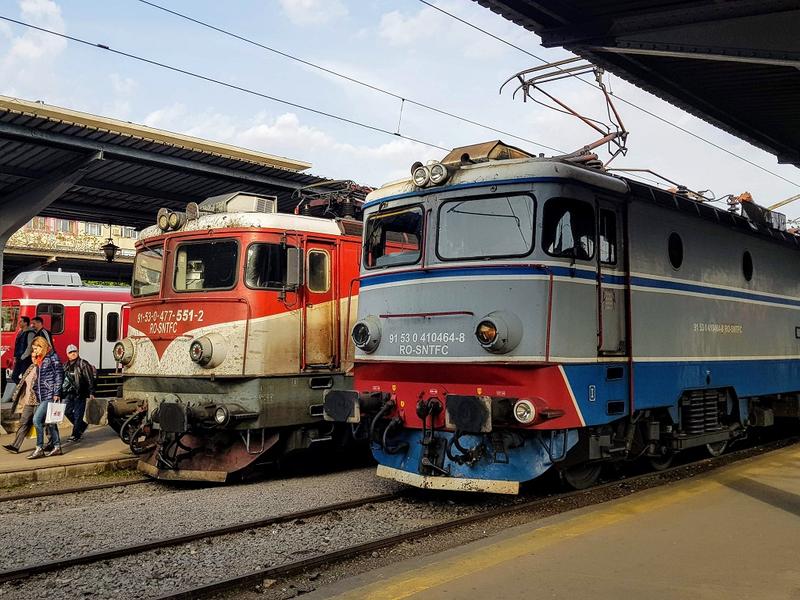
Romania has 50 -year -old locomotives, has modernized under 10% of the railway network in 35 years and accumulates huge delays on sites, but also on the arrival of new trains. The average speed of passenger trains is 45 km/h, and freight trains, below 20 km/h.
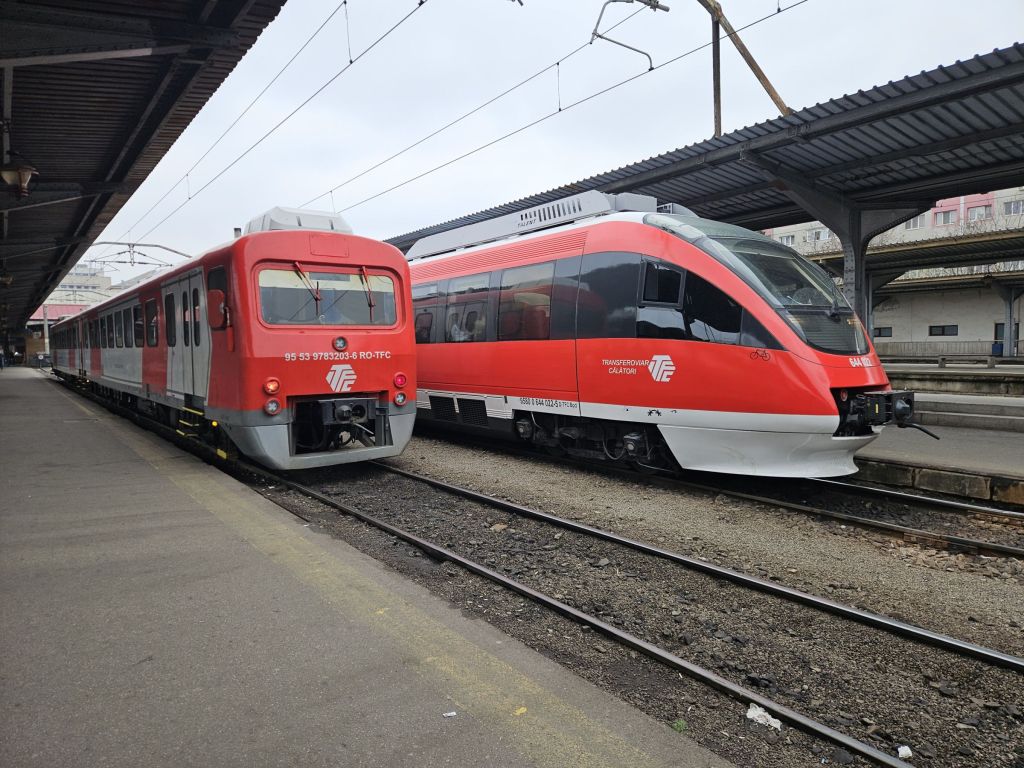
The decline of the railways in us began after 1990 and emphasized after 1996: fewer planned line maintenance works were made, more and more speed restrictions were introduced and more trains have accumulated delays.
The circulation capacity of the network has diminished, and the services offered to customers have decreased in quality. In the last ten years the trains have disappeared from more than 800 km of lines and over 20 traffic sections have been closed.
Politicians don't care about the railway
The political factor, the one who makes the decisions, was not almost interested in the railway, proof that the transport ministers talk about trains “from year to Easter”, while the topic most often related to highways and express roads, an area where great progress has been made to the railway.
Romania has not made a railway reform and does not have a clear long -term strategy. Without a firm support of the political class for a minimum of 5-7 years, the chances of a successful reform are extremely low, because important legislative changes would be to be parliamentary debates, intense public discussions and complex organizational transformations. Plus, a generous budget should be allocated that will remain valid regardless of the Minister of Transport and the Coalition at the Victoria Palace.
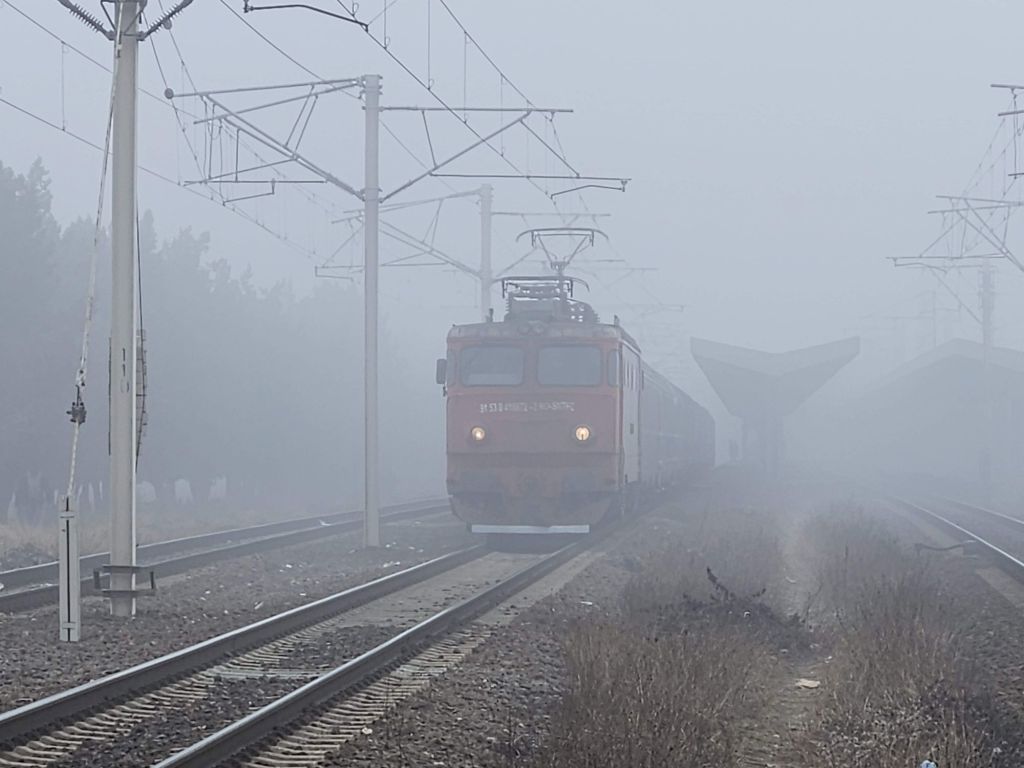
The ministers from Transports very rarely took the train, and when they did it they went on the only newly modernized bus to Constanța and to Brasov. No minister has been in curiosity to go from Cluj to Galati to Cușeta or to sleeping wagon, a 15 -hour “sprinkled” road with delays.
The restaurant wagons have disappeared, the sleeping ones and the quartz are the same as 20 years ago, and the old blue arrows have been modernized, but their age is clear. The private operators brought a little new rolling material, but also to them, with some small exceptions, the average age of the car park comes to be measured not in years, but in decades.
The future looks good only in theory
In the theory we should have in four years over 180 new trains, but at our pace, on the “Romanian railway” which has a very slow flow rate, we will probably have only a few dozens of trains, in the best case! The situation of the new trains from Alstom says everything about the slowness of the procedures from us.
Romania does not maintain its railways almost at all and it was many years in which the budget allocated was below 10% compared to the necessary one. In these conditions there are more and more portions where trains run under 30 km/h, and the Bucharest – Timișoara road lasts almost 11 hours, compared to six and a half hours in 1996.
And the existing sites move hard, there are problems with the projects in the field and the specifications, and the expropriations also last enormously. On sites such as Deva-Arad and Brașov-Sighișoara are delays of 4-5 years, and the Cluj-Oradea project, which should be ready at the end of 2026, also seems to have serious “doses”.
Romania was not interested in S-Bahn type trains
Almost all European countries have many trains in cities, so-called regio-urban systems in the S-Bahn style, but Romania has no such thing and it was not eager to develop such networks that would have changed the face of urban transport, as they did in Vienna, Berlin or Prague.
Romania reopened, after 20 years of break, the Gara de Nord – Progresu – Giurgiu line and the moment was presented as a reference, which would attract hundreds of commuters, although the average speed was 40 km/h.
However, in a pure Romanian style, almost half of the trains were removed eight months after the opening, because the state operator had to reduce the costs due to the “train” ordinance. The dust of the idea of an effective shuttle to Comana, Jilava or Giurgiu was chosen.
And passengers have their part of blaming
In the whole story, not only politicians, but also passengers and ordinary people have their fault for what trains, stations and areas next to the lines look. If you go on the long road by train in Romania you can see that the toilet paper disappears after an hour or two, and the toilet is clogged, because the passengers throw various in it, although there is trash next to the ship and it clearly says that you do not have to throw objects in the toilet.
In the stations there are many kisses on the floor, and next to the railway lines are, sometimes strung for miles, a lot of garbage thrown by those who are through the areas where the train passes. A train by train to the airport exposes a sad landscape of garbage next to the train lines.
Another proof that we have problems of education also belongs to the fact that in only a few months there were two stones attacks on a new train from Alstom, in one of the cases the train traveling with passengers (a window broke, but no one was injured).
The consequence is sad: the train has gained a disastrous image in Romania due to delays and travel conditions. The states related to their railway networks do not want the train to be a means of transport that many avoid, because the interest of the European states that look further in the future is for people to give up the car as much as possible and to take the train, both 500 km, but also on 5 km!
To us, the locomotives that break or set fire and the many hours delays have given birth to banks with CFR Calator: “You know when you leave, but you do not know when you arrive.” Do you want to send someone a Christmas gift? Put it on Easter in a CFR train and maybe it will arrive!, Says one of the jokes.