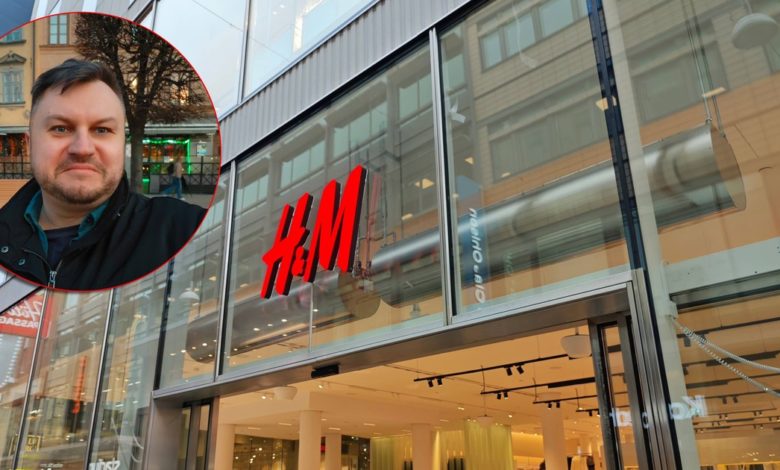
H&M employs up to 500 clothes designers. All brand projects – not counting those intended for the Chinese market – are being developed in the center of Stockholm. There, there is a company's headquarters in several buildings. You can think that it is actually a H&M district – there are not only office buildings, but also of course numerous stores, including a flagship salon, as well as H&M Home or H&M Move points.
The heart of the H&M headquarters is a giant atelier, which is created new collections.
This is how we meet Ann-Sofie Johansson, currently a creative director who began her career in the company in the late 1980s. She had to drive two hours to do shopping in the H&M store. Now – he says – her task is to “inspire younger designers”. He admits that one of the biggest challenges was cooperation with well -known designers – the company started this project in 2004, with cooperation with Karl Lagerfeld. Then there were names such as Stella McCartney, Isabel Marant and Sonia Rykiel. Johansson adds that the next name will be a big surprise – but then she couldn't tell us yet. Then it turned out that it was a Polish woman – Magda Butry.
Look: H&M establishes cooperation with the Polish designer
As our interlocutors admit who work on a daily basis in the atelier, the challenge for designers is to guess what will not only be fashionable during the next season – but also in the future. Some collections are designed for a year or two years ahead. “It's always a lot of calling, but we try not only to keep up with fashion, but also create it” – we hear at the headquarters of H&M.
4,000 colors
For example, you need to choose the right colors. It is not easy, because – as we hear – there are about 4,000 in the H&M database. different colors. The large spaces of design departments do not resemble the offices of large corporations – or rather a great tailor workshop, in which the rows of hangers and materials can be seen. It is from them that projects are created that ultimately turn into clothes, which then go to stores. It is striking that tailoring machines often do not look modern – some have been serving designers for many years. In the atelier itself, unfortunately, you can't take photos – journalists could capture projects that will not see the light of daylight for a long time. In the interiors of the building, a rather typical Swedish minimalism dominates – it is pragmatic, comfortable and without fireworks.
Clothes that can be seen, however, often will not end on shelves – these are usually prototypes that will be modified many times before they finally reach customers.
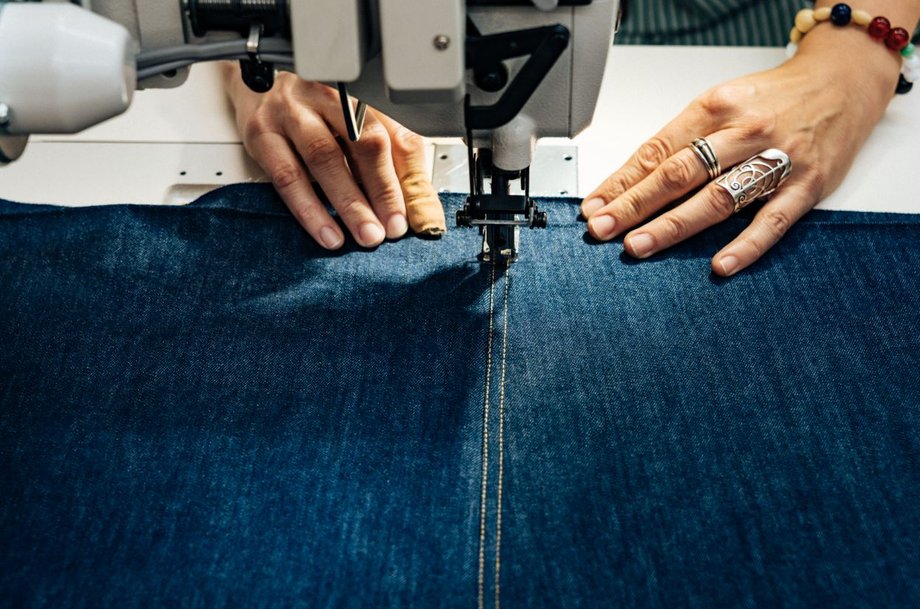
Sewing “test” H&M clothes
|
H&M
Of course, designing clothes is not everything. In Stockholm, H&M even has a special department, which deals with the products to be properly displayed in stores. “The point is for the customer to see immediately which things can be combined with each other,” we hear. As company representatives tell us, there are clothes on the table in the center of each store – they are responsible for the most sales.
Next to the headquarters – at ul. Drottninggatan 56 – is one of the company's flagship stores. H&M emphasizes some technological innovations, for example screens that allow customers to ask for items that an H&M employee can bring directly to the fitting room. By the way – such a solution is available not only in Stockholm, but also, for example, at the Westfield Mokotów center in Warsaw. In addition to the flagship store in the area there are several other points with the H&M logo – for example H&M Move, where you can only get sports collections of the brand.
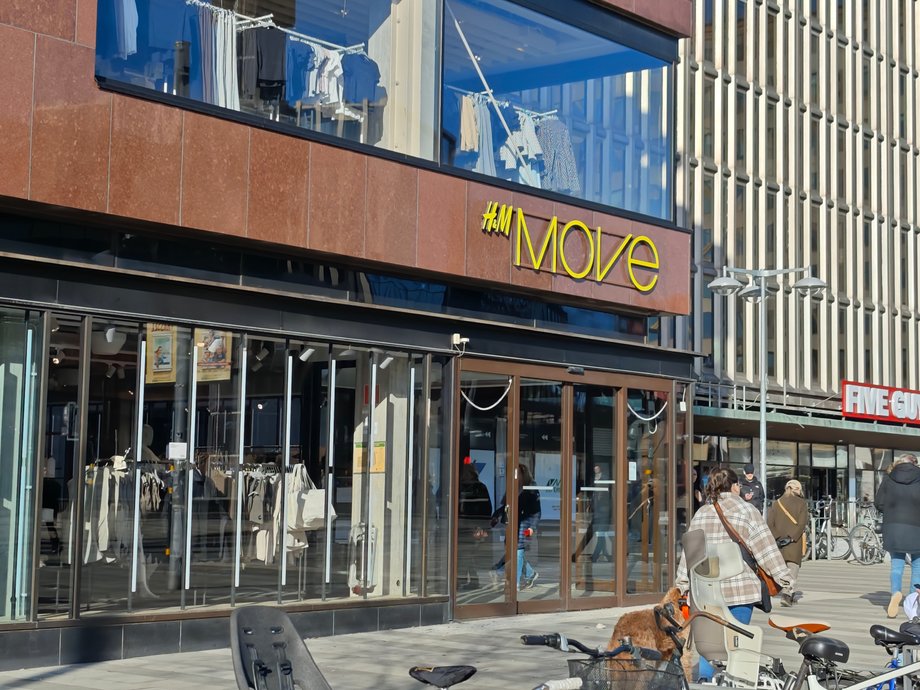
H&M Move Salon
|
Mateusz Madejski / Business Insider Polska
The rest of the article is under video material
Representatives of the Swedish company willingly quote data from which it follows that young customers are increasingly focusing on second -hand clothing. This was a great challenge for brands such as H&M. One of the company's answers to this trend was the introduction of the Pre-Loved section to stores-in short it is such a second-hand second-hand clothes in various brands. The network also focuses on the online Sellpy platform, where you can trade in used clothes.
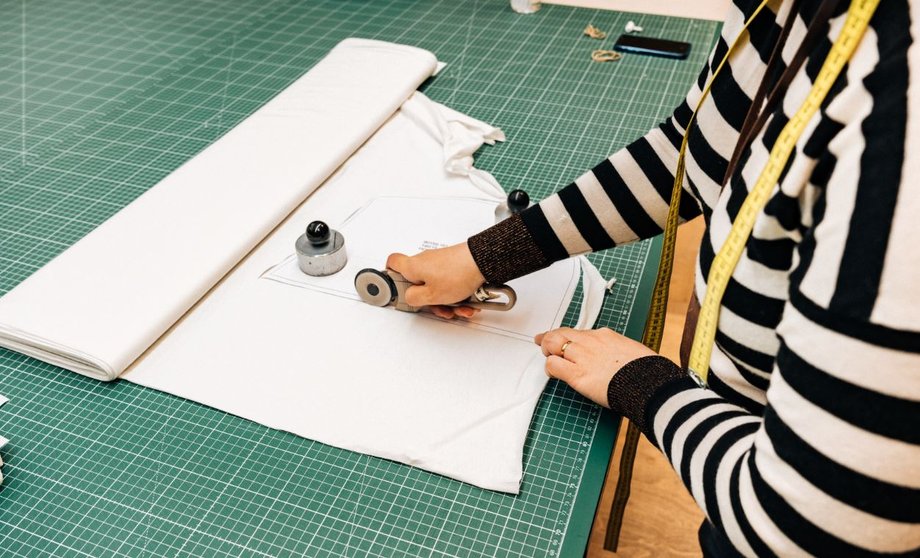
This is what the work on the company's projects looks like
|
H&M
“We see that people want to buy second-hand clothes, but they also want to buy these new ones. Our task is to answer this demand and create a purchasing experience that offers them both. We notice that in recent years the second-hand clothes market has increased-and will probably grow in the following years. Anyway, I have a 15-year-old daughter, I see how I like Vintage. A group of consumers that only buys new things ” – Cecilia Strömblad Bränsten told me, responsible in H&M for activities aimed at ecological use of resources.
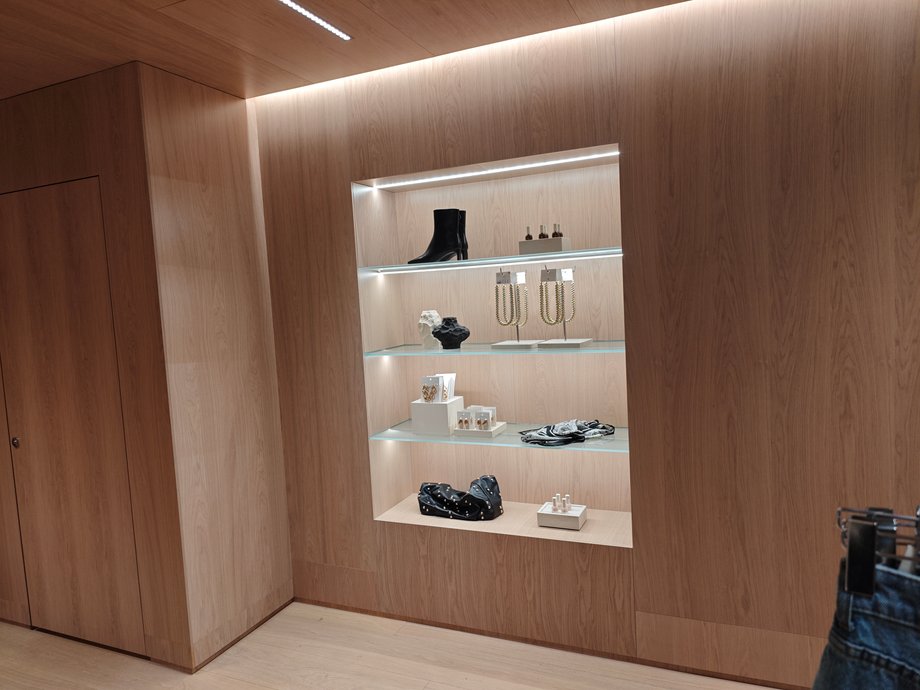
Interior of the H&M flagship store
|
Mateusz Madejski / Business Insider Polska
Author: Mateusz Madejski, Business Insider Polska journalist