On August 15, 1971, President Richard Nixon interrupted an episode of the series “Bonanza” to announce “a new economic policy” to American families gathered in front of TVs that Sunday evening. Among the countless measures that the president emphasized was a 10% customs duty on imports and suspending the convertibility of the US dollar.
Nixon himself was more worried about the political reaction from the Americans than that of the “international money speculators” targeted by his ad. However, the consequences were huge. Although formulated as a temporary measure, the US has never returned to the so-called standard-gold, writes Financial Times
The dollar, which is normally strengthened during periods of financial or economic conflicts, has decreased.
What became known as “Nixon shock” marked the end of a financial era and the beginning of a new era.
Half a century later, the world is facing a similar -scale shock. Earlier this month, Donald Trump's American administration revealed an aggressive tariff regime in which both the tax size and the methodology that supports them shocked even many president's supporters.
Faced with a revolt of financial markets, the president announced a partial pause of 90 days, but investors are still nervous. The dollar, which is normally strengthened during periods of financial or economic conflicts, has decreased.
Coming against the backdrop of an increasingly warmer attitude towards historical allies and an ambivalent attitude towards the hegemony of the dollar of key figures in the administration, investors and analysts around the world are facing a new paradigm, in which the domination of the US dollar could be faded-or even end.
Foreigners hold 19 dollars trillion in shares, $ 7 trillion in US treasury and 5 trillion in corporate bonds
“The commercial war is only the latest example of the contempt of this administration to the rest of the world,” says Mark Sobel, American president of OMFIF, an Economic Think-Tank and a former Treasury official. “Being a trusted partner and ally is a fmentamental pillar on which the domination of the American dollar is based, and this has just been thrown into the trash.”
There are two different questions, but subtly different, which are now asked in the world's financial centers after this “Trump shock”. First of all, how far can the recent decrease in the dollar go? Foreigners hold 19 dollars trillion in US shares, $ 7 trillions in US treasury and 5 trillion in American corporate bonds, according to Apollo Economist, Torsten Sløk. If some of these investors begin to reduce their positions, the dollar value will be under strong pressure.
Although the value of the dollar has increased and has always decreased, and the critics have constantly sought to tear it, the dollar remained “king”. However, some analysts and investors now believe that the extent of the Trump shock could put an end to an almost a century of domination of the American currency.
“The US has benefited from the reserve currency status for 100 years. It took less than 100 days to change this,” says Gregory Peters, an investment chief at PGIM Fixed Incom.
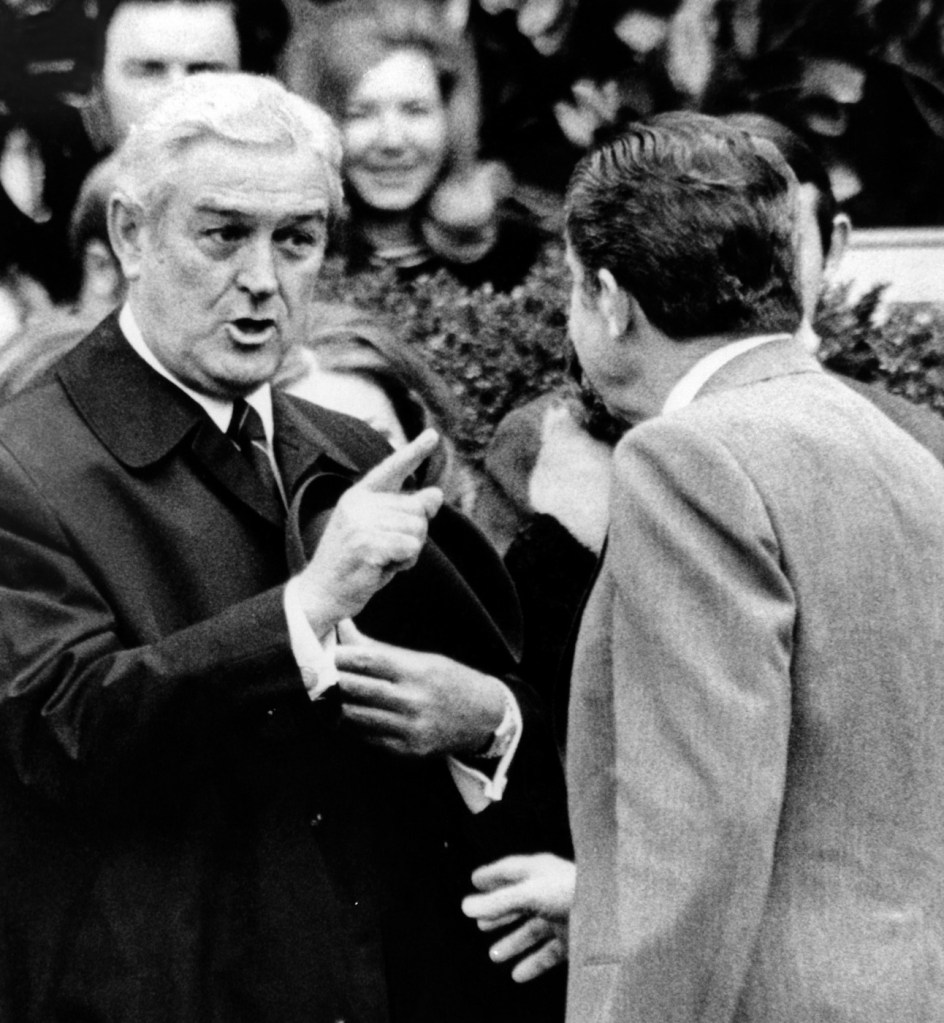
When Nixon's treasury secretary, John Connal, participated in a meeting of G10 in Rome, shortly after the US ended the convertibility of the dollar, the Texan shocked the participants saying: “The dollar is our currency, but it is your problem.”
The vision of the Trump administration is reverse: the dollar is the currency of all, but it is the problem of America.
Despite the fact that Nixon interrupted the dollar connection with gold in 1971, the dollar remained in the center of the monetary universe. In fact, due to the importance of the dollar in the global financial system, how much more interconnected, its importance has increased. Far from eroding the importance of the dollar, the Nixon shock anchored in new ways.
Nowadays, the US represents only about a quarter of the global economy, but over 57% of the official currency reserves of the world are in dollars, according to the IMF. There are many other types of institutions that are not analyzed by the IMF and that keep their assets in dollars; Whether we are talking about a bank in Mongolia, a pension fund in Chile, a European insurance group or a speculative fund in Singapore. Dollars are the supreme reserve asset.
The dollar is equally important in the trade, where 54% of all export invoices are expressed in dollars, according to Atlantic Council. In Finance, its domination is even higher: about 60% of all international loans and warehouses are expressed in dollars and 70% of the international bond shows. In foreign currency, 88% of total transactions involve the dollar.
This huge international demand for dollars translates into a built-in first for US assets and means that the US borrows cheaper than others. It also gives the US the power to sabotage the financial system of another country through sanctions
However, many of the Trump administration claim that the costs of the dollar backup status exceed the benefits, making the American currency unjustifiably strong and injuring American exporters.
Whether it is accidental or not, almost every action undertaken by the Trump administration in the first three months struck in the dollar.
“Although it is true that the high demand for dollars has maintained cheap loans, it imposes unjustified weights to our companies and workers, doing their non -competitive products and work on the global stage,” explains another top economist.
Whether it is accidental or not, almost every action undertaken by the Trump administration in the first three months struck in the dollar. Last week, the DXY dollar index – which measures the power of the currency in relation to a basket of the strongest coins – decreased by 2.8%. This has been the seventh worst week of the last three decades. He continued to decrease this week, extending his decline from 2025 to 8.2%.
“It is not only that you can no longer trust the US, whether it is geopolitics or trade,” says an American financial director. “Also, we managed to massively annoy the rest of the world. There is a real personal animosity towards us and that harms the dollar.”
Most importantly, the dollar was particularly weak compared to other currencies of refuge that are usually strengthened when the markets are turbulent, such as the Swiss franc and the Japanese Yen, but also for gold. The fact that the green ticket is apparently excluded from this select currency club is a shocking evolution for many analysts and investors.
“Despite the postponement of taxes by President Trump, USD damages were made,” wrote George Saravelos, the global research chief at Deutsche Bank, in a report last Friday. “The market reassesses the structural attractiveness of the dollar as a global reserve currency and goes through a process of rapid dedolization.”
However, most analysts say that the dollar reserve status is unlikely to end. The euro is a monetary union, but there are 20 different countries, China holds the renminbi tight, limiting its convertibility, and currencies like the Swiss franc and Japanese yen are too small to compete with the dollar. To adapt a cliché, the dollar is not just the least smelling shirt in the closet, is the only one that suits.
“The domination of the dollar will remain in force in the near future, because there are no viable alternatives”, predicts Sobel in Omfif. “I wonder if Europe can act together and, clearly, China will not open its capital account too soon. So what is the alternative? It simply does not.”
Moreover, the domination of the dollar is so well incorporated into the fabric of the global economy, due to a complex multitude of independent, but interconnected factors, that even the Trump administration is unlikely to manage this quo status fundamentally.
However, the dollar can still lose value. Goldman Sachs – anteriorly optimistic about the dollar – now predicts that the US currency will fall to $ 1.20 compared to the euro and to 135 Japanese yen in the next 12 months, the equivalent of a 6% weight loss. “The negative tendencies of American governance erode the exorbitant privilege of American assets, and this affects their yield,” Goldman analysts warned.
As Walter Wriston once noted, the late Citicorp chief who was one of the titans of the American banks: “The capital goes where it is welcome and remains where it is well treated.” For almost a century, the US was the final destination of the world for money. Now, investors suddenly worry that this is no longer true, and the ramifications could be dramatic.