In the midst of bombing campaign on both sides, Tehran announces: the war “can be easily stopped, with a single phone”

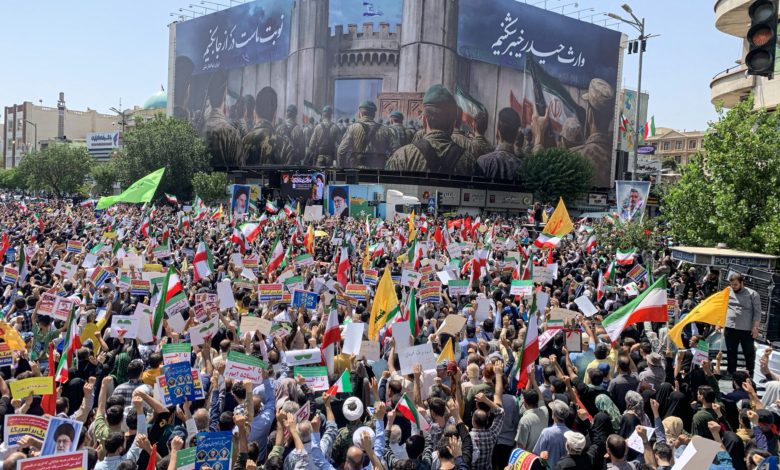
Diplomacy with Tehran can be resumed “easily” if US President Donald Trump orders Israeli leadership to cease attacks on Iran, CNN, Majid Farahani said on Friday.
“Iran believes in civil dialogue,” he said. “It doesn't matter if it is directly or indirectly,” said the spokesman.
“President Trump can easily stop the war with a single phone to Israeli,” he said, thus reiterating the position of Iran that negotiations are impossible while Israeli bombs hit Iran.
Farahani added that Iran will not agree to stop the enrichment of the uranium – Tehran insisting that his nuclear program has peaceful goals – but added that concessions are possible.
“It may be smaller (concession, no), but we will not stop it (the enrichment of the uranium, no),” he said.
In recent days, the European powers have joined American and Israeli calls to ban the enrichment of uranium, strengthening their positions on this key matter. France presented “a clear position on zero enrichment” (Uranium), said on the American television station the spokesman of the French Ministry of Foreign Affairs, Christophe Lemoine.
Iran states that it needs uranium enriched for peaceful purposes, while producing large amounts of material near the degree to which it can be used for armament.
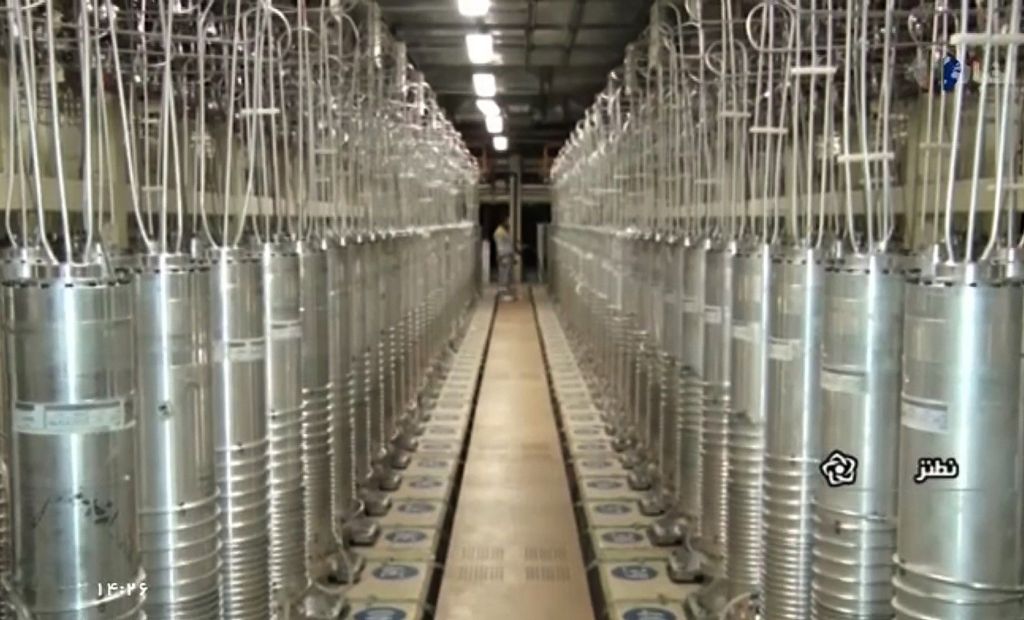 Iran, ready to discuss the limitation of his uranium enrichment program. The variant that “will undoubtedly be rejected” by Tehran
Trump's decision on Thursday to open a two -week negotiation window before deciding on a possible military attack on Iran, offered a small chance, although unlikely, for a peace agreement between Iran and Israel.
In Geneva there are discussions between Foreign Ministers in Iran, France and Germany, together with the head of the EU foreign policy, the first face -to -face meeting since the beginning of the conflict.
After days of increasingly aggressive messages from the Trump administration, the possibility of military action can be avoided.
Indeed, even Trump's camp seems to be deeply divided on the opportunity of direct attacks against Iran, notes CNN.
“If America gets involved in the war,” Farahani said, “there are many options, and all these options are on the table.”
Iranian nuclear file discussed in Geneva
The meeting attended by the foreign ministers from Iran, France, Germany, the United Kingdom, as well as the head of European diplomacy, Kaja Kallas, devoted to discussing the future of the Iranian nuclear program takes place in Geneva on Friday, after a week of unprecedented hostilities between Israel and Iran, have previously reported.
Foreign ministers from Germany (Johann Wadeph), France (Jean-Noel Barrot) and the United Kingdom (David Lammy), along with the EU representative for Foreign Affairs and Security Policy, Kaja Kallas, had a preliminary meeting before meeting their Iranian counterpart, ABBAS ARAQCHI, which also had a Council on Friday. UN human rights.
In his council's intervention, Abbas Araqchi accused Israel of committing war crimes by attacking his nuclear facilities and asked the international community to act to “stop this aggression.”
“The world, all the states and mechanisms of the United Nations have to show their concern and act immediately to stop the aggression, put an end to implement and make criminals to be responsible for the atrocities committed in our region,” said the head of Iranian diplomacy, who also accused Israel of the Crime and in the War.
Araqchi also indicated in front of the Council, from which Israel and the US withdrew at the beginning of the year, that Israeli aggression against Iran is “a clear violation of the United Nations Charter and a clear challenge to the principles and norms that this institution represents.” He also warned of the “potential consequences for health and environment” which could be caused by Israeli attacks on nuclear installations due to radiation.
In the meeting that started in Geneva on Friday, European diplomacy is trying to convince the Tehran regime of the need to give up its nuclear program, while bombing and drone attacks between Israel and Iran continues, the hostilities being triggered on June 13 by Israel and justified with the argument that he is afraid of Tehran.
Iranian sources have confirmed that on the agenda of the meeting are both the nuclear problem and the situation in the Middle East, after the beginning of the attacks of Israel.
The possibility of the United States, the ally of Israel, intervenes military against Iran adds uncertainties to this meeting, after Donald Trump indicated on Thursday that a two -week period has been set to decide whether or not to conflict.
Araqchi told Iranian television on Friday that he rejected a request from the US to continue negotiations on the Iranian nuclear program, which started in April, arguing that there is no place for such discussions as long as the continuous Israeli aggression.
In a press conference in Geneva, the Israeli ambassador to the UN, Daniel Meron, stressed that Europeans should adopt a “firm attitude” towards Iran, asking for the “definitive conclusion of the nuclear program and disassembling its ballistic missiles.”
Meron criticized the UN because it gives the council the opportunity to express a voice of the “Iranian radical regime” and insisted that “there is absolutely no possibility that all the enriched uranium has (Iran) will be intended for a civil use.”
Meron also accused Tehran of pursuing a production capacity of over 10,000 long -range ballistic missiles, “investing billions to achieve this and be able to reach with them to the heart of Europe.”
Israel hit dozens of targets in Iran, including a nuclear military research center
On Friday, Israeli Air Force (IAF) hit dozens of targets in Iran, including a Nuclear Weapons Research and Development Center, according to DPA and AFP.
According to a message on Telegram of the Army, “over 60 Fighters of IAF” launched during the recent operations “about 120 pieces of ammunition”.
One of the objectives mentioned by the military in Israel is the headquarters in the Tehran of the SPN (acronym for the organization for defensive innovations), the institution responsible for “researching and developing the Iranian military nuclear program”. The hit center develops “technologies and peak weapons for the military capabilities of the regime” in Iran.
The Israelis also attacked “several industrial sites used for missile production” in the Tehran area, which constituted a vital center for the Iranian Ministry of Defense. “Production facilities for missiles and factories that produce raw materials used in the manufacture of rocket engines” have been bombarded.
The conflict between Israel and Iran, consisting of mutual bombings, entered the eighth day.
Iran, accused of launching a dispersion bomb
Iran launched a dispersion bomb on Thursday – a missile missile that spreads several small bombs – to make more civil victims, accused the Israeli army and the Jewish Embassy in Washington, according to Reuters and Agerpres.
“Today (Thursday-Red.) Iranian armed forces launched a rocket containing dispersion on a densely populated civil area in Israel,” said the Israeli diplomatic representation in a US-sent email.
The message states that “the weapons with the submunication are designed to disperse on a wide area and to maximize the chances of a harmful blow” and accuses Iran of “intentionally fired on centers with civilian population and tries to maximize the evil done to civilians there by using ammunition with wide dispersion.”
The Iranian mission at the UN did not respond immediately to Reuters's request to comment.
The Israeli press quoted the armed forces, according to which the offensive load opened at an altitude of about seven kilometers, spreading around 20 submunities over a radius of about eight km, in the center of Israel.
One of the submuniors hit a home in the city of Azor, causing some damages, said Emanuel Fabian, a military correspondent of the Times of Israel. No victims were reported.
Dispersion bombs are controversial because they randomly spread submunic, some of which may remain unexploded and make victims for a long time after the conflict in which they were launched. The Israeli army has broadcast an infographic material explaining to the public the danger of unexploded ammunition.
The spokesman for the armed forces of Israel, Brigadie General Effie Defrin, said in a press conference that “the terrorist regime (Iranian-n. Red.) Try to harm the civilians and even used weapons with wide dispersion to maximize the area of destruction.”
Daryl Kimball, executive director of the Arms Control Association promotion group (Association for Armaments Control) said that the respective weapons are known for “destruction on large areas, especially if used in an area populated by civilians, and can be added to the unexploded ammunition remaining in conflicts.” He noticed that although Iranian missiles can be imprecise, Tehran should know that dispersion ammunition “will hit civil targets, rather than military targets.”
Neither Iran nor Israel adhered to the international prohibition on production, storage, transfer and use of dispersion bombs, an act signed in 2008 by 111 countries and 12 other entities.
After a prolonged debate, the United States provided dispersed ammunition in 2023 to be launched against Russian occupation forces. Ukrainians say that Russia has also launched such weapons. Nor are these three countries signatories of the Convention against dispersion ammunition.