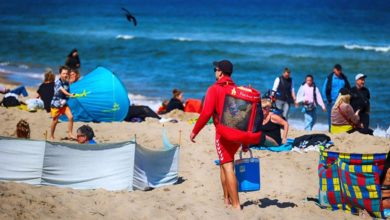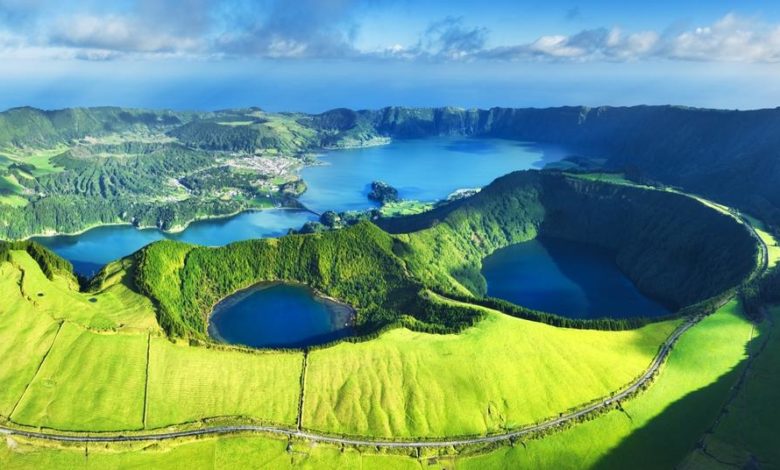
Mass tourism intensifying in Portugal meant that the citizens of this country are increasingly running away from foreign vacationers to the Azores archipelago belonging to this country, located in the Atlantic Ocean. Foreign vacationers, including Poles, also reach there.
According to the data of the Regional Azores government, last year tourists ordered a previously unlisted number of accommodation – over 4.3 million, i.e. by 12.4 percent. more than a year ago. Over 70 percent of them were reserved by Portuguese from the continent.
“I flew on the Azores in March because I wanted to be in my country, but not in the Algarve or in Madeira tourists besieged today, but in a calm place, away from the hustle and bustle and tourists, closer to nature,” Maria Lurdes, a bank from Lisbona, admitted in an interview with PAP.
She added that during a weekly vacation she chose Sao Miguel and Terceira, i.e. the main islands of the archipelago inhabited by around 240,000. people.
Tourists leave record amounts here
The increasing presence of tourists looking for peace is confirmed by representatives of the Regional Tourist Agency in Ponta Delgada, the capital of the archipelago. They estimate that in the last year, thanks to tourists, the local economy collected a record amount of over 200 million euros.
According to Nina Camary, representing the agency, the tourist traffic increasingly increasingly intensifying in Azores also applies to Poles.
“We have seen a constantly increasing number of (Poles) in Azores since the pandemic of Coronavirus. Last year there were over 7,000, which meant a record,” Camara said, adding that this phenomenon also persists this year.
One of the biggest attractions for vacationers going to the Azores is observation of dolphins and whales. Some also decide on divers popular among vacationers.
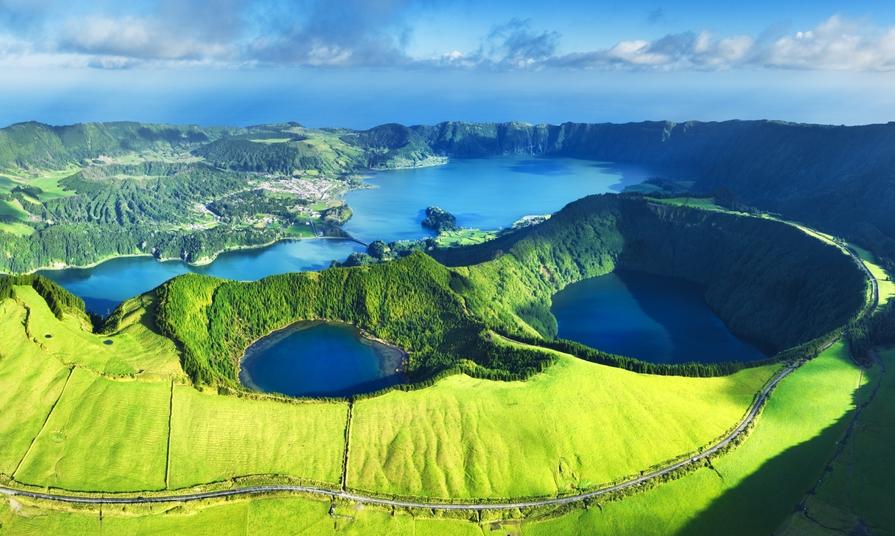
Almost 75 percent Tourists heading for Azores most often choose the main island of the archipelago – Sao Miguel. Furnas, the area of hot sources lying on the crater of the expired volcano, the Caldeira Velha landscape park, famous for thermal pools, as well as the lakes of the volcanic origin of Lagoa do Fogo are particularly popular there.
More demanding tourists are guided during their stay on the island of Sao Miguel to the only tea plantations in Europe or visit greenhouses in which pineapples are grown massively.
Karol Wojtyła visited this archipelago as the only pope in history
Poles may be surprised in Azores with the relationship between the Azora archipelago and Poland.
“I was most surprised by the fact that the main airport of Azores in Ponta Delgada is named after Pope John Paul II,” said Adrian from Warsaw, who was flying with a change in Lisbon to this Atlantic archipelago.
He added that after the first stay on the Portuguese archipelago, as part of traveling with one of the Polish travel agencies, he organized another escapade on Azores himself with a few days stop in the continental Portugal. “Few people know that in 1991, during a pilgrimage after Portugal, John Paul II visited this archipelago as the only pope in history. He was probably one of the most famous personalities who came to these periphery of Europe” – noted the interlocutor of PAP.
On the islands of Sao Miguel and Terceira there are places commemorating the visit of John Paul II in Azors. One of the streets of the Ribeira Grande commune was named after the Pope.
Poles They have been appearing here for decades
The Polish trail is also a monument on the island of Gracios, reminding about the plane crash, in which in 1929 – during a flight over the Atlantic – Major Ludwik Idzikowski was killed. The pioneering attempt to overcome the route from Europe to America ended in a tragedy due to the machine's failure.
As Lena Dias from Ponta Delgada, Poles, though not very numerous, said on the island of Sao Miguel. Usually, she added, as sailors or soldiers.
“My late grandmother told me about her first meeting with a group of Polish officers. As a little girl, she met them at the house of her father, a former diplomat, during the visit they made to him in the summer of 1939. They warned before the outbreak of war,” recalls the dias of her grandmother's relationship.
The Portuguese working as a teacher in one of the primary schools added that nowadays the sight of Poles on the Azora streets is no longer surprising. “We do not lack tourists from Poland today. They come almost every day” – summed up the dias, which runs accommodation for vacationers, including citizens of our country.
Marcin Zatyka (PAP)
Zat/ Szm/ LM/