Work on deregulatory packages is ongoing. Business counts on their efficient intercession, but it still does not expect the first effects to be visible before autumn. Today, entrepreneurs 40 percent They spend their time to complete various types of requirements, and additionally refrain from investments due to the instability of the law. According to entrepreneurs, deregulation is a step in the right direction that will allow money to be shifted in banks to investments and increase the competitiveness of Polish companies.
– The main barriers of development in Poland are excessive regulations, too many regulations and reporting obligations – says Newseria Maciej Witucki, president of the Lewiatan Confederation.
– In recent years, labor costs, availability and energy prices have joined this, but excess regulations have been constant for many years. For example, permits in which instructional terms are not properly observed in a common manner by offices. These are examples where someone wants to invest money, build a new space, a new installation and it suddenly turns out that this process takes a long time, and sometimes it is not known how long it will last at all. These are the reasons why private investments in Poland do not develop as we would like, and actually release for many years.
According to the study of the National Bank of Poland among entrepreneurs in January 2025 36.8 percent surveyed entrepreneurs pointed to readiness to undertake new investments or even specific plans for such. This is clearly more than in the previous two years, but at the same time still less than before Pandemia, when he often reached 40 percent. and more. At the same time, the data of the Polish Economic Institute shows that still 60 percent entrepreneurs declare not taking investment activities, and 44 percent He does not see the need to invest. These are indications by 8 percentage points. lower than the quarter earlier, but still very high. This state of affairs is not the result of a lack of financing.
– Four years ago we were worried that The companies' accounts are unused about PLN 400 billion, today this amount has increased three times. This shows how huge potential is frozen on bank accounts. You could immediately launch investments in the development of better jobs, better technologies, raising this added value. Today, this money is frozen and when we ask entrepreneurs why they do not invest, in most cases the answer is regulations, fear of the changeability of law – indicates Maciej Witucki.
– No business is satisfied with excessive regulations. Of course, there are regulations needed – those that add value, help function, ensure safety and define the frames in which business works more efficiently. But there are also those that are excessive, comfortable only for officials, and for ordinary entrepreneurs – large, small and medium – they become a torment – says Andrzej Dulka, president of the Polish Chamber of Information Technology and Telecommunications.
– Entrepreneurs spend up to 40 percent time just meeting irrational requirements. We want to fight it. We want the potential of the Polish economy to grow, to be more attractive to investors. And regulations are one of those areas that investors look at, considering investing capital in Poland. Entrepreneurs who operate here need healthy, minimal and reasonable regulations.
– Deregulation is particularly important for small and medium -sized entrepreneurs, because these entities have less potential, both organizational and economic, so that in the face of the increasing number of regulations and administrative obligations, they can be able to compete effectively on the market. These entities, when they can work in a more friendly legal environment, will be able to work efficiently and effectively and will be able to focus on their basic tasks, and not sink in the thicket of various barriers, regulations, regulations, which are often difficult to understand – says Tomasz Olszówka, director of the legal andlegissual department at the Office of the SMEs.
February 10 this year Prime Minister Donald Tusk on the Stock Exchange together with the Minister of Finance Andrzej Domański presented the strategy of Poland's development for the coming year. The value of the investment is to amount to PLN 700 billion this year. The plan is based on six pillars: investments in science, energy transformation, modern technologies, ports and rail development, dynamic capital market as well as support and cooperation with business. As part of the latter, a team under the direction of Rafał Brzoska, the creator of InPost, was appointed, who was given the task of preparing a recommendation recommendation that can be quickly introduced.
The government itself is also working on deregulation from the very beginning of its operation. In January last year, he established a deregulation team at the Ministry of Development and Technology, which prepared the first deregulation package. In March, he was adopted by the Council of Ministers, and at the last sitting of the Sejm, MPs sent him to work in committees. For now, business positively assesses the government's activities, although its representatives emphasize that you have to wait for the specific effects of these works.
– The first effects in the form of facilitations functioning on the market should not be expected before autumn – estimates Witold Michałek, vice president of the Business Center Club. – If at the moment the government, even in the first tranche, will be ready after 100 days, i.e. it will be the beginning of July, then there is a holiday break, then the parliament needs 1.5-2 months to apologize in its own structures. Therefore, I think that around October we should see the first effects, I hope that positive.
Rafał Brzoska said that over 13,000 had already been received. proposals of changes, of which 70 percent These are proposals from ordinary citizens, and 30 percent These are deregulatory proposals for business. The team that brings together entrepreneurs distinguished seven areas that are key in terms of simplifications: health, tax law, judiciary, digitization, energy, EU law as well as security and defense. Rafał Brzoska noted that his team wants to submit 300 good proposals by June 1 and asked the Sejm to apologize to the first projects in May.
Maciej Witucki emphasizes that changes are necessary in three areas: digitization, which will simplify the formalities related to the fulfillment and submission of documents, clarity and stability of the regulations, i.e. that the regulations cannot be changed from day to day, so that entrepreneurs can be sure of the appropriate Vacatio Legis when making changes in law, and applying the presumption of taxpayer's innocence in practice, which will reduce investment decisions.
– Deregulation regulations to the extent that they could come true will definitely improve competitiveness, they can certainly be reflected in the organization of the enterprise and the effort that needs to be put into it. This also indirectly will always be reflected in the costs of the activity, and this also translates into competitiveness. Also in situations where entrepreneurs can function more efficiently, they can find time and space to think about their development, about improving how they function to think about the future – says Tomasz Olszówka.
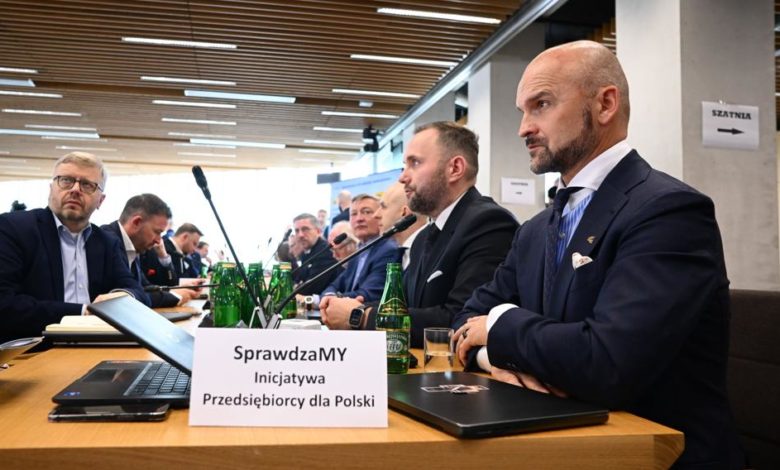
Experts talked about business expectations for deregulation during the debate “DE: regulations. Business needs simple rules”, which was organized on March 31 by Newseria.
The transmission record is available at: https://youtu.be/Mbs4txsa0fu