Thousands of believers and priests participated in the flower pilgrimage in the capital. Patriarch Daniel: A confession of faith in Christ the crucified and resurrected

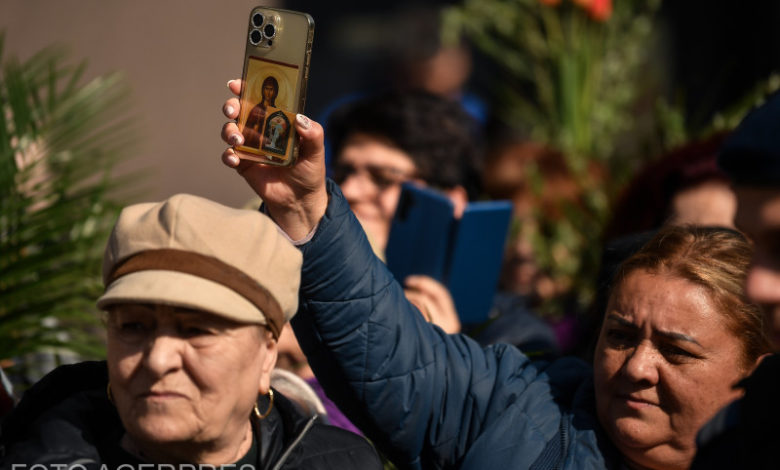
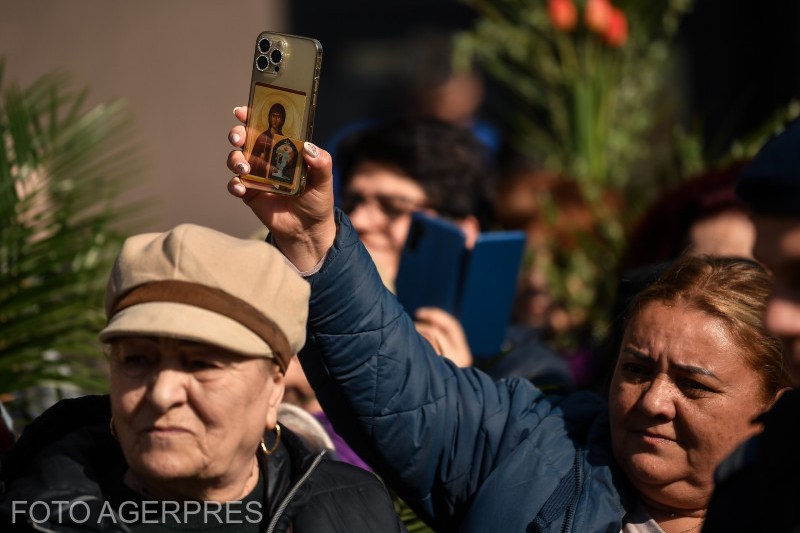
Flower pilgrimage, an event organized by the Archdiocese of Bucharest; departure in procession from the Radu Voda Monastery to the Patriarchal Cathedral. Photo source: Agerpres
Thousands of pilgrims, hierarchs, priests, monks, monks and believers from the capital and from Ilfov county, in front of which the bishop of Bucharest, Timothy Prahovean, participated in the Flower Pilgrimage, organized by the Archdiocese of Bucharest.
The pilgrimage started at the Radu Voda Monastery and took place on the following route: Mărășești Boulevard, Dimitrie Cantemir Boulevard, Unirii Square (East and North side), Sfântul Anton – Old Curtea (First Stop) – Unirii Square (Western side), Brancovea Crucea (Second Stop).
Prior to the start of the pilgrimage, at the Radu Voda Monastery, PS Timothy consecrated the willow and finical branches, which were then offered to the believers, and at the Patriarchal Cathedral, the pilgrims were greeted by the Most Blessed Father Daniel, who sanctified the icon of the Lord's entry and to the Lord's Entry.
The Orthodox, Roman Catholic and Greek-Catholic believers celebrate the Lord's entry into Jerusalem-Flowers.
According to the tradition of the Church, the entry of Jesus Christ into Jerusalem is the only moment in his earthly life in which he accepted to be acclaimed as a emperor. This time, he prepares his entry alone, according to the prophecies of the Old Testament, to be recognized according to the law that it is the Messiah, the Savior of the world. The people welcomes Jesus with branches of finic and olive, shouting: 'Osana! Well the one who comes in the name of the Lord is well spoken. Through these words, people felt that God Himself came into the world to bring her salvation. Entering as a emperor in Jerusalem, Jesus anticipates His near victory over death, as well as the victory of all humanity he carried.
By Flowers, people go to church to sanctify willow branches that they put on windows, doors or gates. In some parts of the country, the inhabitants of the villages warm with the willow branches over the middle. Faith says that this ritual defends them from diseases and makes them more robber. He also defends the house of evil and protects it from unpleasant events.
The willow branches that are divided into the church on the day of Flowers symbolize the finic branches with which the crowds encountered Jesus in Jerusalem.
With the Flower Day, the last week of the Passover Passover begins, called the Passover Week, in which the Christians are preparing to meet the great feast of the Resurrection of the Savior Jesus Christ, who is celebrated together by the Orthodox, Roman Catholic and Greek Catholic believers on April 20.
Flower pilgrimage is a confession of faith in Christ the crucified and resurrected, a blessing for the city and a joy for the pilgrims, the Patriarch of the Romanian Orthodox Church, Daniel, said to the thousands of believers present on Metropolitan Hill, according to Agerpres.
“The pilgrimage of the flowers is a prayer in procession and gathering in the parishes and monasteries, of the clergy and the faithful of the Miren. He is a confession of faith in Christ the crucified and raised, but also a friendship with him, the victor of death. And we ask the Savior Jesus Christ to give peace and joy, health and salvation and blessed holidays to the glory of God and our salvation, “said Patriarch Daniel, in the teaching word addressed to the participants in the pilgrimage.