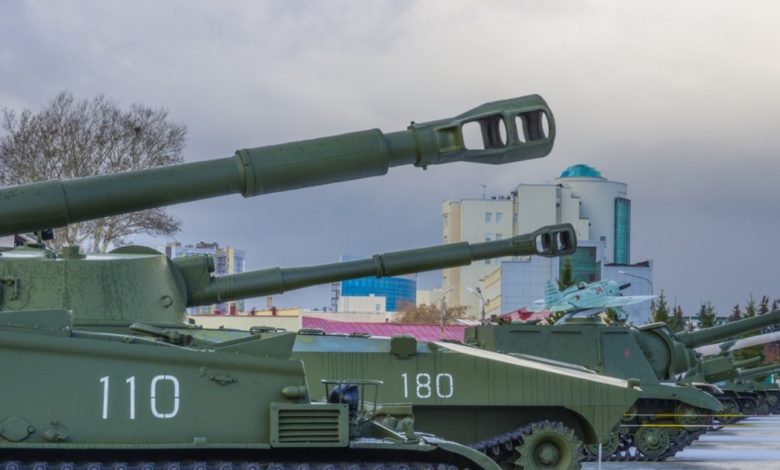
Over three years after the widespread invasion of Ukraine, Russia has not only prevailed by bombing or gross force on the battlefield-but also by unprecedented industrial mobilization.
Russia has managed to grow spectacular Pro/Photo: Archive
While Ukraine tried to restore its military production capacities, and Europe was hindered in bureaucracy and lack of coordination, the Kremlin managed what seemed impossible: to transform a fragile, dependent economy of raw resources, into a well-oiled mechanism.
A recent report by the prestigious British British Think-Tank is an alarm signal: in the case of a lasting conflict, not only the political will matters, but also the ability of a nation to produce successive armament waves and to restore the lost forces. Russia, despite the sanctions and losses on the front, has managed to increase the production of weapons spectacularly – a sustained effort of centralized planning, aggressive funding and working methods that Europe does not allow.
Russia had a plan. Europe – just money and promises
According to Russians, Russia has entered the war with a military-industrial plan already prepared. He mobilized early, used his existing network of factories and quickly directed the necessary resources to the industry. In May 2022, the Russian military-industrial complex included approximately 1,400 companies, largely by the state. By the end of 2023, the number of employees in the defense industry had reached 4.5 million – about 10% of the active population.
For comparison, Ukraine acted quickly, but without a pre-existing plan, resting on the infrastructure inherited from the Soviet period. And Europe, although it abounds in resources and declarative will, had no clear data, no coherent plane of industrial mobilization. The result: fragmented investments, slow deliveries and a chronic inability to produce the equipment required by Ukraine – but also to their own armies.
From five -year -old to forced production
Russia has achieved this performance not only by planning, but also through measures reminiscent of the Soviet period. In 2022, harsh provisions were reintroduced for non -observance of state orders: 12 hours a day, working week of 6 days, giving up public auctions, price regulation and even possible criminal penalties for delaying deliveries.
The financing was directed with priority: state banks, especially PromsvyazBank, have granted favorable interest loans to the companies in the military sector, while civil companies pay double or triple. The Ministry of Industry and Trade coordinates over 900 companies, and large conglomerates such as Rostec reported spectacular income growths – even if the net profit has remained modest, a sign of mass subsidy.
In parallel, funds from “civil” budgets-education, health, infrastructure-were tacitly redirected to the military-industrial complex.
Europe, trapped between regulations and fragmentation
The Russian report emphasizes that, while Russia and Ukraine centralized the defense industry, Europe operates on a decentralized model, in which national governments compete for contracts and have no unitary vision on supply chains.
Safety regulations, test standards, purchase procedures – all, although designed to protect taxpayers and prevent abuse, delay production and increase costs. In the absence of a common mechanism, Europe risks losing the “industrial war”, although it has the necessary human technology, money and resources.
Hidden costs and an uncertain future for Russia
However, the industrial mobilization of the Kremlin comes with a price. Russia allocated almost 40% of the budget for defense, security and information in 2024 – ie about $ 150 billion, a huge burden for a stagnant economy. Massive lending, workforce pressure and technological isolation could seriously affect long -term support capacity.
Even so, the Russian report warns that Russia's advantage is precisely in the ability to produce rapidly, organized and scale. It is, in essence, a hard lesson for Europe, which has to learn to be prepared to discourage an aggressive – and more capable – with less support from the US.