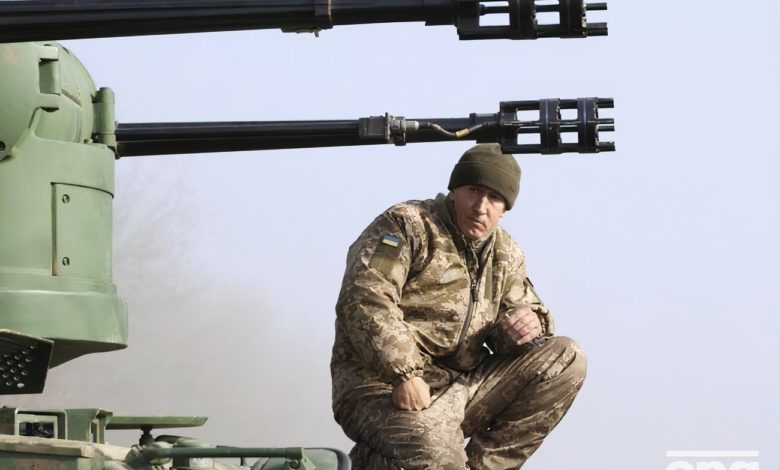
The publication notes that American military assistance is reduced and at a certain moment will completely stop, unless it is resumed by US President Donald Trump. The publication says that the latter looks unlikely. Therefore, supporters believe that the best way to guarantee the safety of Ukraine is to arm it as much as possible, regardless of whether the ceasefire will be reached or not. In this regard, the European Commission stated for Ukraine the “porcupine strategy”, consisting of two parts.
Firstly, Europe will purchase more ammunition and weapons for Ukraine, including air defense missiles. Secondly, it will strengthen the defense industry of Ukraine. According to The Economist, the plan is the brainchild of Kai Kallas, the former Prime Minister of Estonia, who is now the main diplomat of the European Union. She wants to double military assistance to Ukraine this year up to € 40 billion ($ 44 billion).
The arguments in favor of investment in the Ukrainian arms industry are convincing, the newspaper writes. In the Soviet years, Ukraine was a large manufacturer of weapons, but after gaining independence in 1991, this industry disappeared largely. Nevertheless, when three years ago Russia began a full -scale invasion, Ukraine had an engineering base and a prosperous new technological sector that could be reinforced with. The country had a foundation: a strong production sector and many engineering schools and universities, of which people with highly specialized knowledge passed into the defense sector.
According to the former Minister of Defense, heading the Center for Defense Strategies in Kyiv Andrei Zagorodnyuk, since 2022 development has been extremely active. While the purchase of weapons in the West usually takes years, in Ukraine the idea can be embodied in a weapon in the hands of the military in a few months, he noted.
Last year, Ukrainian weapons companies produced sets in the amount of $ 10 billion. This is a three-time growth compared to 2023 and tenfold-compared to 2022, the publication says.
The publication notes that the original plan of Callas fell apart on the European summit on March 20. Some accused her of not doing diplomatic work in order to agree with the leaders in advance. Ultimately, the plan was softened: € 5 billion euros should be spent on ammunition. However, Callas is determined to revive the plan, the article says. “If she fails, Europe will discard the fastest and most effective way for Ukraine to protect itself,” writes The Economist.