Why Neagoe Basarab wanted to teach his son: “Be your master's mind,” and not the other way around. A less common analysis of the presence of wine in Romanian culture

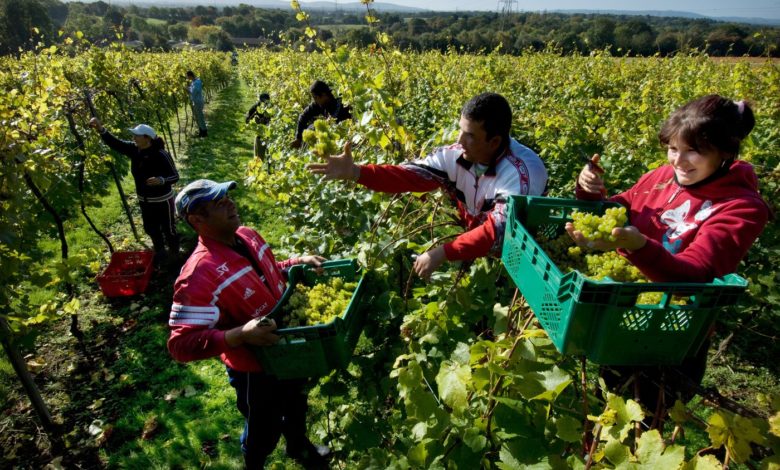
“The Romanian rulers, to our modern sovereigns, had a close relationship with wine, most of them being not only consumers, but also producers,” says, in an interview for the public Hotnews, the literature professor Răzvan Voncu, who recently launched the book “A literary history of wine in Romania”. The author analyzed the relationship of Romanians with this drink throughout history, through the literary works.
- A sad moment of this relationship was in the 19th century when an insect brought from France destroyed most of the Romanian vineyards. The effects are felt today, says the writer.
- “Mihai Eminescu was a great amateur, he knew the culture of the wine and resisted well at Bahite trials, when he spent,” explains Răzvan Voncu.
“This book is not a literary history from a viticular perspective. No history of wine from a literary perspective. But, rather, an anthropological openness (…) To recognize, what would be the wine without a story?”, Writes the author in the introduction of the volume. Răzvan Voncu explained in the interview for the public Hotnews and what Romanian authors were influenced by wine in their work.
– Why a literary history of wine in Romania?
– Răzvan Voncu: Literature is a wide mirror, which “captures” more than the writer intends, from fashionable historical information and from architecture to natural catastrophes.
In relation to what captures unintentionally, literature is a neutral witness, so credible. I am interested in capturing the evolution of wine civilization on our lands not from the perspective of historical documents, but from that of a witness who, naturally, did not have the first target of his observation. At the same time, I tried to write a history of literature which, without giving up the primacy of the aesthetics, looks at art from a thematic perspective.
Neagoe Basarab to his son Theodosie: “Be your master's mind on the wine, and not the wine on your mind”
– Is the wine part of the identity of Romania?
– Of course. I'm not saying it and not just my book. If there are controversy (we belong to the central, the Balkan or the South-East Europe, regarding the civilization, we register a remarkable consensus among the European scientists: Romania is a Latin culture, which belongs to law and always to Europe of wine.
– What is the report of the Romanian literature with wine?
– It is a close ratio and not only in the anecdotal way. Wine is an object with double symbolic, sacred and profane content. As such, it is richly represented throughout the historical extent of the Romanian culture, from ancient times, and until today. The wine provided, so to speak, literary masterpieces and fueled first -sized texts of our culture.
I say – only to give an idea of the size of wine in Romanian culture – a few works marked by the presence of the wine. One of the fundamental advice that Neagoe Basarab gives to the young prince, in “the teachings of Neagoe Basarab to his son Theodosie, is that of measure and lucidity:” Be your master on wine, and not the wine on your mind. ”
The most beautiful goliar song (regarding the medieval poets – n. Red.) From the Romanian literature is the one from “Occisio Gregorii in Moldavia Vodae Tradice Expressa”: entitled “Testamentum bachi”, That is, the “will of Bachus”, this great fragment of ingenuine poetry is built around the ancient myth of the god of wine.
One of the letters of the greatest prose writer of the 19th century, Ion Ghica, Letter XXVII. No. 1. Nicu Bălcescu, narrates the foundation of the “Brotherhood” society – which organized the revolution of 1848 in the Romanian Country – around some bearded must. The Eminescian poem “The shadow of Istrate Dabija-Voievod”, the story “Gura village”, which brought the literary consecration to Ioan Slavici, numerous Bacovian poems, the anthological poem “In vineyard” of Ion Pillat, “Come after me, comrades!”, By Lucian Blaga are just a few of our texts.
We have no one, but several great wine writers, from Mihai Eminescu to Mihail Sadoveanu, from Ion Pillat to B. Fundoianu and from Lucian Blaga to Ștefan Aug. Doinaș.
In this, it consists, in fact, the belonging to Europe of Wine, of which I spoke: not only in production and consumption, but in the culture and civilization created around the vines and wine. An ancient and very beautiful one.
“The Romanian rulers had a close relationship with the wine”
– What is the first appearance of wine from Romanian literature?
– It depends on what content we give the notion of “literature”. The medieval writing, for example, even when practiced in Romanian, does not always (and even rarely) have a direct aesthetic content. If we are to talk about our first modern writers, according to current literary historians – the regret Nicolae Manolescu, Mihai Zamfir -, then we fall to observe that Dosoftei, and Dimitrie Cantemir, and Ion Neculce are writers in the work to which wine is a notable presence.
– Among the writings of you were the historical chronicles. What was the relationship of Romanian rulers with wine?
– Except for those passers -by that Dan Horia Mazilu called “heterodox” (like Ilias Mehmet Turcitul), the Romanian rulers, to our modern sovereigns, had a close relationship with the wine, most of them being not only consumers, but also producers. Some – and I will refer to the case of Constantin Brâncoveanu -, present on the European wine market and with pride (expressed in writing) by large producers of good wine.
A negligent decision of authorities in 1885 influences the wine today

-You note, quoting the writer Pastorel Teodoreanu, that the history of wine must be viewed in two parts. Before and after the phylloxer. What happened at the time of “division”?
– It happened what happened everywhere in Europe, whether the authorities were on the stage and took action or, on the contrary, remained careless. An imported insect from America, with some American wild vines, spread from France to us, attacking the roots of the calf and largely destroying the vineyards.
Imported around 1850, in 1863 it caused the phenomenon known in Hexagon as “drying of vineyards”. Only after five years, the scientist Jules-Émile Planchon discovered the cause-the insect called “Filoxra” -And after another year, in 1869, the remedy was found: the grafting of European vines on American vine roots, immune to the philoxry.
In Romania, Filoxera entered a long time after she knew everything about her and the risk she assumes: in 1877, the botanist Dimitrie Ananescu brought from France, in 1877, a few infested cuttings. In just a few years, the vineyards have practically dried on the entire area cultivated in the country: it is not known exactly how many hectares, as no one was keeping an exact record.
With great delay, the Romanian authorities forbade the imports of cuttings, but the evil had already been done. Only in 1885 was the import of hybrids protected against philoxhera, but at first it was directly producing hybrids, lacking in enological value. Păstorel Teodoreanu designates the year 1885 as the year in which the decline of traditional Romanian viticulture began, assaulted by “strawberry” or “zaibăr” wines, which are not only native, but have no value.
Even today we have not returned completely, there are still thousands of hectares occupied by this bad vine, although the marketing of these varieties of wine is forbidden by law.
At the same time, a few tens of traditional varieties, which have only preserved only in the memories of specialists and, of course, in literature, have disappeared because of the phil. Other ancient varieties have been preserved in nurseries away from the phylexer, but they only returned to a small extent in production.
It was a time when the potential habits of the Romanians changed permanently.
“Wine is a friend of important writers, but not of all”
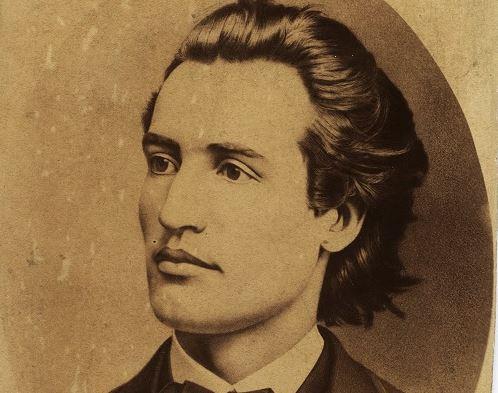
– Is it true that wine is a friend of writers? What was Eminescu's relationship with wine?
– Wine is a friend of important writers, but not of all. Eminescu, if you are still particularly interested, he was a great amateur, he knew the culture of wine (not only the Romanian one, to calm the eagerness of the ultranationalists to paint the poet in the colors of extremism) and resist well at Bahice attempts, when he was spent. But he didn't spend very often, it was rather – as we say today – one workoholic.
To return to the first of the two questions, the rival of Eminescu from the time, a great poet and he, Macedonski, was rather an abstinent. His relationship with wine is a discreet one like personal life.
“If communism had not collapsed, wine culture in Romania would have disappeared completely”
– How does wine culture evolve during the communist period?
-evolves … through a huge and regrettable involution. The nostalgic of that time would do well to remember the long years in which the only wine could be consumed-in one of the largest wine-growing countries! -It was the Bulgarian Merlot, present when and when in the shelves …
It's a very sad topic, I treated it carefully in my book. If communism had not been collapsed, the culture of wine in Romania would have disappeared completely, drowned in “strawberry” type, in horrible spirits and in beer, not once, bad.
– Currently, how do you think the report of the ordinary Romanian?
-The culture of wine returns slowly to Romanians, if it is to take us after statistics and what can be seen empirically in society.
But I point out that the world of wine is a competitive one, and the Romanian state does not show signs (in this area) that it wants to maintain the competitiveness of domestic production.
I am worried about the amount of stupid and cheap wine, imported, which penetrates the internal market, makes me think that even at 18 years after the EU accession we do not occupy a significant place in this market (apart from the internal sale) and last but not least, it is worrying that they are still tolerated on the Romanian market, as well as in the Romanian market. Portugal. Hungary, for example, could provide us with a good example of care for everything that means the local wine culture.
Who is Răzvan Voncu
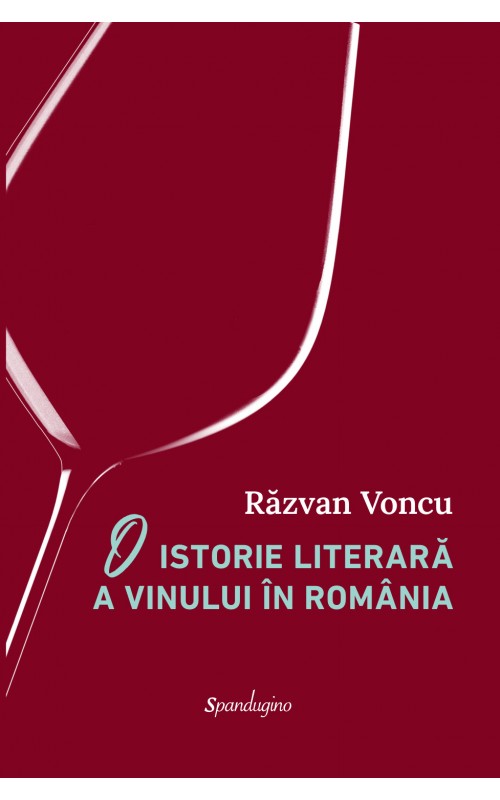
Răzvan Voncu, author of the book “A literary history of wine in Romania”, published in 2024, at Spandugino Publishing House, is a literary critic, university lecturer at the Department of Literary Studies of the Faculty of Letters of the University of Bucharest. He holds the position of editor-in-chief of the magazine “Literary Romania”. Has published over 20 books.