Species that resist drought and frost better than calens and peaches. “We can transform these poor soils into agricultural paradise”

We will eat fewer apricots, cherries, cherries, peaches or nectarins from domestic production this year, the February frost and the Snow April seriously endangering production. The researchers instead have good news about the new species acclimatized in the sandy soils in “Sahara Oltenia”.
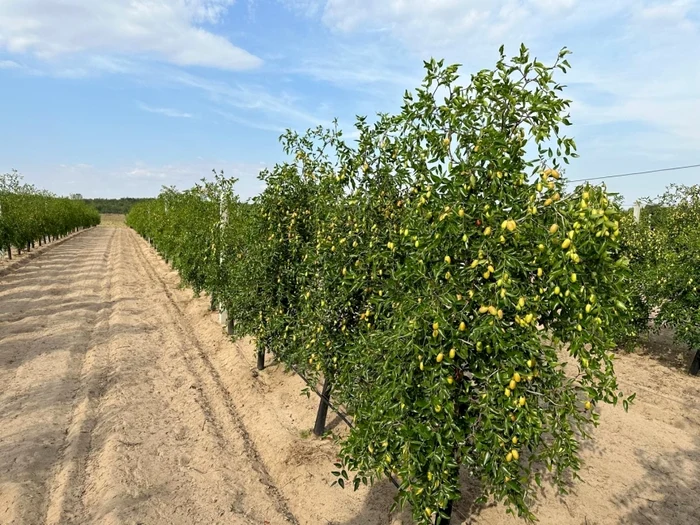
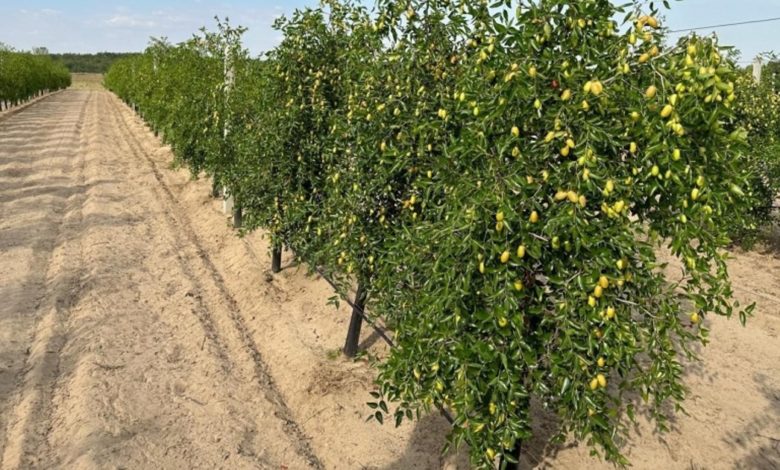
The Chinese curm were adapted to sandy soils in the south of Oltenia: FB/ST. Dăbuleni
The early varieties of apricot, peach, nectarin, cherry or cherry go through heavy trials for years, since we are facing late autumn and winters, but also unexpected episodes coming after the trees have started in vegetation.
At the Research Station for the culture of plants on Dăbuleni sands, in “Sahara Oltenia”, they passed well and very well, both over the cold nights of February, and over this last (hopes) the bursting of winter in April, the species that the researchers have been studying for over 10 years.
“The key word for our cultures is early. That is why in the area and our technologies are the ones that increase the early and farmers go to this measure of early increase ”, explained the director of the Dăbuleni Research Station, Aurelia Diaconu, for “Adevărul”. The strategy was effective until the “climatic accidents” appeared, respectively episodes of consecutive nights with negative temperatures in February, and even in March and April, this after spring in full winter. The gentle winters no longer help the trees, they start early in the vegetation, and the cold surprises them, with disastrous effects. This is how it was decided to test some new species.
From Sahara Oltenia, Pomicol paradise
“Last year I had a very hot February month, exaggeratedly warm, and through the average it was the hottest in the last 50-60 years, (…) was 1.7 degrees below the multiannual average. This tested the fruit species. We rethought, after those episodes 2012-2015, the strategy of fruit growers on sandy soils, we had a debate within the ASAS (Academy of Agricultural Sciences), with several specialists in the field, and we established to try other species. Other species that have the ability to withstand the high temperatures during the summer and negative temperatures in winter ”, continued Dr. Eng. Aurelia Diaconu. This is why from the early species that were novelty in the 1970s (peach, nectarin, flat peaches), it reached Kiwi, Kaki, Chinese Curmal, North Banana, Rodium, Pistachio.
“The North Banana is not an ordinary banana, it is like a mango, an extraordinary taste, it is a little perishable, we have it in the study and along with the others. Detach, such as Ziziphus Jujuba – or Curmal. All the dangers have passed. We say that we can turn them into agricultural paradise, if we cultivate what we need and if we apply the specific technologies ”says the head of Dăbuleni resort.
Other promising shrubs are khaki and the pistachio.
In addition to the Pomicolă section, the resort of Dăbuleni has also become known for the newly cultivated vegetable species, such as sweet potatoes, bales and many more, not to the famous Pepene by Dăbuleni, recognized for its sweetness.
And the medicinal plants have won their place here and proved that they can give value to the sandy soil. At the apricot, peach and almond losses can, on the other hand, exceed 70%.
“I put the almond with the others, I had it in the study. And the early varieties we recommend in the past have been affected in a proportion of 70%. Now, the variety is very important in the species, it determines how it resists at high and low temperature. The late ones will hope that this incidence will be escaped. Two or three days of frost, usually ”Diaconu added.
In Kiwi there are losses at the peaks of growth, instead the curm, which started in the vegetation, had to suffer. “He has come to rest and stays well, until the heat comes.”Diaconu added.
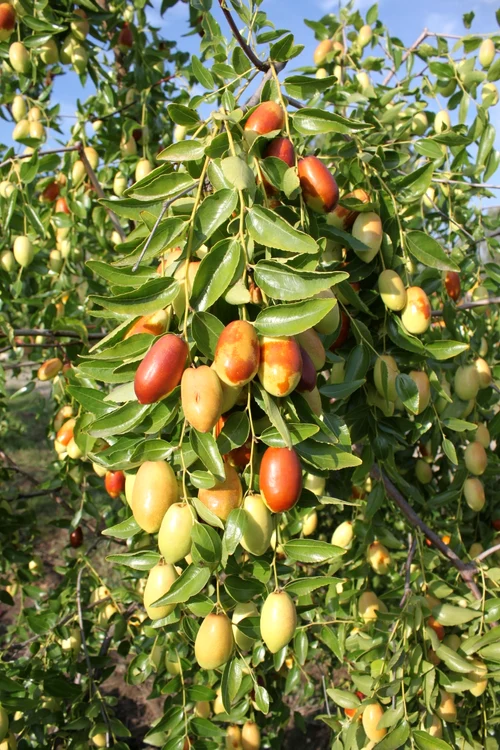
Curmals also resist drought and photo frost: FB/ST. Research Dăbuleni
The news that certain species that we not long ago considered exotic have been acclimatized in the sandy soils in Oltenia has spread throughout the country, and requests now come from all over the country. The representatives of the Dăbuleni resort currently develop a project in collaboration with Babeș-Bolyai University and the University of Veterinary Sciences and Medicine in Cluj Napoca, trying sweet potatoes, peanuts and beans and in other areas of the country.
“They are for the warm area from here, but because in other areas the tendency is to increase temperatures, we intend to analyze the climate and soil and to make some mathematical models of precability. We have some points where we will grow so we see. It does not mean that they cannot be cultivated, but it is the problem of the production potential, or rather, the zoning of the crops. (…) To know that we delivered seeds all over the country. We have a courier system, make us orders by e-mail and we honor them by courier and reach with the technology in the parcel. Wherever the farmers try, it must first be that our results enter several areas of the country, to try each in the garden, in their own garden, to taste them, to taste the neighbors and relatives and then the novelty is propagated. The sweet potato went, we find it anywhere, we find it even in the market in Dăbuleni, on stalls ”, Diaconu added.
The sweet potato has long passed the border of Dolj. “People started to grow for their own consumption and started to grow their farms in their farms. We find, for example, in the county of Călărași sweet potato at the farmer, even in the organic system, and in Mehedinti, and in other areas.
The beans that beat the beans and nasty
Another species that has proven to face the more and more arid summers is the bean. This is not only an important source of protein, but the wishes are incorporated into the soil and helps to improve its quality, by increasing organic carbon.
“If last year, due to the very large burning, under minus 15% relative humidity, the beans, the nasty, did not, effectively, with all irrigation, the bean produced under such conditions. (…) It is a species that is recommended to enter asolar, to ensure the need for organic matter, it is also used in the food of humans and in various fodder recipes, instead of soy that without water does not increase in our conditions. Without much water, because the beans also needs water, but it is resistant, resistant to drought ”explained Eng. Aurelia Diaconu.
The soils in the south of Oltenia can be an important resource of Romanian agriculture, the horticulture rather, said Ing. Aurelia Diaconu, because if they are obtained, and this under irrigation conditions (and irrigation is a problem), maximum 3 tonnes of wheat/ha, in the case of sweet potato, the production is 30 tons, and the top of the I give a production of 3 tons/ha, and the beans – 2.5 tonnes/ha, that is a much better price than the price of wheat.