Donald Trump needs to be careful. The underground city in Greenland is a ticking time bomb

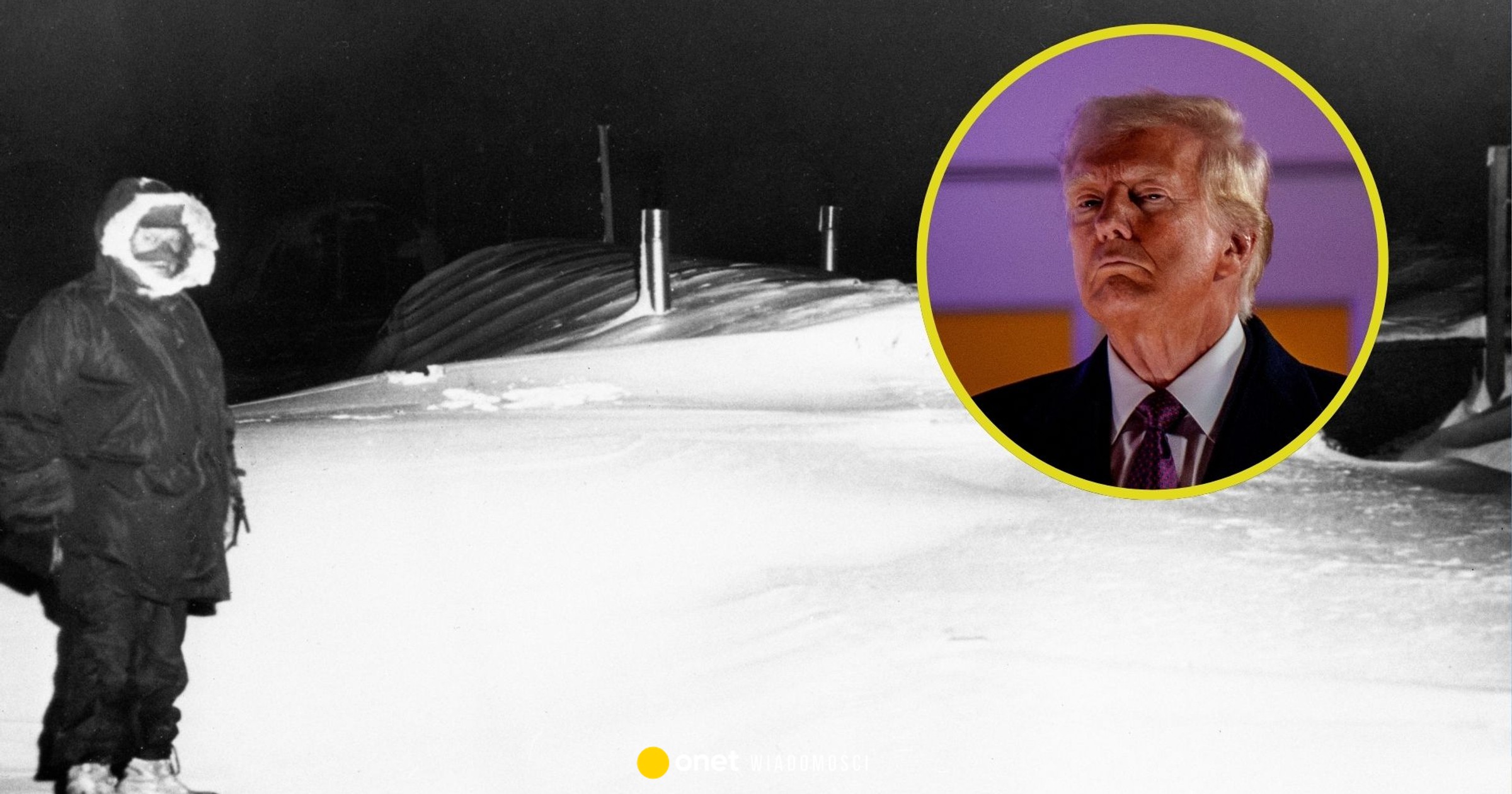
The project, which involved digging a network of tunnels through the Greenland Ice Sheet and was powered by a small nuclear reactor, was deemed unfeasible due to the constantly shifting ice and abandoned in 1967. Although the Americans dismantled the reactor and took the nuclear reaction chamber with them when they departed in 1967, they left behind thousands of tons of waste and debris – including radioactive residue – that will be buried under the cover for eternity ice. But that eternity may come sooner than planned.
As the climate warms, Camp Century — which is located in one of the most remote places on Earth, about 1,500 kilometers north of Nuuk, the capital of Greenland — has become the subject of renewed interest and concern about how long it will remain buried. A groundbreaking study published in 2016 found that the remains of the abandoned base could be exposed by melting ice and snow in the late 21st century.
The unexpected significance of Camp Century
“Our study highlights that Camp Century now has unexpected political significance in light of anthropogenic climate change,” the scientists wrote (though they later revised their findings in 2021 to rule out the base emerging from the ice until at least 2100). The revelations caused a political storm in Greenland, a Danish territory that has been self-governing since 1979.
Greenlandic Foreign Minister Vittus Qujaukitsoq demanded that Denmark take responsibility for cleaning up the rubble of abandoned American military installations in Greenland, of which there are 20 to 30, mostly unused. Greenland, formerly a colony of Denmark, never agreed to accept them.
Nuuk and Copenhagen signed an agreement in 2017 under which approximately USD 30 million was allocated. (PLN 124 million) to clean up debris and waste, but Camp Century was not included in the contract. Greenlanders “fear that [Camp Century] it will pollute the environment when the ice melts,” said Pipaluk Lynge, an MP from Greenland's largest party and chairwoman of the parliament's foreign policy committee.
But it's not just about Camp Century, she added, referring to other abandoned bases. — There are many places where [Amerykanie] they left the landfills,” she told Politico. “The United States has military waste all over the Arctic,” she said.
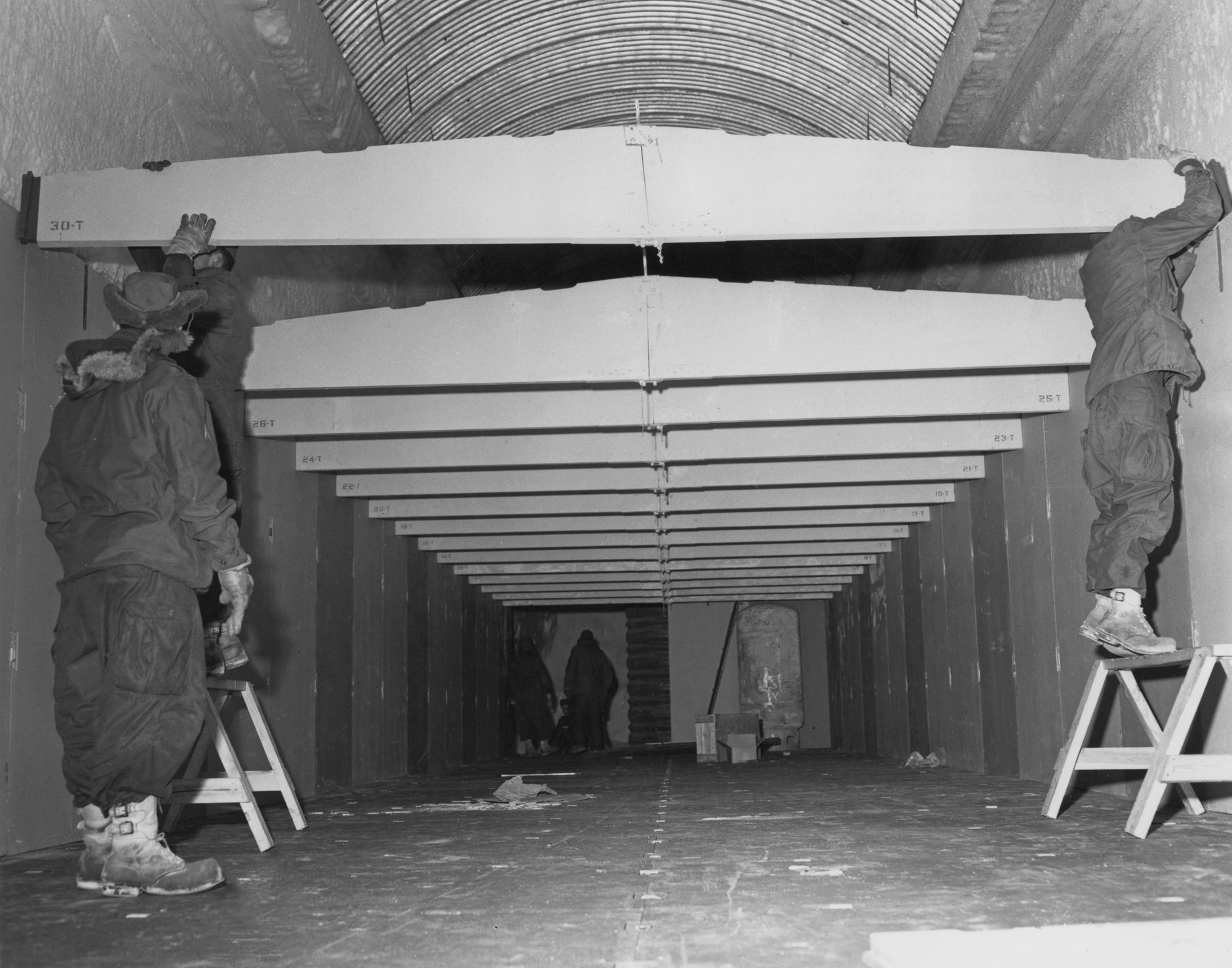
Men from the U.S. Army Polar Research and Development Center constructing the “T5” building in a side trench at Camp Century, a U.S. Arctic military research base in Greenland, June 1959.US Army/Pictorial Parade/Archive Photos/Getty Images/Getty Images
“It's cold, it's deep, don't touch it”
So far, there have been “no attempts” to clean up Camp Century's radioactive and toxic waste, said William Colgan, a professor of glaciology and climate at the Geological Survey of Denmark, who led a 2016 study of the ice surrounding Camp Century.
While Colgan once drilled deep into the site to test for its radioactivity at the request of the Danish health ministry, “there was actually a conscious effort not to drill into the debris field,” he told Politico. “We don't actually know the full nature of what's there,” he added.
Camp Century has been described as an underground city, complete with a chapel, a hair salon, and dorms that once housed hundreds of people. To build it, equipment and supplies were transported through the ice on sleds and tractor trailers from the nearby Pituffik Space Base, the northernmost U.S. military installation in the world that is still active.
In 1961, television legend Walter Cronkite visited a military base in a program on the American broadcaster CBS. His show filmed the digging of Camp Century's massive ice tunnels and showed U.S. Army engineers relaxing in their underground, nuclear-powered barracks, reading and listening to records.
All of this is now buried under thick layers of ice. Colgan said he and his team of investigators were unable to find parts of Camp Century, such as the fuel depot, and were concerned about disturbing it too much. — It's cold, it's deep, don't touch it – warned the glaciologist.
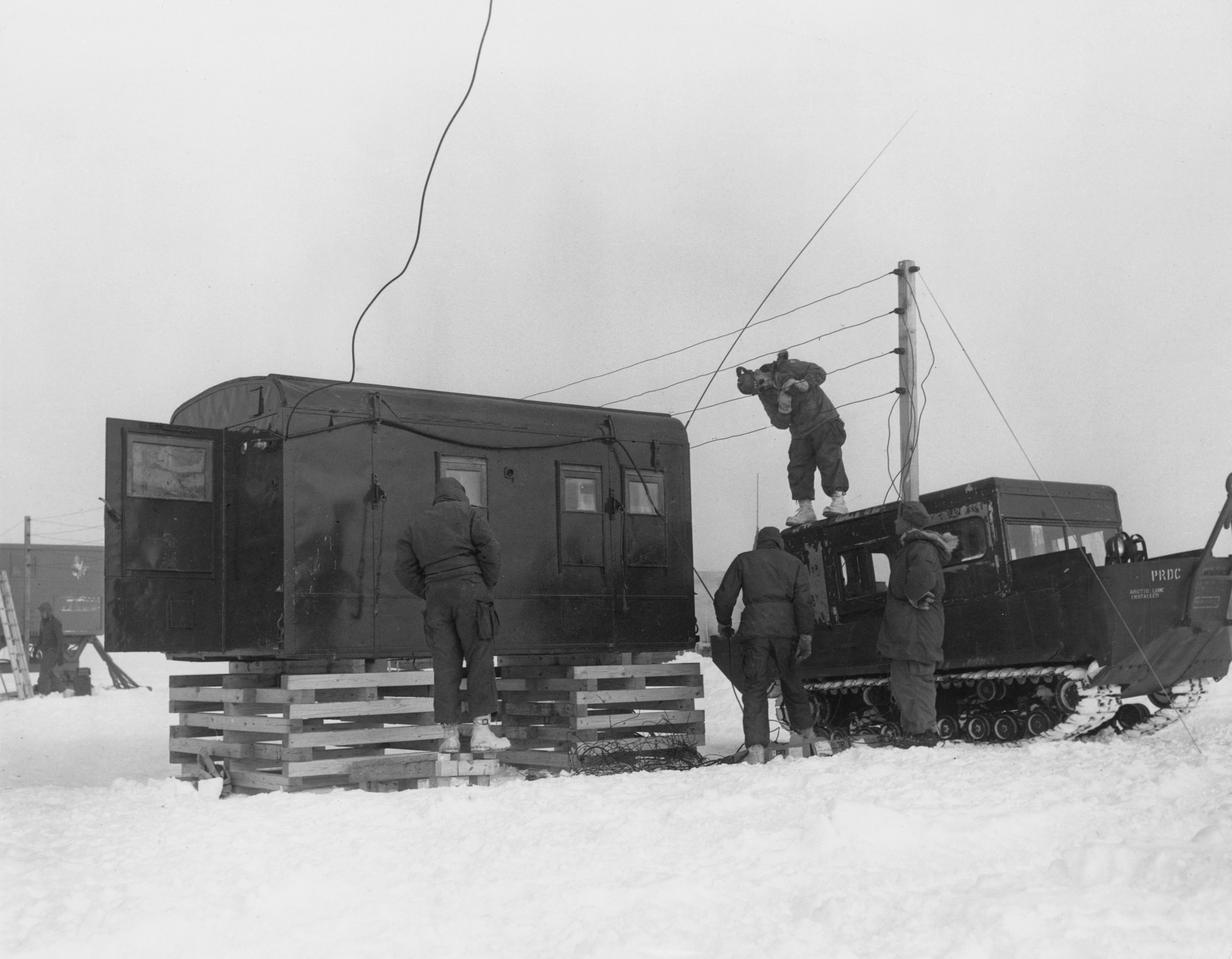
Men from the U.S. Army Polar Research and Development Center setting up communications at a temporary camp used during the construction of Camp Century, Greenland, June 1959.US Army/Pictorial Parade/Archive Photos/Getty Images/Getty Images
Game for two degrees
There are various ways in which Camp Century can pollute the environment. First, melting ice and snow carries toxic waste — as much as 200,000 tonnes, according to Colgan. liters of diesel hidden under the ice – into the ocean. Another is when the ice containing parts of the base breaks off and forms an iceberg. Neither one nor the other scenario is likely this century. The latter would probably take thousands of years.
But the timeline shifts slightly depending on how much the world warms in the coming decades. While there are varying forecasts, a UN report published last October showed the planet would warm by 2.6 to 3.1 degrees Celsius this century, with no chance of limiting temperature increases to the overall 1.5 degrees Celsius target agreed in Paris in 2015. “It's just a few degrees at stake,” Colgan said. — Two or three degrees Celsius is the difference between Camp Century remaining under the ice or… [ten lód] will melt – he explained.
The article continues below the video
The key role of Camp Century
The Camp Century base itself has played a key role in scientists' understanding of climate change. In the 1960s, scientists excavated an ice core there, a frozen soil sample that is still studied today for insight into climate patterns dating back hundreds of thousands of years. The base is of great importance to science, said Colgan, who visits it every year along with many other climate researchers.
If the United States laid claim to the island — as Trump has repeatedly said, calling American control of Greenland “an absolute necessity” and even threatening military force — it would also inherit a legacy of its own Cold War polluting activities. “Camp Century is a microcosm of climate change,” Colgan argued. — Modern people are trying to understand the impact of decisions made 50 or 60 years ago on the climate.
And with the United States now the world's second-largest emitter of planet-warming emissions, Camp Century and its “changing fortunes” are not only a fascinating slice of Cold War curiosities, but also a history of climate action and responsibility today, he added. — It is the decisions we make over the next decade or two that will put us on these trajectories that have centuries-long consequences Colgan warned.