Trump deepens the gap between the rich and the poor. Even JD Vance warns him

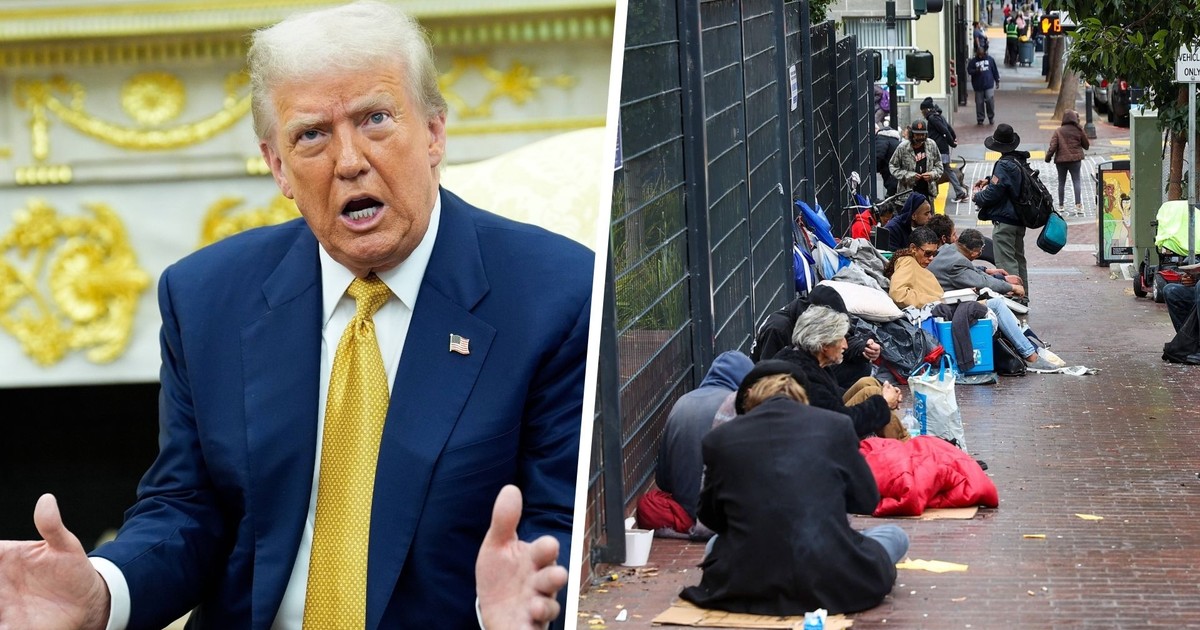
A few years ago, Isaiah Rogers, a 61-year-old lonely father from West Pullman, Illinois, was forced to leave work as a gardener because of vision problems, dizziness and other symptoms, which later turned out to be symptoms of type 2 diabetes. From that time Rogers uses Medicaid to help to pay for visits to doctors and medicines that he lives, ” surface “.
Deep cuts in the Medicaid program as part of the Republican Act One Big Beautiful Bill Act [ang. wielkiej, pięknej ustawy] They pose a serious threat to Rogers and millions of other poor and disabled Americans who are addicted to the government health insurance program. Combined with extensive tax breaks for rich activities, these will deepen the high level of income inequality in the United States. This is bad news for American democracy – and good news for the authoritarian forces that threaten it.
My studies have shown that the greater the disproportion in income between the richest and middle and lower classes in democratic society, the greater the probability that voters will choose the head of the government who will increase their power and violate political norms. Perhaps the most bright example of the highly uneven democracy in the direction of authoritarianism was 2016, when the United States elected President Donald Trump, who attacked the press and threatened to prison with his political opponents.
But the United States is not the only such case. As I show in my new book “The Backsliders” [ang. ci, którzy zeszli na złą drogę]in recent years, about 20 countries, including Hungary, India, Brazil and South Africa, have experienced the erosion of democracy or its regression. Most often, elected presidents and prime ministers extended their enforcement rights, while pushing aside the judicial power, intimidating the press, chasing opponents and disregarding the rule of law.
The greater the economic inequalities in democratic society, the greater the risk of taking power by the auto -citizen. This is because in such a situation people are aware that the growing wave will not lift all boats. The resulting feeling of removing behind can undermine confidence in “elite” institutions. For example, Henry E. Brady and Thomas B. Kent from the University of California in Berkeley combine constantly decreasing in the last half -century trust in American institutions – including the judiciary, congress, press and executive power – with deepening inequality.
A cynical, polarized public opinion plays in favor of potential autocrats. This applies to both right -wing ethnonationalists [którzy uważają, że do narodu należą wyłącznie osoby o tej samej tożsamości etnicznej, a nie te, które mają takie samo obywatelstwo czy kulturę]such as Trump or the Prime Minister of India Narendra Modi, as well as leftist populists, such as Venezuela President Nicolas Maduro or former President of Mexico Andres Manuel Lopez Zbrador (commonly known as AMLO). They all used social dissatisfaction, fueling party misunderstandings and skepticism towards democratic institutions.
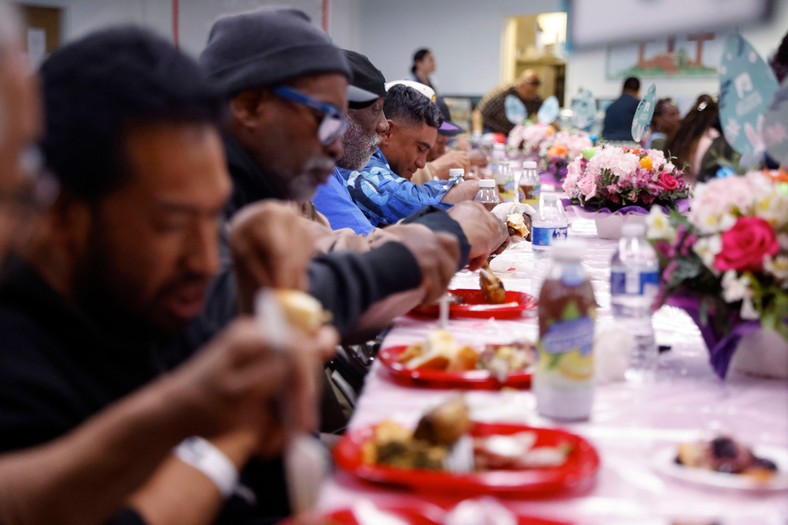
People in the crisis of homelessness eating free meals served by Los Angeles Mission in Los Angeles, USA, March 29, 2024.
Strategic social expenditure
However, although potential coaches can gain voices of the working class and low -income citizens, blaming their political elites, immigrants and interest groups, this strategy becomes less credible when they come to power. That is why many of these leaders – especially those who come from traditional conservative parties – have adopted the policy of redistribution of income and more generous social expenditure.
In India, the Baratija Janata Modi nationalist party, which originally spoke more to Hindus from the upper castes, decided that in order to win the election, she must broaden his support among Hindus from the lower castes and low income. Thus, despite the fact that Modi doubled efforts to Hindu nationalism and Islamophobia, he implemented a large -scale social assistance programs, from the construction of latrines to the distribution of fuels for cooking. Also in right Europe, ethnonatitators withdrew from the orthodox idea of a small government, which has long characterized conservative parties.
It is less surprising that leftist populists also combined the policy for the poor with actions aimed at weakening democratic rule. During his term of office as the president of Mexico in 2018-2024, Amlo increased the minimum wage and pension, while strengthening his power through attacks on the press, judiciary and an independent body supervising the election in this country.
Trump, however, took a different path, using populist rhetoric and constantly deepening the gap between the rich and the poor. Outstanding personalities of the Maga (Make America Great Again) movement, including JD Vance Vice PresidentMissouri senator Josh Hawley and the longtime ally of Trump Steve Bannon, warn that supporters of the President from the Workers' class may lose illusions. Although Trump has so far maintained his support thanks to the brutal repression of immigrants, focusing on law and order, and other tactics of a strong hand, deepening the unevenness that fueled his growth, can accelerate his falling out of the magician of the magician.
A chance and duty for democrats
In the meantime, Democrats should use the upcoming increase in unevenness as an opportunity to re -define their message, promoting a policy supporting the working class and improving price availability. The party must take into account the acquisition of it through corporations and the group of financial interests – this is the fate that has also met many leftist and centro -mediocre parties in Europe.
Even if Trump manages to divert attention from the upcoming consequences of his budget law and avoid the anger of their supporters in the face of growing unevenness, the democratic party must use the new budget – which takes the poor to give the rich – to rebuild its political platform. This platform must focus on politics, which actually serves the interests of the middle and workers' class and fights income inequalities in their sources. Social democracy can be the last chance to stop the growing authoritarianism.
**
Susan Stokes is a professor of political sciences at the Chicago University and director of the Chicago Center on Democracy [Chicagowskiego Centrum Demokracji] and the author of the books. The latest is “The Backsliders: Why Leaders Undermine Their Own Democracies” (Princeton University Press, 2025), or “returning to the wrong path: why leaders undermine their own democracies”.