“Nostalgici interview will always exist. It is good that this year the history of communism will be mandatory in high school”. How was the real life of adolescent in communism


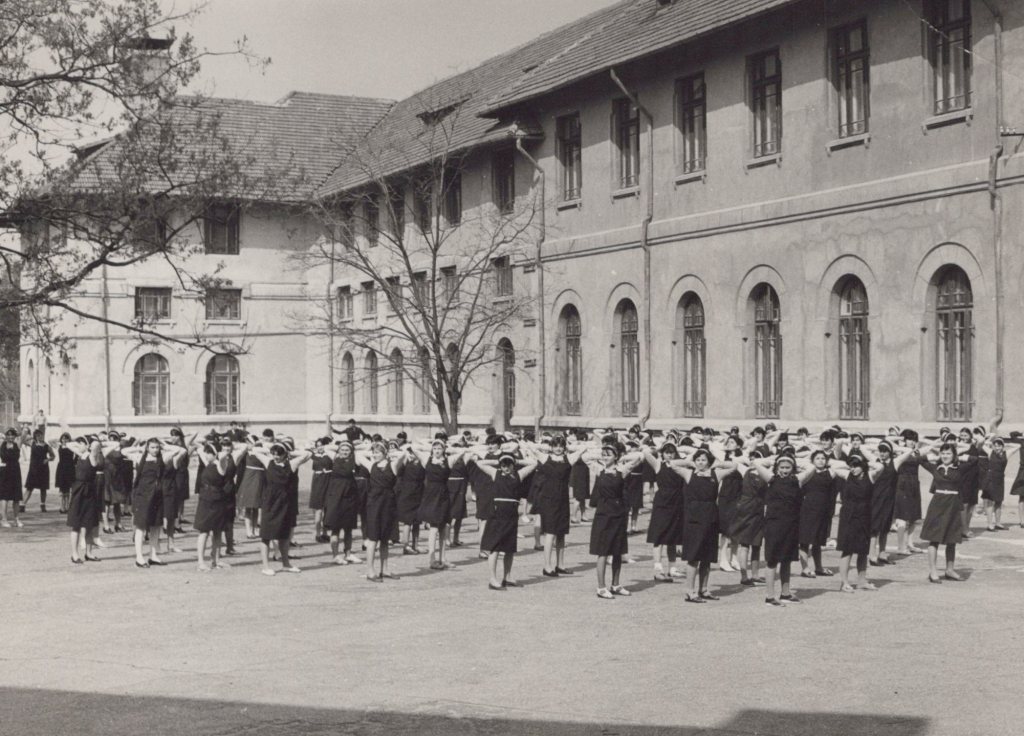
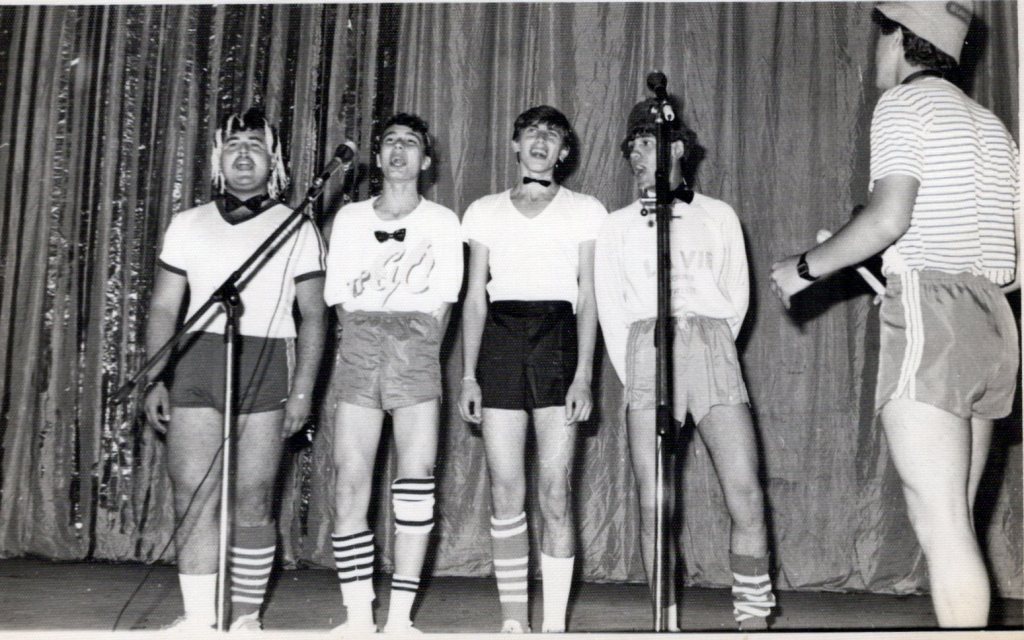
What did adolescence look like in a Romania where the shelves were empty, and the fear was ubiquitous? How did the young people of the 1970s live their great emotions in a regime that controls school, music, books and even friendships? The project “Adolescent in communism”, part of the initiative The Museum of Memorytries to answer these questions through an extensive approach of oral history and beyond. Smaranda Pasnicu, the co-founder of the project, explains for the public Hotnews why young people need more about communism than they can read in history books.
- A 2024 survey shows that 41% of young people between the ages of 18 and 34 believe that a totalitarian regime would be good for their country, according to the research by Globsec.
Smaranda Pasnicu, co-founders of the Museum of Memory and Cultural Point NGO, tells for Hotnews how the idea of the “teenage in communism” project was born and how we can talk to young people about this period, which many know only from textbooks and sometimes from the fragmentary memories of parents or grandparents.
– What determined to start the project “Adolescent in communism”?
– Smaranda Pasnicu: The Museum of Memory is a cultural project, which promotes immaterial heritage, with an emphasis on lived history. There are many family stories that are interwoven with remarkable historical facts, which otherwise we did not get to know or lose. Since the beginning of the project, we have established that we will approach different key points in the history of Romania, as entry points in oral history, which we can use and promote.
The theme “Adolescent in communism” has been built on this line. We wanted to start a study on communism, but we wanted to find an approach that is in the sense of young people and of interest to them. I chose adolescence, a key moment of transition marked by strong emotions and I looked for a narrative line to unite the teenagers since then. I started more than 2 years ago and divided the research into three chapters, starting with the late 60's and ending with the Revolution.
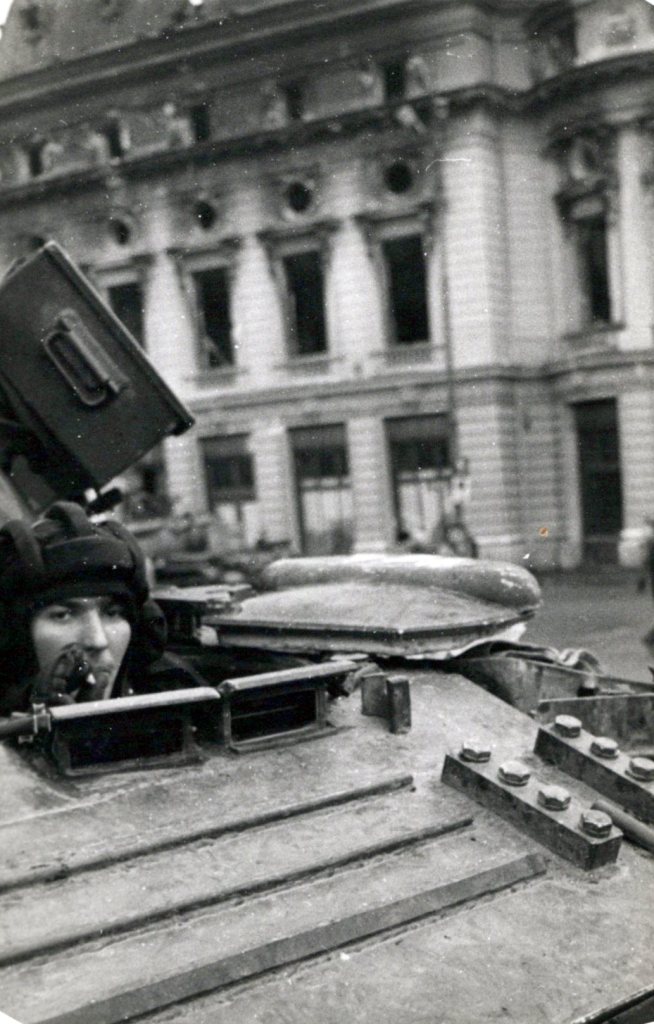
“I relive the revolution through the eyes of those who were directly in the street – a shot, others in the army”
– CIs it types of materials and testimonies you have collected to play the experience of teenagers during the communist period? I know you have a video testimony from 1989, a mini-documentary that has not been presented so far in the country.
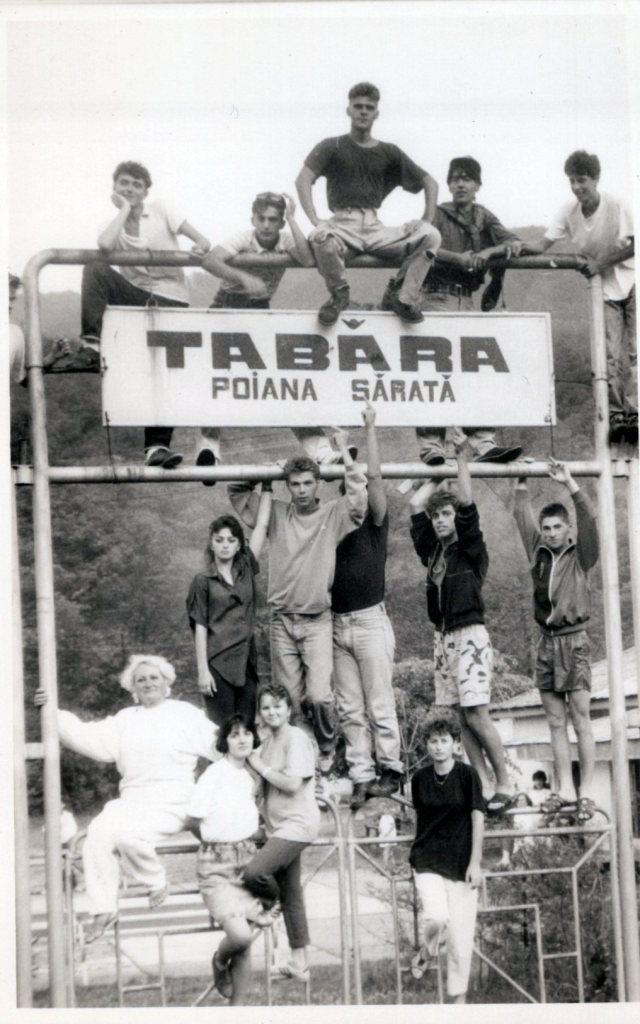
– All our research starts on the field by conducting interviews, searching in specialized archives, in antique shops, museums or collectors. We have an interview guide that we adapt according to the theme to find out more about the lives of those people (such as childhood, how they were having fun, how they were at school, what books they were reading, what music they listened to, etc.), and the discussion is then outlined as the interview is advancing, depending on the story.
In this last stage of our project (we had 3 stages – the first about the late 60s and the 70's, the second about the mid -70s, including the 1987 earthquake and the early 80s, and the final one addresses the end of the 80s and the Revolution) I had 35 profound interviews, through which I traveled in time to understand what they lived. In addition to interviews, images, research in the newspapers of the time, we are also looking for unique materials and we are glad that we were able to convey a video testimony filmed in December 1989, before the Revolution, with the Hidden Camera. The material has over 1 hour in the gross form and I decided with its author, Alex Petre, to make a 15 -minute edit to make it easier to travel.
– What were the most surprising or exciting discoveries in the research for this project?
– At the Museum of Memory, we have always searched for bridges between generations, to find out more about what they defined, the values in which they believe and the experiences they had. The same thing I felt here, speaking with the generations born between the 50s and '75, which were born and formed in another regime, which we see today so far and different. I have always believed that adolescence is universal from the point of view of experiences, although the context always differs.
What we were very pleased was the opening of people to share their stories, following online calls, allowing us to discover the past full of challenges. The result was truly exciting, because I relived the revolution through the eyes of those who were directly into the street – a shot, others in the army, waiting with fear to be sent on the street.
– What impact did the project have on the public and what reactions did you receive from “visitors”?
– Through the Memory Museum project we try to present things as they are transmitted to us. We really put them in context and provide historical information for those interested. However, reactions are very different, especially in social media. We had the most powerful ones with the launch of the mini-documentary who took us by surprise, rapidly. The fact that he created so much debate to do it even more viral and came to travel on various channels.
It was surprising to us to be told that the film is made with artificial intelligence, because “Alex Petre's hat” flies, or that he uses certain words that were not used at that time.
On the other hand, when we do not agree with one thing, we notice that now we say that “it is not true” or that “it is a false”. We did not comment on these statements at all, because our role is not this. We want to keep the past and not forget it, whether it was a good one or one that made us suffer. We believe that everyone is free to draw what conclusions he wants, pursuing our materials, and not to agree with them.
We address in particular the young generations and we want to make them curious, to seek beyond history books and to return to the history of our own family to understand it better.
“Nostalgic people after certain periods will always exist”
– By the way, one Recent Inscop survey shows that 66% of Romanians He believes that Ceausescu was a good leader. What explanation do you have for this perception?
– We started research on communism more than two years ago, and what I noticed is how hard you find information about life, gathered in a place, from different perspectives. I also noticed in our projects, that the family does not discuss enough about the past. There are sensitive topics that are ignored.
To inform you remains one of the most important “tools” you have available, especially as a young man, nowadays. The speed with which the information circulates today requires an information as fast.
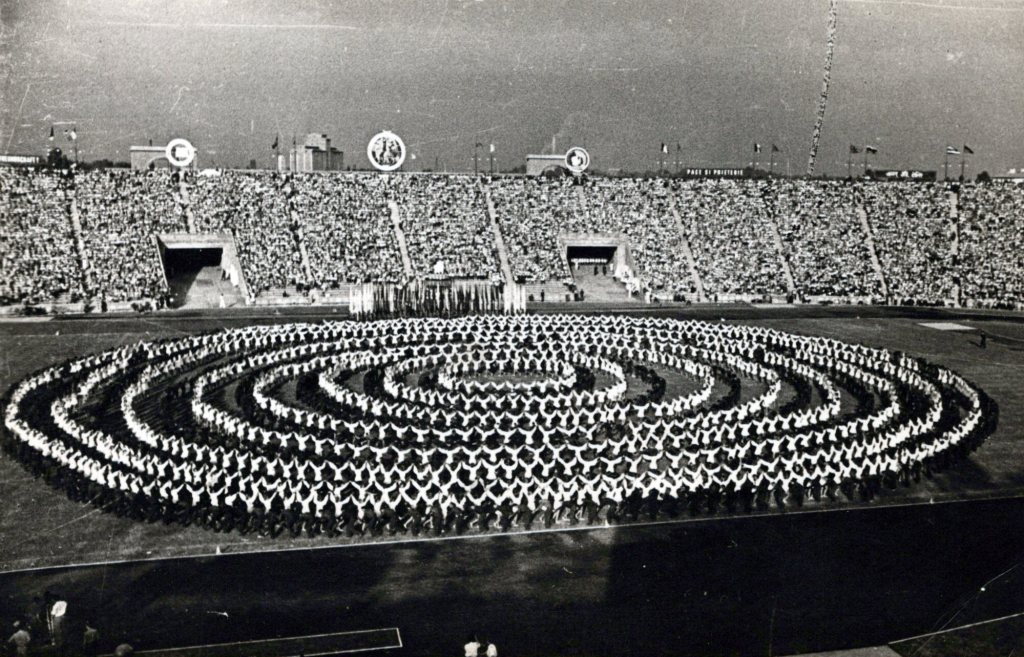
– Do you think there is an idealization of the communist past among young generations? If so, what factors contribute to this phenomenon? I think here about Another survey showing that 40% of young people would prefer a dictatorship.
– Each generation passes through a tumult defined by the context in which it is formed. It is difficult for him to relate to other generations and understand the back mechanisms that have shaped and defined them. We are living anchored today, considering that we are the hardest thing for us and that we are difficult to understand, given the context in which we live.
By information, we can detach ourselves from the present moment to look back, what it was, and to look forward, what we want to build and promote, not only as individuals, but as a generation. Nostalgic people after certain periods will always exist, especially if they are associated with a beautiful period of their lives.
We, with our filters, can critically decide on what information to trust or not. Considering that this year the history of communism will also be compulsory subject in high school, we may find new critical tools to analyze the historical periods.
– Can museum education fight myths and misinformation related to the communist regime? I also think about the fact that Romania does not yet have a museum of communism.
– There are some projects dedicated to communism, especially independent, who are struggling to survive. For example, the Museum of Memories of Communism is still looking for a new house and was one of the most visited museums in Brasov. Interest is certainly for them.
And it could really contribute to museum education to contribute to the creation of an overview of communism. But here the message must be adapted to your audience, by interactive, modern means. We have installations in the country every year, in direct connection with various communities. Now we have a memory phone, an old disk phone, retehologized, which “speaks” and contains fragments from the testimonies collected in Bucharest in Mnir, Brașov, Buzău, Târgoviște, Brăila and Târgu Mureș, in the Cărturești bookstore and at KF Arad.
In addition we have a power station, a more complex chest with several messages, at the Embassy in Timisoara and at the Dorian Gray Bookstore in Constanța. Again, we hope we can achieve a physical exhibition, multimedia, with everything we have gathered in the research years, using technology as a means of communication.
– Do you think that Romania is ready to face its true communist history? This is also in the context of the reactions aroused by Ion Iliescu's death.
-As I said before, the nostalgics will always exist because they associate certain periods with times when they were best. We should not judge them for this, just as those who see things differently should not judge them. Today we have the freedom to express ourselves, and this is a very important thing.
The truth about communism has been among us for a long time, only that we choose or not to see it. As an independent project, we can provide information based on authentic experiences and contribute to the development of critical thinking, especially among new generations.
“Adolescents from communism could distinguish the reality of propaganda”
– What lessons can we learn from the experiences of adolescents during the communist period and how can we apply them in today's society? How can the project “Adolescent in communism” contribute to a deeper understanding of Romania's recent history?
– Adolescents from communism were informed as much as they could from the sources that were allowed then and which they had available and could distinguish the reality of propaganda. We want the project “Adolescent in communism” to be taken as such, as a research on how different generations have lived their adolescence, with everything that meant. All that is written is real and lived, we did not intervene at all and tried as much as possible to have a neutral tone to allow each one to draw what conclusions he wants. We hope to attract readers on our pages and make them more curious to go into their own family and discover other testimonies.
– If you were to send a single message to today's teenagers about life under communism, what would that be?
– To go home and ask how it was. To go to history time and talk to teachers about communism and what they were told at home. They will definitely receive many answers that they will then be able to analyze with their own critical spirit.