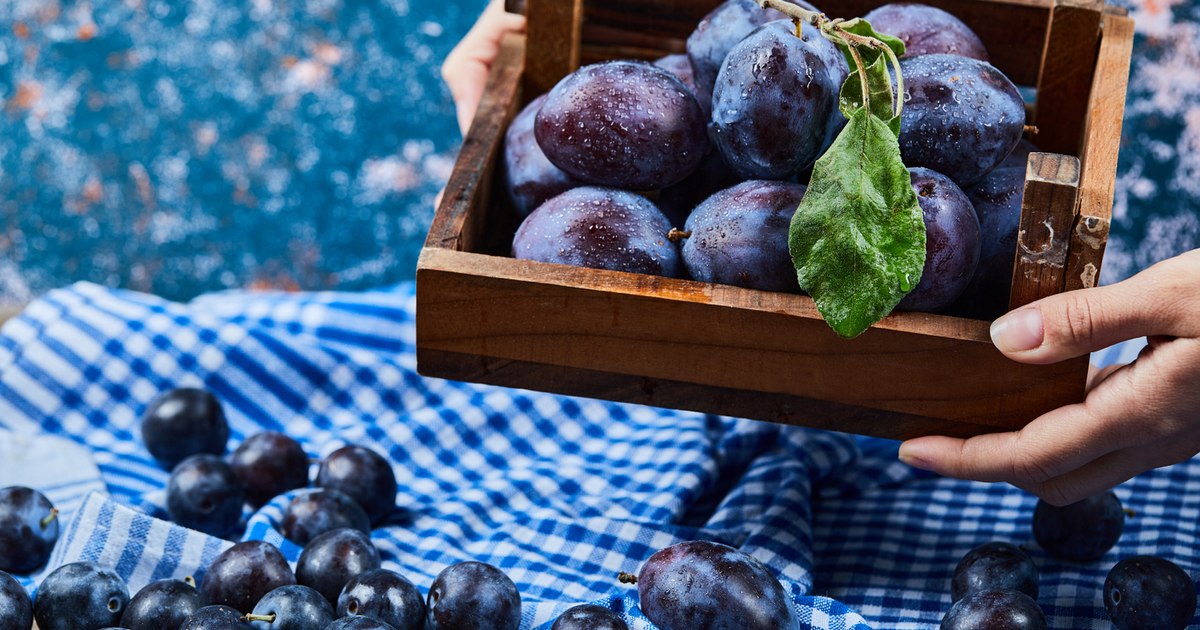
Romania is one of the largest plum producers in the world, but fruits, although rich in vitamins, antioxidants and fiber, have been used since ancient times especially for the manufacture of alcoholic beverages. Recent studies show their real health benefits.
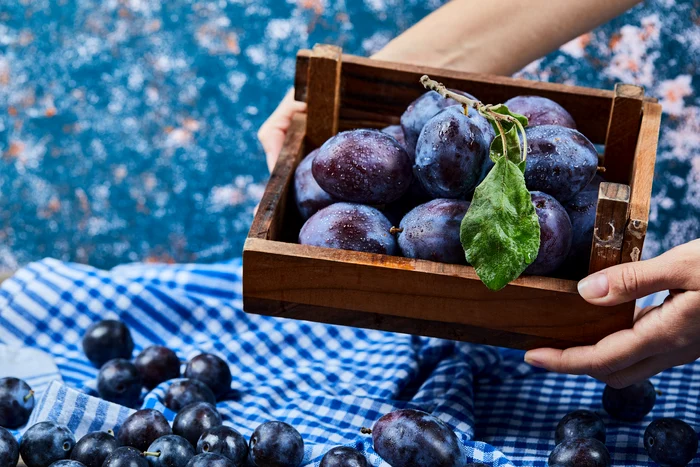
Plums are extremely healthy. Source: freepik.com
Romanians have a long tradition of plum cultivation, a little pretentious and well -adapted fruity variety in hilly and sub -Carpathian areas.
The plums and their “relatives” have been used mainly for alcoholic beverages such as rachis and pike, while sometimes their nutritional and health value has been passed in the second or neglected plane.
The high production of plum orchards and their perishability has made the Romanians often reserve them. Many Romanians were also convinced of the benefits of consuming plums, raw, preserved or dried.
The plum, brother with the Romanian from ancient times
The plums have been cultivated on the current territory of Romania since ancient times, and in the Middle Ages the testimonies about the orchards in the Romanian countries and Transylvania have multiplied.
“The plums, the pigeon heart, are so many that they resemble a sea that flows. The plums are of various colors and varieties: white, yellow, red, rust and are very tasty. The cherries, with red fruits, are so many that they look like forests. There are wonderful varieties.” The note Paul de Aleppo, the archdeacon of Antioch, describing the orchards of the monasteries in Iasi in the middle of the seventeenth century.
During the same period, the city of Oradia was famous for its plum orchards, as Evlya Celebi, another famous scholar of the seventeenth century. In the following centuries, the cultivation of plums in the Romanian lands has become a recognized tradition, as well as the preparations obtained from fruits. The rachis were among the favorite drinks of the locals, a fact noted by many foreign travelers.
“The mountain is learned with a sober life. Its food is composed of milk, vegetables, a little meat, dry and salty, called a pastrama. Its drink is the rachi, a kind of spirit, extracted from plums; it does not like the wine. He immediately runs at Rachiu and “a thousand and one of cures” of the village witchcraft, and, therefore, at a thousand and one of dry spells “, wrote the scholar Theodore Margot after visiting Oltenia, in the 19th century.
Ţuica, the vice of many Romanians
Moldovans used to drink wine and, above all, a rachis to deceive hunger, observed scholar Eugene Leger, at the same era. In the Transylvanian cities, the Ţuica was often the drink that made the spirits.
“Most quarrels at this fair (no Sibiu) were born between Romanians, who, still in the morning, tasted from the rachiu and came to break the heads of each other”, reported Austrian Topographer Joseph Adalbert Krickel after a trip to the Transylvania of the 19th century.
At the same time, the Romanian Country was famous for the extended orchards of plums, whose fruits were used in the production of drinks and sweets, but also raw or dried.
“The Romanian peasants like the game very much, and above all, the plum racks, which I do great”recorded, at the beginning of the 19th century, FG Laurecon's scholar, who lived for 12 years in the Romanian Country.
Romania in the top of plum producers
In the twentieth century, the European plum and Subspecia SA, Corcodușul, remained traditional species of fruit trees cultivated in Romania, shows a study published by the International Horticultural Sciences Society, an independent organization of the specialists in the field.
“Romania was, in the last century, one of the largest plum producers in the world, with productions between 962,000 tons in 1969 and 252,200 tonnes in 1995”, mentions the study.
In the first part of the 20th century, the culture in Romania was based on local varieties, and up to 85% of plum production was intended for alcohol. Authorities frequently attracted the attention of Romanians about how they used plums and asked them not to waste them in making alcohol.
“A fact that leaves it to be desired is that, in many places, plums are not used in something other than the manufacture of tufts, that alcoholic beverage so harmful to the health and the mind of man. And thus, this fruit, whose value is of the highest, does not reach the true purpose, but to play, on the contrary. Note Flacăra magazine in 1984.
The culture of the plum in decline in the 90s
In the last decades of the last century, the uses have diversified: fresh consumption, dehydration, jam or jam, but alcohol production has remained significant, representing at least one third of the total harvest, notes the study published by the International Society of Horticultural Sciences.
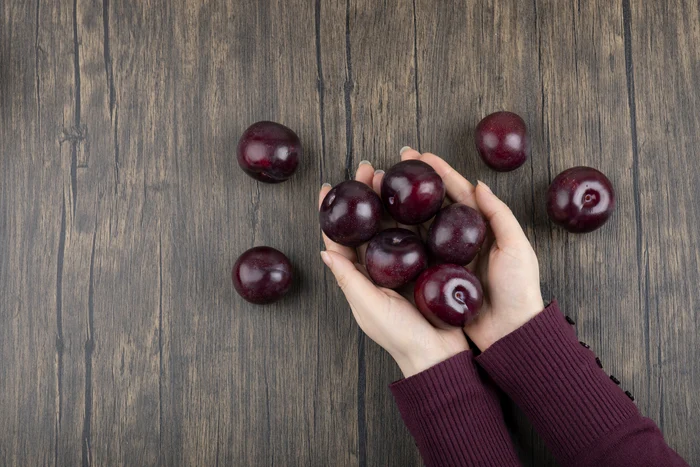
Plum. Photo: freepik.com
“After 1990, the culture of the plum in Romania suffered a major decline, against the backdrop of the land from the state farms and cooperatives to the initial owners. Many orchards were cleared, others abandoned, and the establishment of new plum plantations was sporadic. shows the same research from 2010.
The situation of plum crops has improved in the last decade, even though the last years has reached a slight decline, the data of the National Institute of Statistics shows. If in 1990, the Romanian plum production amounted to about 450,000 tonnes annually, in 2024 it had reached 612,000 tons. In 2003, the most prolific in the last 30 years, over 900,000 tonnes of plums have occurred in Romania, and in 2018, over 860,000 tonnes.
The number of plums in Romania is currently estimated in 3.5 million trees, with one million fewer than in the early 1990s, and their cultivation area amounts to about 65,000 hectares.
Romania, the country of the plums
Although the cultivated surfaces have decreased in recent decades, Romania has remained one of the main plum countries in the world (2023), according to the World Population Review (WPR), an independent statistics and demographic data founded in 2011, which uses official sources (UN, World Bank, US Census Bureau, Pew Research Center, etc.).
According to WPR data, after China – the largest plum producer in the world, with almost seven million tonnes annually – Romania divides the second place with Serbia, each having a production of about 700,000 tonnes per year.
“The plums have a cultural and historical significance in Romania, which is why Plums represent about 45 percent of the total fruit trees of the country. Romania currently produces about half a million tonnes of prunes.”shows WPR.
Plums, source of vitamins and minerals of autumn
Over time, the most popular use of plums has been in the production of alcoholic beverages, but the juicy fruits of the early autumn have been appreciated in the diet.
Plums, dried or raw, are recommended by specialists for health benefits. They are rich in nutrients, fiber and antioxidants, effective in improving constipation, can support blood sugar and heart and bone health, being easy to consume, says nutritionist Jerlyn Jones, in an article recently published on Healthline.com health website.
According to the specialist, dried plums and plums have an impressive nutrient content. They provide over 15 different vitamins and minerals, in addition to fiber and antioxidants. In addition, they have relatively few calories, but they contain a significant amount of important vitamins and minerals.
“A plum, on average, has about 30 calories, 7.52 g of carbohydrates, 0.92 g of fiber and 6.55 g of sugars. In addition, it provides 7–10% of the recommended daily dose (DZR) of vitamin C, 1.2–1.6% of Vitamin A DZR and 3.5–4.7% of Vitamin K. Manganese, phosphorus and magnesium, ”the health site shows.
Anti-constipation remedies
Plums and plum juice are well known for their ability to improve constipation, due to the high fiber content. They also contain sorbitol – a sugar alcohol with natural laxative effects.
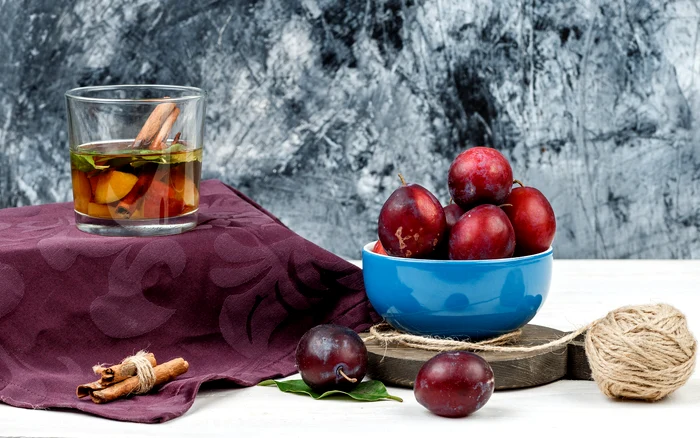
Plums have numerous intuitions. Photo: freepik.com
“It is important to note that too high plum consumption can have unpleasant effects, such as diarrhea”notes the nutrition specialist.
Dried plums and plums are rich in polyphenolic antioxidants, which can reduce inflammation and risk of several chronic diseases. They are also a good source of fiber, which contributes to maintaining blood sugar and can increase adiponectin levels, a hormone with an important role in regulating blood sugar.
Plums can also be beneficial for bone health. According to the Healthline website, some research has associated their consumption with a lower risk of bone disorders such as osteoporosis and osteopenia, characterized by low bone density.
“Not only can plums prevent bone mass loss, but there are indications that it could even reverse the loss already installed. For now, it is not fully clear why plums have these positive effects. However, their content of antioxidants and the ability to reduce inflammation seems to play an important role. Plus, plums contain several vitamins and minerals with protective effect, such as vitamin K, phosphorus, magnesium and potassium ”, shows the nutritionist.
Plums, versatile foods
Although studies on the effects of plums on bone health are still limited, the results obtained so far on human subjects are promising.
Regular consumption of dried plums and plums can also have a protective effect on heart health.
“They have been studied for their potential to reduce blood pressure and cholesterol levels – major risk factors for cardiovascular diseases. The positive effects of plums and dried plums are most likely due to their high fiber, potassium and antioxidants.”explains the specialist.
Dried plums and plums are easy to include in the diet. They can be consumed in various forms and fit in numerous recipes, concludes Jerlyn Jones, a specialist in integrative nutrition.