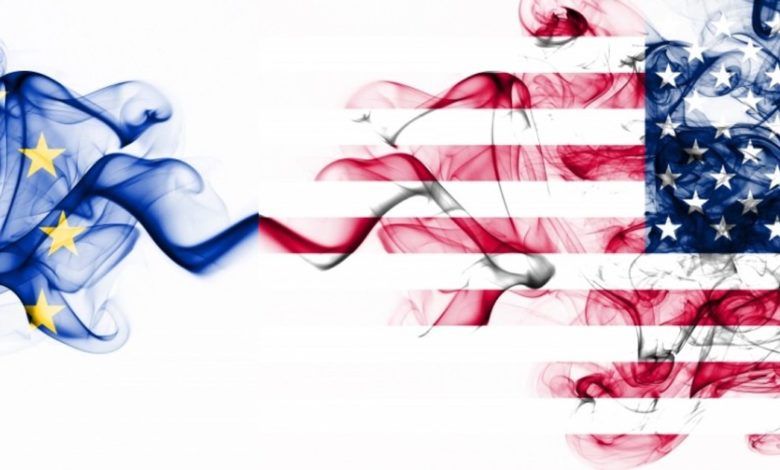
The risk of global recession persists, despite the “break” from the application of mutual tariffs imposed by the United States and the European Union, considers the analysts consulted by “Adevărul”.
The risk of global recession persists. Photo shutterstock
“The risk of recession has been strongly diminished after the advertisement on module Break of Customs Tax raised for almost all countries. The relieved breath of investors has heard all over the world. The NASDAQ index has experienced the best session of the last 25 years. The space for negotiation is an excellent news but many questions remain“, Explained XTB analyst Claudiu Cazacu for” Adevărul “.
According to him, the risk of recession persists.
“With all the particularly optimistic reaction of the scholarships, a high level of uncertainty can continue to affect the decisions of companies and consumers. It is also clear at what level, after 90 days, customs duties with economies in Asia, South America and Europe. imports. added Cazacu.
And banks pointed out the risk of recession
Important international banks have been reported on Wednesday the risk of global recession, especially since the VIX volatility indicator is at the highest levels after pandemic. “It is a very prudent environment – and not only in the field of actions,” added Cazacu.
“In addition to investors, the most volatile episode of recent years has forced and unusually rapid reassessments of financial institutions. Goldman Sachs has already revised twice in so many weeks the risk of recession in the USA, increasing from 20% to 35% and then to 45%. For Morgan Stanley, although the recession is not in the case. “Pesimist”.
JPMorgan describes the implicit probability of recession derived from the movements on S&P500 to 62%, starting from 5 years to 54%, and from industrial metals to 68%. However, in corporate bond markets the feeling is more optimistic, at risk of only 25%.
The decreases on the scholarships have the role of signal, but unlike other periods, it is not clear to what extent the US management or the federal reserve are willing to intervene”, Points out Claudiu Cazacu.
Attention is not only directed to the American economy, although US stock markets have been among the most affected. The growth rate of the global economy was estimated by the OECD at 3.1% this year, in slowing of 0.1 points compared to last year. This vision seems now, in the light of new rounds in the commercial conflict, far too optimistic.
The risk of recession, signaled with the title of a film: “will flow”
The decline of oil, encouraged by the increase of unexpected production of OPEC by 0.41 million barrels, signals a strong concern regarding the demand in the real economy. The dynamics from the beginning of the year, of -18%, reflect the estimated diminution of commercial traffic, especially maritime, but also bears unfavorable information about the global economy, says Claudiu Cazacu.
The risk of global recession has increased enough that a bank warns, paraphrarating a famous “There Will Be Blood” movie. JPMORGAN has passed the probability of decreased world economy at 60%. To put things in perspective: each 1 -point percentage adjustment would mean about 1.15 trillion dollars lost by the global economy, so only from the advance 3.1% to stagnation the covered distance translates into economic activity of 3.57 trillion trillion. The value exceeds the GDP of France.
The restriction would come from both the considerable reduction of the activity of some exporters and the subsequent effects in their own savings, as well as from the very high level of uncertainty that press on consumption and investment decisions. In the case of the US, the new customs duties could collect the equivalent of 1.3% of GDP, marking the most severe increase in taxation after 1968, stresses the XTB Romania strategy consultant.
Although tax reductions have been considered to cover the losses of exporters or checks offered to Americans as a “special dividend” of public personnel discounts, the net effect could remain one to brake the economy. US trade represents 15% of the global one, and what happens to the rest of 85% will be the key to this year.
However, the current shock is large, and if descending adjustments by negotiation do not reduce the burden, they can affect the growth rate of the global economy by 1 – 2 percentage points, the strategy consultant of XTB Romania shows.
The European Commission on Thursday announced that it suspends the counter-US fees after the US administration “pause” its commercial war for 90 days.