“It will not have a choice, because its economy is cabbage.” What Trump relies on to oblige a little to put an end to the war

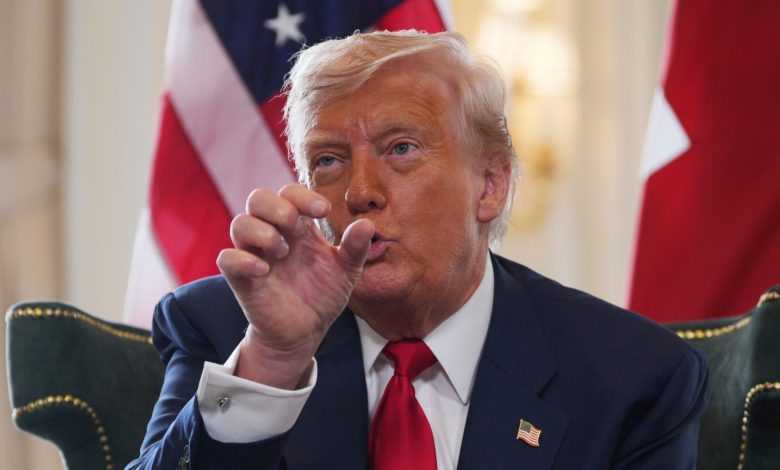
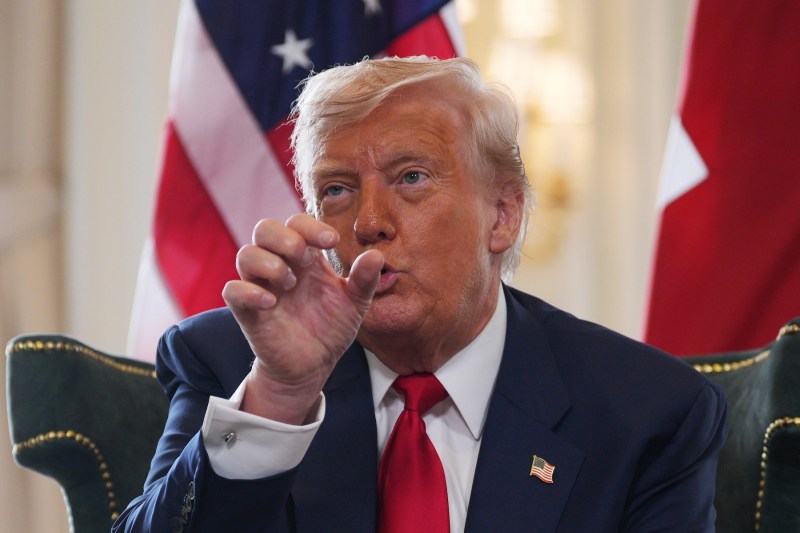
The US President Donald Trump, during a meeting with Prime Minister Sir Keir Starmer, at the Golf Turnberry field in South Ayrshire, on July 28, 2025. Photo: Chris Furlong / Pa Images / Profimedia
US President Donald Trump said on Tuesday that the lowering of energy prices is likely to determine Russian leader Vladimir Putin to end the Ukraine war, reports Reuters and The Kyiv Independent.
“If the energy drops enough, Putin will stop killing people,” Trump said in an interview with CNBC. “If the energy drops with another $ 10 on the barrel, it will not have a choice, because his economy is in bad condition.”
“Forget, (the price) of the oil has dropped to $ 2.20 per gallon, for the full of a car. It has dropped to a level, I think, about $ 65 per barrel, but it continues to decrease. If the energy (the price of crude, no) decreases enough, little will stop killing people,” Trump said, in an interview, in an interview.
“If the energy (oil, no) decreases by another $ 10 on the barrel, he (Putin, no) will not have a choice, because his economy is cabbage,” said the leader from the White House.
Last week, Trump set August 8, as a deadline for Putin to take measures to end the Ukraine war, otherwise Russia is to face tougher sanctions. The Administration of the Republican also exerted pressure on India and China to cease the purchase of Russian oil.
Trump also told CNBC that the lowering of energy prices is due to the increase of production, including from OPEC and other states, and that they are expected to decreases.
“If you notice OPEC and OPEC+, they are more drilled because I think they want to thank me,” added the US president.
Oil production, accelerated
OPEC+ agreed on Sunday to increase oil production by 547,000 barrels a day for September, the latest in a series of accelerated production increases to regain market share, against the background of increasing concerns about the potential supply interruptions related to Russia.
The measure marks a complete and early reversal of the largest instruction of OPEC+production discounts, plus a separate production increase for the United Arab Emirates, worth about 2.5 million barrels per day, or about 2.4% of world demand.
Eight OPEC+ members held a brief online meeting, against the background of increasing pressures on India to stop Russian oil acquisitions – part of Washington's efforts to bring Moscow to the negotiation table to conclude a peace agreement with Ukraine.
The International Monetary Fund (IMF) reduced the Russia's economic growth forecast last week to 0.9%, from 1.5% in the previous forecast of April.
“There is no point in waiting”
High -rank American diplomat John Kelley told the United Nations Security Council, on July 31, that Trump wants an agreement to conclude the war until August 8th.
“President Trump has made it clear that this should be done until August 8. The United States is ready to implement additional measures to ensure peace,” Kelley said.
Trump has repeatedly warned Moscow that a series of severe consequences will follow if he did not comply. On July 29, the US president announced that new sanctions, including secondary rates for Russia's trading partners, will enter into force within ten days, unless the Kremlin will reach an agreement to end the war.
“Ten days starting today. And then we will impose other measures,” Trump said in an audio recording broadcast by the White House. “I do not know if it will affect Russia … but we will impose various other measures,” he said.
Trump had initially granted Putin a period of 50 days, but on July 28 he announced that he was no longer willing to wait.
“There is no point in waiting,” said the head of the White House at that time. “I wanted to be generous, but we see no progress,” the American leader added.
The proposed sanctions include secondary rates for countries that continue to buy oil, gas and other Russian products – a measure that would have a direct impact on Moscow's major trading partners, such as China and India.