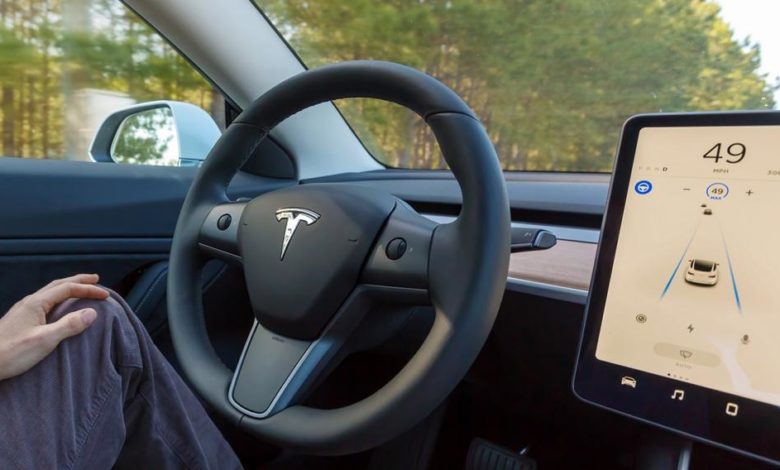
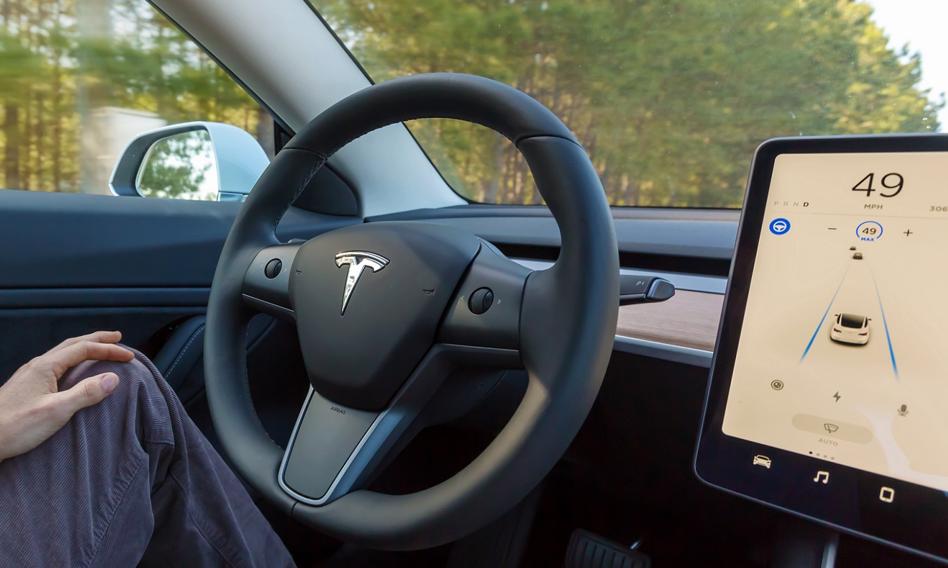
Poles see in autonomous vehicles a chance to improve road safety and increase the mobility of the elderly or with disabilities. At the same time, the development of AV technology is accompanied by concerns, including The loss of control over the vehicle or more failure rate than traditional cars – according to Łukasiewicz – Pimot research on social acceptance for AV. These fears indicate that the development of technology should also be accompanied by education, both drivers and passengers. Experts also talk about the need to transparently inform AV.

– Considering the results of our social research related to the acceptability of technologies that automate transport, as well as technical research results, on specific technological solutions, we can say that society basically understands the need to introduce these technologies. At the back of the head, we are all aware that this technology will improve road safety, i.e. eliminates such situations in which the driver may have difficulties in making decisions due to response time – says Newseria agency dr inż. Karol Zielonka, director of the Łukasiewicz research network – Industrial Automotive Institute.
The first conclusions from the study “Social and technical aspects of autonomous vehicle safety: from test scenarios to technology approval” was presented by Patryk Szwajkowski from the research group of new technologies in the automotive industry in Łukasiewicz – Pimot during the AV Poland 2025 Congress, organized by the Motor Transport Institute. The study indicates that 31 percent Poles cannot say what feelings an autonomous car arouses in them. In the remaining group, “rather positive” and “definitely positive” answers over “rather negative” and “definitely negative”, but only by 1 pp. (35 percent vs. 34 percent).
The respondents were most willing to pass on to autonomous cars (if they entered the widespread use) the function of informing the driver about possible threats (55 percent for yes) and responding in dangerous situations (51 percent). 28 percent It decided that cars could take control in selected repetitive road situations (against 72 %). The same percentage decided that he would give the vehicle the ability to control in most road situations, with the possibility of taking control by the driver. At the same time, 19 percent She replied that the automatic driver would not give any duties because they believe that the management should be completely under human control.
– The fears of our respondents are related to the fact that they would like to know which vehicle has technologies at such a high level of automation, i.e. they talk about vehicle marking. And this is, it seems natural, that users want to know about it, that such technologies are already appearing to observe the behavior of these vehicles and get used to it – says director Łukasiewicz – Pimot.
– There seems to be very few these fears. Rather, these are concerns related to technology, with the need to know that these technologies are tested and prepared in such a way that they support and do not increase the threat.
53 percent respondents are afraid of lack of control over AV, and 58 percent – that this technology will lose control in difficult situations. More than every third admitted that he considers AV to be dangerous vehicles (23 percent of the undecided). Many people emphasized that the simultaneous use of autonomous and traditional vehicles on the roads can be problematic.
– Today we can clearly say that companies that introduce these technologies are already at such a level that we can confidently trust all these assistant systems, and ultimately to automated or fully autonomous vehicles. For this reason, however, testing is so important at the moment, but in the real environment, on public roads, which in Poland has been possible since 2018. Our institute, among others, conducted such tests – says Dr. Eng. Karol Zielonka.
In one of the projects conducted, the Institute creates a database with scenarios for testing AI algorithms. He also develops models for research on their effectiveness in simulation, test tracks and traffic. This project is implemented in cooperation with the Ministry of Science and Higher Education under the “Science for Society” program.
– It seems that technologies are developing at a very dynamic pace and we do not deviate from what is happening in other markets. Rather, we expect it to happen a little faster, but these technologies will be implemented faster – says the expert.
The vast majority of the Łukasiewicz – Pimot indicate that the possibility of trying an autonomous car in advance would be useful when deciding to buy it and use it.
– Of course, the education and training of drivers is an important aspect, i.e. preparing not only society, i.e. recipients, but also drivers who will use these systems in vehicles so that they do it consciously and be able to react to what the vehicle can do today. So that they have some trust in these systems on the one hand, and on the other, limited trust, however, that they are not yet technologies at this stage, that they can travel from point A to B fully autonomously, at the fifth level, in which we imagine that these vehicles will already travel in principle without the participation of the driver – adds Dr. Eng. Karol Zielonka.
Research indicates that Poles see many benefits related to the development of autonomous vehicles. 45 percent He agrees that they could improve road safety (19 percent of the undecided). A similar result was obtained when AV would be easier and better to use than a traditional car. Even greater support respondents showed that AV will allow AV to reach their destination faster (63 percent) and allow people with disabilities or elderly to move a passenger car (71 percent).