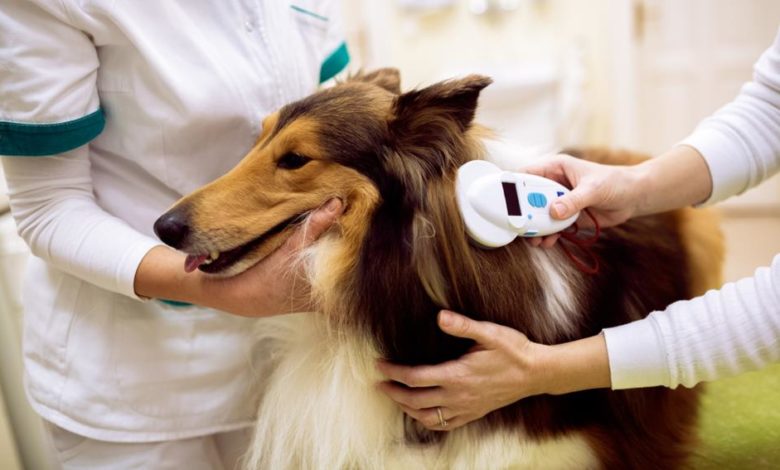
The European Union wants to limit the homelessness of dogs and cats and smuggling these animals. The solution is to be mandatory microchipation of animals and registering them in national databases, which will be connected to the Central EU index. In Poland, the government is working on creating a national register of marked dogs and cats. Although the basic assumptions of the proposed changes do not raise doubts of non -governmental organizations, they are skeptical about some entries, especially those that apply to costs and impose additional administrative obligations on veterinarians.

The data published by the Ministry of Agriculture and Rural Development shows that municipalities in Poland allocate more and more money for the implementation of homeless animals care programs and to prevent homelessness (in 2023 over PLN 347 million, in 2022 – PLN 275 million), and one way to limit this phenomenon is to implant transponsters for identifying the owner of the quadruped.
– In Poland, we have several animal chip programs, most often run by foundations, which educate socially and which all the time show that this is the most important element of animal care. But fortunately we also have several municipal programs. Some local governments introduced free chipping of animals, including ownership. Thanks to this, the mass of animals that got lost, instead of the shelter, went back to her guardian. What's more, sterilization and castration programs allowed that the number of animals not intended for breeding and reproduction was seriously limited, and thus these animals did not go to shelters – says Newseria agency Anna Zielińska, vice president of the Viva Foundation!
The Ministry of Agriculture and Rural Development reports that the number of animal shelters is increasing in Poland – in 2022 there were 226. However, the number of dogs maintained in them is decreasing – in 2022 84 thousand. (in 2011 over 100,000), and there are more and more cats – in 2022 over 34,000 (in 2011 there were 20.5 thousand). However, many animals stay in the shelters, temporary houses and asylum, which are not under the supervision of the Veterinary Inspection.
According to the report “The State of Pet Homelessness Project” Chipping reduces dog homelessness by 25, and cats by 26 percent. The level of homelessness of these animals in Poland in 2024 was 8 percent. This is much below the average among 20 surveyed countries in the world (35 percent), but more than, for example, in Lithuania, France or Great Britain (5 percent).
The Ministry of Agriculture estimates that About a million living dogs and cats were registered in the currently operating bases run by private entities and the National Chamber of Medicine and Veterinary. Identification and registration, however, is not mandatory. There is also a lack of a centralized system connecting existing bases. The only official base is the register of issued animal passports moved for non -commercial purposes on the territory of the European Union.
– The European Union is currently working on solutions on the mandatory registration of pets, ownership and homeless animals. These are very important actions, behind which all European organizations keep their fingers crossed, because thanks to this we are able to limit the homelessness of animals, and on the other hand we are also able to control how these animals are moved, or are, for example, smuggled into different countries, which unfortunately also happens – says the expert.
– Animals cannot be in transports, which are very often transported by death, because they are crowded, closed as in a can, transported hundreds, sometimes thousands of kilometers. A very large part of them do not experience this transport. And in order to be able to prevent all this, there should be absolutely a base in which each animal must be registered and thus we are able to identify them regardless of where it will stay.
In June, the European Parliament voted a regulation on the well -being of dogs and cats and their identification, which imposes on the Member States the obligation to create a central, national database. In most EU countries, registration of dogs in a public base is mandatory. For example in Spain Such registers are kept by regional veterinary chambers. IN Irelandalthough there is no centralized base, there are five private, approved by the government and being members of Europetnet. The obligation to register cats was introduced by, among others Belgium, France, Greece, Spain and Lithuania. IN Austria Chipping dogs and cats is mandatory for now only for breeding ones. However, this country took decisive steps towards limiting homelessness of pets. From 2026, people who want to register a dog, and in the last two years they have not been under the care of an animal, they will have to take a special course of several hours. The idea has already been successfully tested in Vienna, where the trainings covered 20 thousand. people.
– The European Union is currently proceeding with ordinances that will impose the obligation to chip and register animals in member states, and, among others, a government project was created, which aims to adapt our Polish local right to European law – says Anna Zielińska.
The provisions proposed by the Polish government assume the creation of a national register of marked dogs and cats (Kropik). It is to be conducted in the ICT system by the Agency for Restructuring and Modernization of Agriculture, and its construction will be responsible for the minister competent for computerization in cooperation with the minister competent for agriculture.
– This is a very good step that we absolutely agree with. The very idea of such a project to be created, as right. Another issue is what solutions are contained in it, which we are not able to agree with. Because only newborn animals are to be chipped, it means that we will de facto have a very large number of dogs and cats that will not be covered by this program, and this will not solve the problem of homelessness – the expert believes.
After the new regulations come into force, dog owners will have time to remember and register a dog at the latest during the first compulsory rabies vaccination, and cats no later than before the age of 12 months. The project assumes the obligatory registration of all dogs and cats that are kept in shelters. Critical voices of representatives of the invarrative organizations also refer to the introduction of fees for registering a quadruped and for any change of information, including a new guardian. In their opinion, this will increase the costs of operating shelters, foundations or other institutions in which animals stay and from which they are taken over to adoption.
– These costs will be an additional component and very high interim costs. We have 3,500 in our organization. Animals per year under care. Therefore, these will be very measurable means – emphasizes the president of the Viva Foundation!
Currently, the average cost of identifying a dog's registration is about PLN 53 in cities below PLN 20,000. residents and approx. PLN 85 in cities over PLN 100,000 residents.
The draft act on which the government is working on, assumes that access to data in Kropik will be free of veterinarians, municipalities or relevant services to the extent necessary to carry out statutory tasks, for example, catching a lost animal. Veterinary doctors entered in the ARiMR register and entities running shelters will be able to read information related to the specific transponder number, but they will not be able to search the base.
The register is to be integrated with the MOBIATR system. The owner of the animal will be able to update data such as the address of residence or information about the death of a quadruped, but only a veterinarian will be able to enter in the database – this is also new, because there is no such requirement in the registers kept by private entities. Anna Zielińska believes that the provisions regarding the introduction of transponders only by veterinarians registered in the list of ARMIR for unnecessary bureaucracy. It also draws attention to the fact that the legislator does not provide for data migration from existing databases. The authors of the project explain this by the fact that the adequate quality of migrated data cannot be provided. They emphasize that the animal registered in Kropik may also be registered in another register, e.g. to use the integration of these databases in the European European database.
– There are solutions in the European Union, in which fortunately compromises and some other solutions have been made. For example, animal registers are made available, which have already been registered, which means that we do not have the construction of a database from scratch, only on the basis of a governmental agreement, these databases and the possibility of searching for information about the guardian are synchronized in various databases, which allows the animal to be returned to the house faster – says Anna Zielińska.
NGOs dealing with animal protection made their proposals in the so -called draft legislative initiative “Stop chains, pseudo -breeding and homelessness of animals”.