On June 25, 2025, in the basement converted into a bunker, the 18 -month hunt for the most wanted Ecuador criminal ended. Jose Adolfo Macias Villamar, known as Fito, the head of the Gang Los Choneros, was targeted in his hideout under the luxury villa in Manta – he managed to find him thanks to the collapse in a marble floor. – We'll regain the country. No mercy – announced President Daniel Noboa after his arrest.
A month later, Macias was deported to the United States. He stood before the federal court in Brooklyn, but he did not plead guilty. The prosecutor's office charged him with seven charges regarding cocaine trafficking and cooperation with the Mexican Sinaloa cartel. He went to an American prison – but even from there he controls his organization, and even organizes press conferences.
This year, violence in Ecuador reached terrifying sizes. According to government data, in February the number of murders increased by 90 percent. compared to the previous year. 736 killings were committed at that time, which made it the bloodiest month of recent years. In March, 22 people were killed in the gang war in the port of Guayaquil. The AFP Information Agency said that the competing gang fractions of Los Tigueraones fought for territories.
Despite this, Noboa was re -elected president in April, winning a surprising majority. His strategy of “hard hand” allowed last year to reduce the murder rate by 16.5 percent. Success, however, turned out to be deceptive, and Noboa hunting for the most important gang leaders finally had the opposite effect to the intended one. Four large groups – Los Lobos, Los Choneros, Los Tiguerones and Latin Kings – They fell apart into numerous factions, which are currently fiercely fighting for territories and influence.
“It used to be different here,” says Uber driver, traversing the streets of Ecuador.
– My grandfather talked about the time when guayaquil [miasto w zachodnim Ekwadorze] They were called Paris of South America. But it was before the Mexicans arrived – he adds.
This is how Ecuadorians call members of the Sinaloa cartel, who at the beginning of the 21st century noticed the strategic importance of Ecuador for drug trafficking. It started with the creation of a harmless transit route there. It quickly ended in taking over the entire districts.
Money or assault
Mexicans brought with them not only cocaine, but also a whole system of violence – beveling, public executions, a psychological war against civilians. They brought techniques to Ecuador, which he already improves in Mexico.
The hotel is located in an area that is not visited by foreign tourists. To stop in it, you need to leave an identity document at the reception – among many there is only one passport, all others are ID cards. There are no windows in the room, just a bed, a chair and a table. Salsa can be heard from each side – from neighboring rooms, from the corridor, from the street. Music penetrates the walls like a sign of the city's life, which still dances.
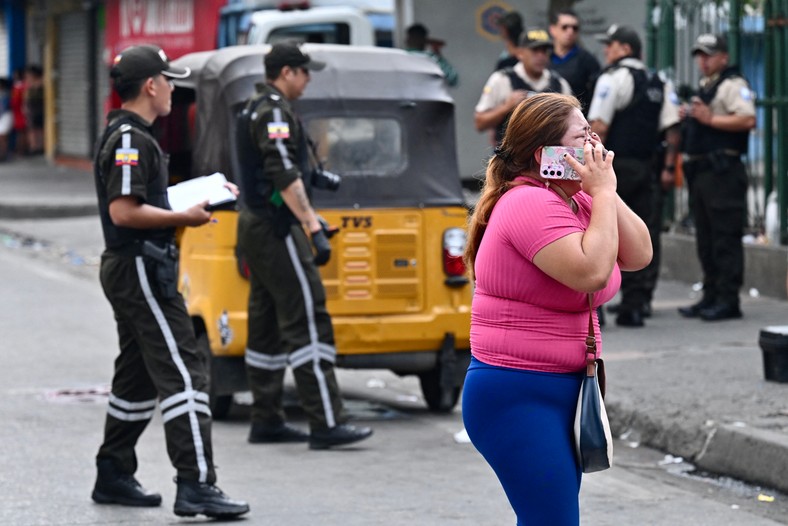
Marcos Pin / AFP
A woman mourning a loved one and seven other victims who died in the Pascales district in Guayaquil in Ecuador, June 10, 2025.
“You are not from here,” says Carlos. He has been working here for 12 years. – We used to walk after the night. Now … all stores pay for protection – he says, shrugging. Money for protection is an euphemistic term for institutionalized forcing. – My cousin has a small store. He must pay $ 200. (PLN 731) per month, otherwise he will burn him. This is a larger amount than it earns many people – he says.
Gangs have learned that the store owners can no longer pay. So they developed a sophisticated system of violence dosing – enough terror to ensure obedience, but not enough to lead to a breakdown.
Police police cars are standing on the street, and their blue lights from time to time cast shadows on the walls. However, this is not a sign of more safety, explains Carlos. “The street rules here,” he says.
The case of the Cacias baron of the Baron of the Drug Baron. During his “career” he was convicted many times, but every time he managed to escape-recently from the Littoral prison in Guayaquil, where he was to serve a 34-year punishment for drug trafficking and murder.
Terror in front of the camera
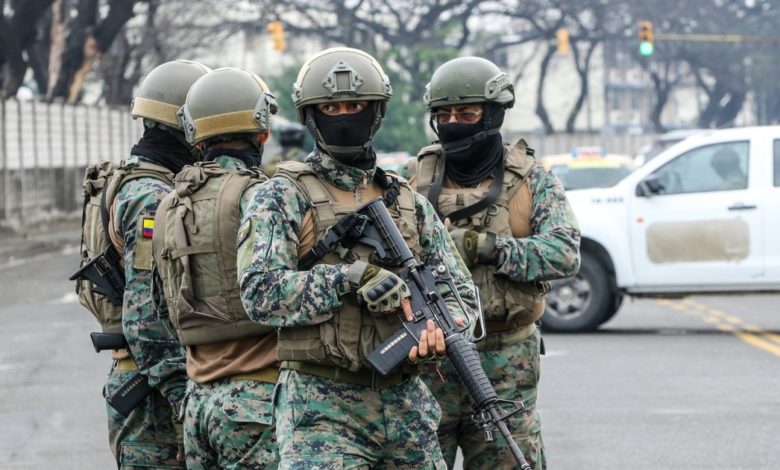
On January 7, 2024, Macias disappeared without a trace of his cell, and therefore the President of Noboa announced a state of emergency and mobilized the army. The gang's response was unprecedented – they hit simultaneously in six provinces, taking over 139 hostages. The culmination of the terror took place on January 9 – 13 armed men invaded the TC Television studio in Guayaquil during live broadcast and for 15 minutes held hostages before thousands of viewers.
Noboa then announced “internal armed conflict” and recognized 22 gangs as terrorist organizations. The country was officially at war with its own criminals. It enveloped the whole state. It ran the most brutal in the satellite cities of Guayaquil. In Duran, the murder indicator reached 82.8 per 100,000. residents. Last year in the administrative district of Camilo Ponce Enriquez This indicator was 258.56, which makes it the most dangerous place in the world.
Behind these numbers are personal tragedies, such as the one that met Donia Rosa. He sells fried bananas on the corner of the street. He is 67 years old and three grandchildren. – My son worked in the port, he had an honest job. He was offered to earn more. He refused. Two weeks later we found him in a container – he says. He has a Skinny voice, as if she talked about the weather.
The port of Guayaquil made Ecuador become the most important transhipment point of drugs in South America. Over 70 percent Cocaine produced in the world passes through Ecuadorian ports. The Sinaloa cartel and Albanian mafia clans control these supply chains along with local gangs – drugs are perfectly hidden among banana boxes. Ecuador exports 346 million a year.
Even the Galapagos Islands are involved in this network. The largest island of the Isabel archipelago serves as a secret fuel fuel station for drug smugglers on the way to North America. A distant location – 1000 km from the coast of Ecuador – makes these islands an ideal parking place for motor boats loaded with cocaine. The Inter -American Human Rights Commission (CIDH) reports that last year the Ecuadorian Navy discovered several fuel warehouses on Isabeli.
Pamela Spitz / Die Welt
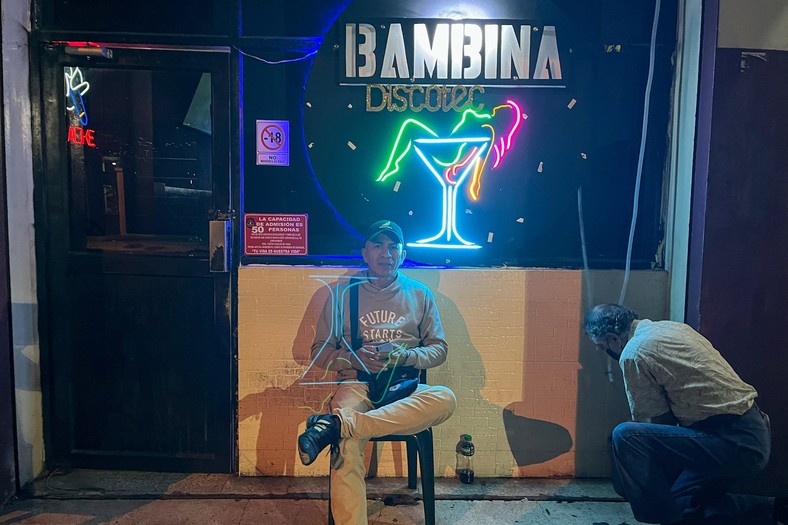
Miguel before “Bambina”
When drugs are smuggled through international trails, human drama takes place in small bars and clubs. From the hotel we go on foot to “Bambina”, a small bar and a disco just around the corner. Pink and blue neon lights illuminate the room with light, which simultaneously reveals and distorts reality. Many women and girls share several men – in a city where 26 percent residents live in poverty, and 50 percent He works black, it is a survival strategy.
Miguel, the club's goalkeeper, sits before entering the plastic stool. “I know everyone here,” he says. To confirm these words, he dismisses the people who greet him. He says that this is his little kingdom with his own rules – because the official has long failed. At some point, an older man carrying withered flowers is approaching. I want to sell them. Miguel shake his head politely, but gives him coins. The man washes his face with water from a bucket of air conditioning, as if it was something natural.
In the middle of the bar on a huge flat screen a football match is displayed-Paris Saint-Germain and Botafogo from Brazil play. Here for 90 minutes you can forget that In the first quarter of last year, the official number of extortion in Guayaquil increased by 476 percent. Miguel lights up a cigarette. – Outside dies for nothing. You live here for something. Gangs are fighting for millions, we fight for survival. This makes us fair – he says. He knows the street hierarchy better than every police commissioner. – Clay can only look. We do everything ourselves – he says.
“Different world”
Valeria is 34 years old and comes from Guayaquil. He has six children. She once ran an escort agency – a business that allowed her to keep a distance and gave some control over her own fate. Now he must work as a prostitute. Her pink top and a denim skirt shimmers in the light of neon lights, and a delicate tattoo on the collarbone looks like a promise of better times. Serves a drink with a free smile – As if she learned that survival is more important than feelings.
– Men from the old days left. Either they are dead or sitting in prison or they are in gangs – he says, putting a glass. – My oldest daughter is 17 years old. I want her to study, she became a doctor. That's why I do it – he adds.
One of the guests orders another beer. He presents himself as Fernando, 42-year-old, a former bank employee. He lost his job. – 12 years in Banco del Pacifico – he says with resignation. Now he sells mobile phones on the street.
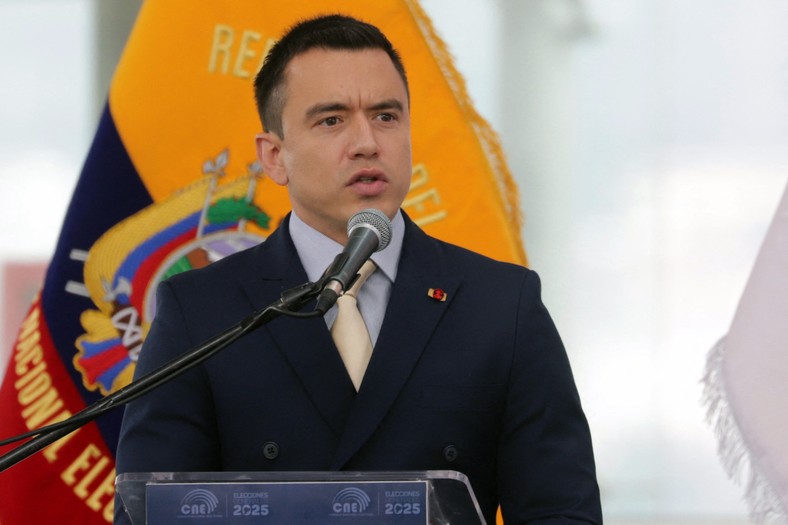
Armando Prado / AFP
Daniel Noboa after re -election in the center of Quito, May 15, 2025.
Just 300 km away, but in a completely “different world”, lies Quito, the capital of Ecuador, with a white presidential palace. Daniel Noboa resides in it. The 37-year-old is the youngest leader of the world in the world. It ruled from November 2023 – from January 2024 almost continuously in a unique state. Interestingly, his father manages the family company Noboa Trading, which is one of the largest banana exporters in the country. That is why some suspect that the President of Noboa may be involved in drug smuggling.
It is not known if this is really the case. What is certain is the fact that Ecuador is still in a state of “internal armed conflict” and militarization intensifies. Safety forces have extraordinary rights, and the number of cases of human rights violations is increasing. Last year, the Human Rights Watch organization recorded a total of 3036 murders in this country – by 429 percent. more than in 2019.
With a national murder indicator of 44.5 per 100,000 Ecuador residents are even ahead of Mexico and El Salvador. Violence forces more and more people to flee: in 2024, 117,000 were detained on the US border. illegal immigrants from Ecuador – five times more than in 2022.
A once calm country on the equator has become a focus of international organized crime, which he apparently cannot cope with. In March, Noboa held talks with Erik Prince, the founder of the private military company Blackwater, currently known as ACademi.
In April he went to Florida to ask US President Donald Trump for help in fighting cartels. In return, he offered the US government to build military bases in Ecuador. The constitution of this country prohibits such activities. However, Noboa wants to change it.
I’m Ashley Davis as an editor, I’m committed to upholding the highest standards of integrity and accuracy in every piece we publish. My work is driven by curiosity, a passion for truth, and a belief that journalism plays a crucial role in shaping public discourse. I strive to tell stories that not only inform but also inspire action and conversation.