The Dalai Lama ends the years of speculation and states that it will reincarnate. The indications left for after his death

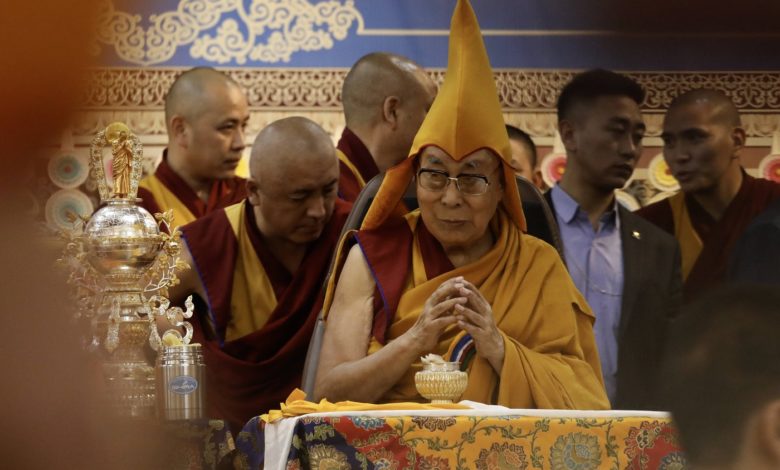
The Dalai Lama, the Tibetan spiritual leader, said on Wednesday that the old institution of Tibetan Buddhism will continue after his death, thus ending the years that he started when he suggested that he could be the last person holding this position, reports Reuters and Associated Press.
Speaking in some prayer ceremonies organized before its 90 -year anniversary, which will take place on Sunday, the Nobel Peace Prize and the spiritual leader of Tibetan Buddhism said that the next Dalai Lama should be found and recognized according to the Buddhist traditions and also emphasized that China should not be involved.
The succession plan of the Dalai Lama has significant political implications for the majority of the Tibetans who oppose the strict control imposed by China over the Tibet and who fight to maintain their identity, either in their native country or in exile. It also has a deep importance for the Tibetan Buddhists, who worship it as a living manifestation of “Chenresig”, the Buddhist deity of compassion.
However, this decision is expected to cause China's dissatisfaction, which has repeatedly stated that only she has the authority to approve the next religious leader of Tibet. Beijing insists that the reincarnated figure be found in the Tibetan regions under its control, thus giving the communist authorities the power to decide who will be chosen.
Many observers believe that, in the end, there will be two Dalai Lama Rivali, one designated by Beijing and another by the loyal monks to the current Dalai Lama.
Current Dalai Lama is the longest longeviv religious leader in the world
Tenzin Gyatso became the 14th reincarnation of the Dalai Lama in 1940. He ran out of Tibet in 1959, after Chinese troops have drunk a revolt in the Tibetan capital, and has been living in the city of Dharamshala in India. He contributed here to the establishment of a democratic government in exile and traveled throughout the world to plead for the autonomy of the Tibetan people.
Tibetan buddists believe that the Dalai Lama can choose their body in which it will reincarnate, as has happened 14 times since the institution's creation in 1587. Gyatso has said in the past that its successor will be born outside China.
The Tibetans are praying for his health, especially from the knee operation last year in the United States, although the Dalai Lama told Reuters, in December, that he could live until the age of 110.
The Dalai Lama presented its succession plan in a registered statement, broadcast in a religious meeting of the Buddhist monks in Dharamshala. He stated that the process of finding and recognizing his reincarnation is exclusively of the Gaden Phodrang Foundation-a non-profit organization he has set up in 2015 and which deals with issues related to the spiritual leader and the Dalai Lama institution.
“No one else has the authority to intervene in this matter,” he said, adding that the process of searching for the future Dalai Lama must take place “according to the past tradition.”
China again insists that the next Dalai Lama must be approved by the Beijing government
Asked on Wednesday about the announcement of the Dalai Lama, the spokesman of the Chinese Foreign Ministry, Mao Ning, said in a press briefing that “the reincarnation of the Dalai Lama must respect the principles of internal search” and “the approval of the Central Government”.
Mao said that the process must “respect religious rituals and historical circumstances and take place in accordance with national laws and regulations.”
Separately, director Amnesty International for China, Sarah Brooks, said on Wednesday that the efforts of the Chinese authorities to control the choice of the next Dalai Lama is “a direct attack” on the right to religious freedom.
“The Tibetan Buddhists, like all religious communities, must be able to freely choose their spiritual leaders, without constraints or interference from the authorities,” Brooks said.
Dalai Lama often urged her followers to reject any person designated by Beijing. The Tibetan government in exile, which he led until 2011, when he gave up his political role, also supports this position.
Choosing the future Dalai Lama, “a unique tradition of Tibetan Buddhism”
Penpa Tsering, the President of the Government in exile, said that the Tibetans from all over the world made “a sincere and devoted request” that the position of Dalai Lama would continue “for the good of all the feeling in general and of the Buddhists in particular.”
“In response to this overwhelming request, his sanctity showed infinite compassion and, finally, accepted our call on the special occasion of his 90-year anniversary,” he said at a press conference.
But Tsering warned China not to mix in the Dalai Lama succession process, saying this is “a unique tradition of Tibetan Buddhism.”
“We firmly condemn the use of the subject of reincarnation by the People's Republic of China for political purposes and we will never accept this,” he said.
The search for the reincarnation of a Dalai Lama begins only after the death of the current religious leader.
In the past, the successor has been identified by senior monastic disciples, based on spiritual signs and visions, and the whole process can take several years, until the next Dalai Lama is identified by the child and educated to take over.