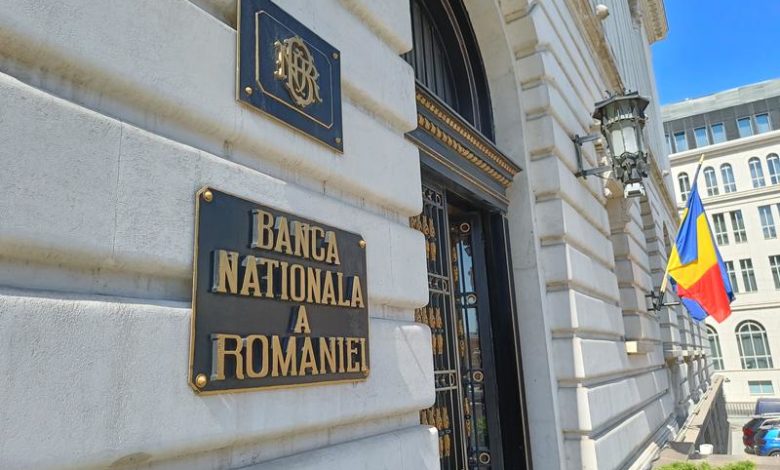
The uncertainties and effects of the changes in the US commercial policies and the measures adopted in response to other states generate additional risks to the financial stability of Romania, in a context already marked by high vulnerabilities, including as a result of successive shocks from previous years, resulted from the report on financial stability on June, published by the National Bank of Romania (BNR).
The report specifies that the resilience of the Romanian banking sector for possible shocks from the macroeconomic and political framework marked by uncertainties is maintained.
The main risks to the financial stability in Romania identified by the NBR are:
- uncertainties globally in the context of multiple geopolitical events,
- Damage to internal macroeconomic balances,
- The risk of non -reimbursing the credits contracted by the non -governmental sector
- and the risk associated with the challenges to cyber security and financial innovation.
“Given the complex geopolitical landscape, the main systemic risks to the financial stability in Romania are maintained, similar to those from the European level. From a cyclical point of view, two severe level risks and two moderate intensity risks have been identified. and ii) deterioration of internal macroeconomic balances.
“The risk of steep corrections on international financial markets remains important”
At the global level, the risks have intensified, and the direct and indirect effects arising as a result of the extension of commercial protectionism, against the background of the US commercial policies and the measures adopted by other states, generate additional risks to the financial stability. The tension of commercial policies occurs in a context already marked by relatively high vulnerabilities, including as a result of successive shocks from previous years and persistent geopolitical tensions, under the prolongation of the Ukraine and conflicts in the Middle East.
“These developments have greatly amplified the uncertainties associated with economic policies, the associated indicators reaching historical maxims,” the BNR stresses
The prospects for global economic growth have been revised decreasing, and recent macroeconomic and geopolitical developments have amplified the risks associated with the sustainability of sovereign debts, under the conditions of a high degree of public debt.
The feeling of investors has been affected by the increased uncertainties regarding economic policies, causing the increase of volatility on international financial markets, especially since April, the NBR report shows.
“In perspective, the risk of steep corrections on international financial markets remains important, in the context in which the evaluations are erected in some segments of capital markets and corporate bonds. However, the financial system as a whole has retained its resilience,” the authors of the document say.
What is happening internally
According to the same source, the internal macroeconomic balances continued to deteriorate. In 2024, the economic activity decelerated significantly, under the previous forecasts, the gross domestic product increasing in real terms by 0.8%, the lowest advance of the last decade, except 2020 severely affected by the Covid-19 pandemic.
The economic activity increased at a low rate and in the first quarter of 2025, by 0.3% in annual terms on the temperature of consuming and intensifying the negative effect of net export.
The NBR warns that, in 2024, the twin deficits deepened, being accompanied by an economic activity below expectations.
At the same time, the slow pace of implementation of PNRR led to blockages in accessing funds and delaying planned investments. In the absence of fiscal policies that will firmly support the fiscal-budgetary consolidation, the attainment of the 7% forecast budgetary deficit target is graded by high uncertainties.
“The latest estimates indicate an even more modest recovery than previously anticipated, up to 2.8%in 2026, while for 2025 the forecasts were adjusted in the sense of decrease (to 1.6%, from 3.3%). The weight of the budget deficit in GDP was 9.3% in 2024 (ESA 2010 methodology), being the highest between the states of the European Union, at a considerable distance from the next most important deficit, respectively the one in Poland 6.6%. less than the same period of the previous year. Fiscal-budgetary planning ”, the BNR report reveals.
Regarding the risk of non -reimbursing the credits contracted by the non -governmental sector, the central bank draws attention that the quality of the credits granted to companies, especially those with state guarantees and those granted.
“The financial health of the companies has been damaged; on the other hand, for the population, the net wealth provides an important financial reserve in the event of an adverse shock.
Also, cyber risks intensified as a result of escalation of commercial wars and international conflicts, exacerbated by technological innovations. Cyber incidents in the financial system mainly concern credit institutions.
“In the current context, marked by digitalization and geopolitical conflicts in progress, cyber risks are increasing. This climate is marked by an accentuated global fragmentation and more frequent use of cyber attacks as a tool in hybrid conflicts. Although the total number of these attacks remains unknown, including the information Increased incidence of attacks sponsored by states. the report.
The main European trends specific to cyber risk are also manifested in Romania. The most common incidents against local banks were DDOS and Phishing attacks, banks continuously invest in digital infrastructure to ensure that they are able to cope with digitization. Also, social engineering campaigns (such as phishing, sissing and vishing) have increased during the recent period and had the main targets.
“In this case, it is necessary to raise awareness of the cyber risks at the population level, through the best information about the types of attacks common in the current context. The National Bank of Romania draws attention including the fraud attempts on behalf of the NBR, information such as banking coordinates or data from the identity document, and not being requested by the central bank,” The central bank.
 BNR restores the foreign exchange reserve after spending a fortune to stop the depreciation of the lion