A region of France has banned tap water, contaminated with “eternal chemicals”. Environmental activists believe it's just the beginning of a major crisis in Europe

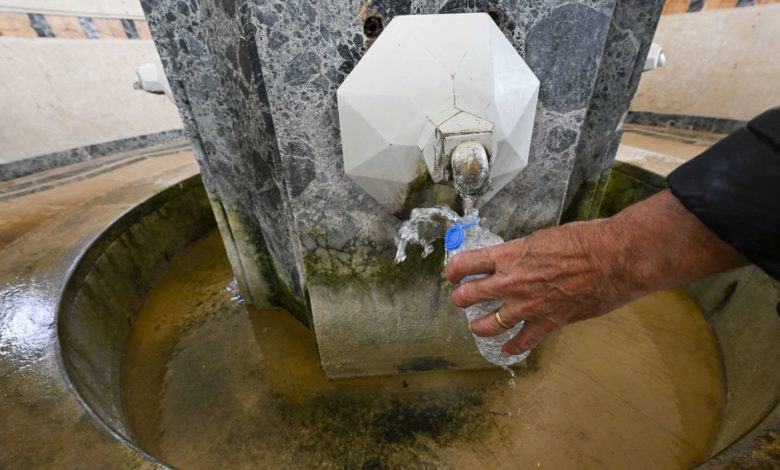
Chemicals that have the potential to cause many health problems have contaminated drinking water used by 60,000 people in France. Environmental activists say that similar levels of pollution are encountered in many other places in Europe and that authorities have to take action, writes The Guardian.
In May, locals in Saint-Louis, a French urban agglomeration with 60,000 people near the border with Switzerland, learned that tap water is no longer good to drink.
Authorities have informed the inhabitants that due to the dangerous chemicals it contains, water is forbidden to children under two years, pregnant or breastfeeding women and people with a weak immune system.
The locals exposed to the risk will be based on bottled water at least by the end of the year, when the authorities hope that they will be able to install water filtration systems.
What happened more exactly?
Tests performed on tap water have shown that PFAS levels (perfluoroalchilate and polyfluoroalchilate substances), also called “eternal chemicals”, being extremely persistent in the environment and in the human body, have reached four times the recommended limit.
According to the European Environment Agency, substances can cause health problems such as liver disorders, thyroid disease, obesity, fertility and cancer problems.
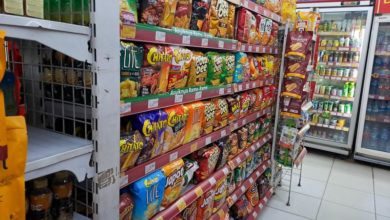
In the communes of Saint Louis, the message was received, and the shelves were emptied of bottled water.
Pollution source: an airport
According to the common statement of the local authority and the regional health agency, the source of the chemicals was a fire extinguishing foam used at the airport from the 1960s to 2017.
The toxic residues in the foam remained, filtering through the soil in drinking water and in the body of humans-probably for decades.
But the situation in Saint-Louis, writes The Guardian, could be just the beginning of a major drinking water problem throughout Europe.
The EU will start from next year to apply new limits on PFAS levels. With over 2,300 places in Europe that exceed the new safety limits, experts say that the ban on France is just a precursor of crises that will follow.
“I think we are at the beginning of the story,” said British daily Séverine Maistre, who lives in Saint-Louis and who worked in the past in the drug studies.
“At present, we are talking about peaks here and there. (But the chemicals) will be everywhere in France. It will be the same in Germany, Switzerland, the UK and everywhere,” she said.
One month after the ban, the fears did not calm down in Saint-Louis. People declared themselves “terrorized”, and the supermarkets substantially increased their bottled water sales.
Local authorities estimate that nearly 3,000 people in the Haut-Rhin region fall into the “vulnerable” categories.
Each will receive a single payment of 80 euros to cover the cost of bottled water.
Increased levels of PFAS in the blood
PFAS includes thousands of chemicals appreciated for their non -stick, indestructible properties.
They are used in anything, from cooking pans to waterproof jackets, food packaging, fire and electronic foams.
They do not decompose naturally and can remain in the environment for centuries. Currently, they are found in the blood of almost all people on the planet.
There is no official test of the blood of residents in Saint-Louis in progress to understand the potential impact on health.
Bruno Wollenschneider, the chief of ADRA (Association de Défense des Riverains de L'Aérport by Bâle Mulhouse) – an association of the inhabitants of 200 members – organized their own tests and sent 10 blood samples from ADRA members to a laboratory.
The person with the highest concentration had 22 micrograms per liter of blood. The average was 14.9- which would make the residents of Saint-Louis among the most contaminated 5- 10% of France, according to the 2019 public health data.
Long -term adverse effects on health are possible for people with levels higher than 6.9 micrograms per liter of blood, according to the European food safety authority.
“The state is there to protect us,” Wollenschneider told The Guardian. “If people had been warned by the authorities, we could have protected ourselves, instead of continuing to drink water,” he added.
The effect of eternal chemicals in nature
Beyond the risks to human health, Pfas arrived in a water source threatening whole ecosystems.
This is caused by the fact that chemicals accumulate in the tissues of aquatic organisms in a way similar to that of humans.
In North Carolina, for example, alligators suffer from innocent and infected lesions, in the North Pacific, fewer marine turtles appear, and in Wisconsin, the swallows no longer have chickens.
Even in distant areas, such as Arctic, hoods and their chicks suffer from thyroid problems. The researchers found that all these animals faced high levels of exposure to PFAS.
More than 600 species on all continents are at risk, according to a map that illustrates how harmful chemicals appear in ecosystems everywhere.
The impact is propagated in the waterfall along the ecosystem-the sensitive species could decrease, while those that are tolerant are doing better, which can change the way ecosystems work.
“In France, I trusted water – but that was broken”
At the center of the crisis in Saint-Louis is the Basel Mulhouse Freiburg airport-2 kilometers away from the supermarket-which is an international passenger knot in France, Germany and Switzerland.
The new terminal covers the land on which for decades the fire extinguisher containing PFAS have been used, as they are effective in combating kerosene fires.
At a depth of up to 15 meters there is the groundwater in which these chemicals were infiltrated.
Wollenschneider has lived his entire life less than five minutes from the airport. As head of ADRA – which was created in 1988 to fight the airport expansion – it is now in a situation of fighting on a more personal front: for clean drinking water.
“In France, I trusted water – but that was broken,” says Wollenschneider.
“The authorities lied to us, they have cheated us,” he says, referring to the fact that the authorities did not tell people about PFAS contamination for years after it was first identified in government data.
He struggles for the airport to pay the invoice for the cleaning costs of 20 million euros.
“The airport is responsible. Water is a public good. The last thing is for the law to oblige the authorities to act and make the airport pay – we have no choice,” he said.
PFAS contamination map in Europe
Currently, there are no legally compulsory limits for PFAS in drinking water in Europe.
However, this will change in January 2026, when the EU will require a threshold of 0.1 micrograms per liter. The restrictions in Saint-Louis have been placed on waiting for this limit.
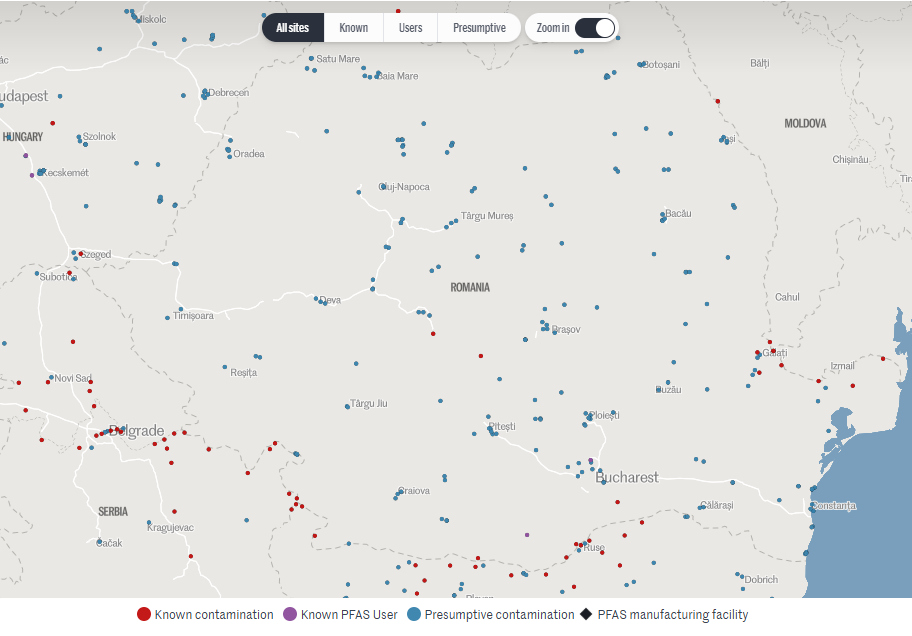
Throughout Europe, over 23,000 places are contaminated with these substances – either in water, soil or living organisms, according to the Forever Pollution Map map, which is maintained by the French National Center for Scientific Research (CNRS).
Of these, 2,300 sites have a higher concentration than allowed by future EU regulations and are considered dangerous.
Contaminated sites are scattered throughout Europe. In France there are 34 communes in which PFAS in drinking water exceeds the new EU limit.
Only in the Lyon region, 160,000 people from 50 localities drank water over the new EU limits.
In Veneto, Italy, up to 350,000 people were exhibited at PFAS from a chemical plant that worked from 1964 to 2018.
In Antwerp, Belgium, about half of the people living within a 5 km radius of a 3M multinational plant have high levels of PFAS in the blood.
The map, which can be consulted here, has few data from Romania, but points a series of places contaminated with PFAS:
What follows in Saint-Louis
In Saint-Louis, the records suggest that the Government Agency for Underground Waters found for the first time records of high levels of PFAS in water in 2017, according to CNRS data.
Several government agencies have had access to this data, but it seems that the information was not taken into account.
Thierry Litzler, vice president of the Saint-Louis urban area, who deals with water for the district, said he heard about the high levels of PFAS in October 2023.
“Things went quickly from the moment I had the information,” he said.
Now, he believes that the government will act faster, because there is a roadmap.
However, there is no criminal or civil trial against the airport, because the foam used were certified at that time.
To remedy the problem, the local authority intends to install new water treatment stations at a cost of 20 million euros, to which are added 600,000 euros per year.
From 2026, water bills will probably increase to help cover costs.