“At two owls” they received rescue offers, but the founders of the bookstore say that “it cannot continue.

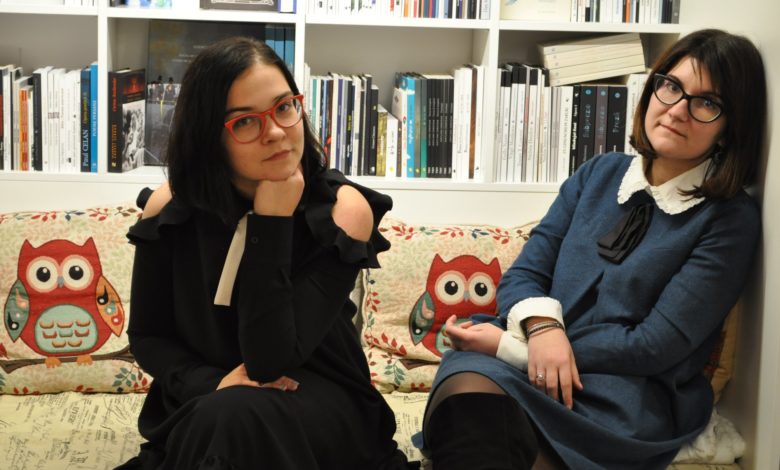
Caused rumor and even shock when announcing that, After almost nine years of existence, the Timisoara bookstore “La Two owls”, one of the most important independent bookstores in Romania, closes its doors. In a dialogue with Hotnews, the founders of Oana Doboși and Raluca Selejan said What happened after the announcement and how the calculations are.
- “A bookstore that makes 50% of the turnover in the book should be supported-by tax exemptions, accessible rents. You cannot pay the same taxes as a disco or a restaurant. From a book with a book, in the happiest, you reach zero.”
“At two owls” will no longer receive customers, from June 29. The announcement, made by the founders on the Facebook page, has sparked a lot of reactions. The writer Radu Vancu said that he is “the saddest news in the public space lately”, and the journalist Matei Martin said that the closure should “shake the cultural community.”
“This is an independent project, culturally solid, an active bookstore, a landmark of Timisoara (city, however, economically developed, plus European capital),” continued the journalist.
Matei Martin stressed that, unlike other European countries where bookstores are supported by coherent subsidies and policies, in Romania there are no mechanisms that ensure the economic survival of cultural spaces with a profoundly community impact.
Hotnews wanted to know more about how this decision was.
“I have bought a lot of time”
Oana Doboși and Raluca Selejan, the founders of the bookstore at two owls, said that the decision “was a very difficult one. I worked it very long,” says Oana Doboși.
The problems started from February 2022, after the outbreak of the war in Ukraine, when the turnover decreased considerably. “I was already coming after a pandemic and years in which the monthly minus gathered. In February 2022, I reached the greatest minus in the history of the bookstore.”
A support from a financing granted to the companies affected by the pandemic then saved them from the closing.
Oxygen mouth: The year in which Timisoara was the European Culture Capital
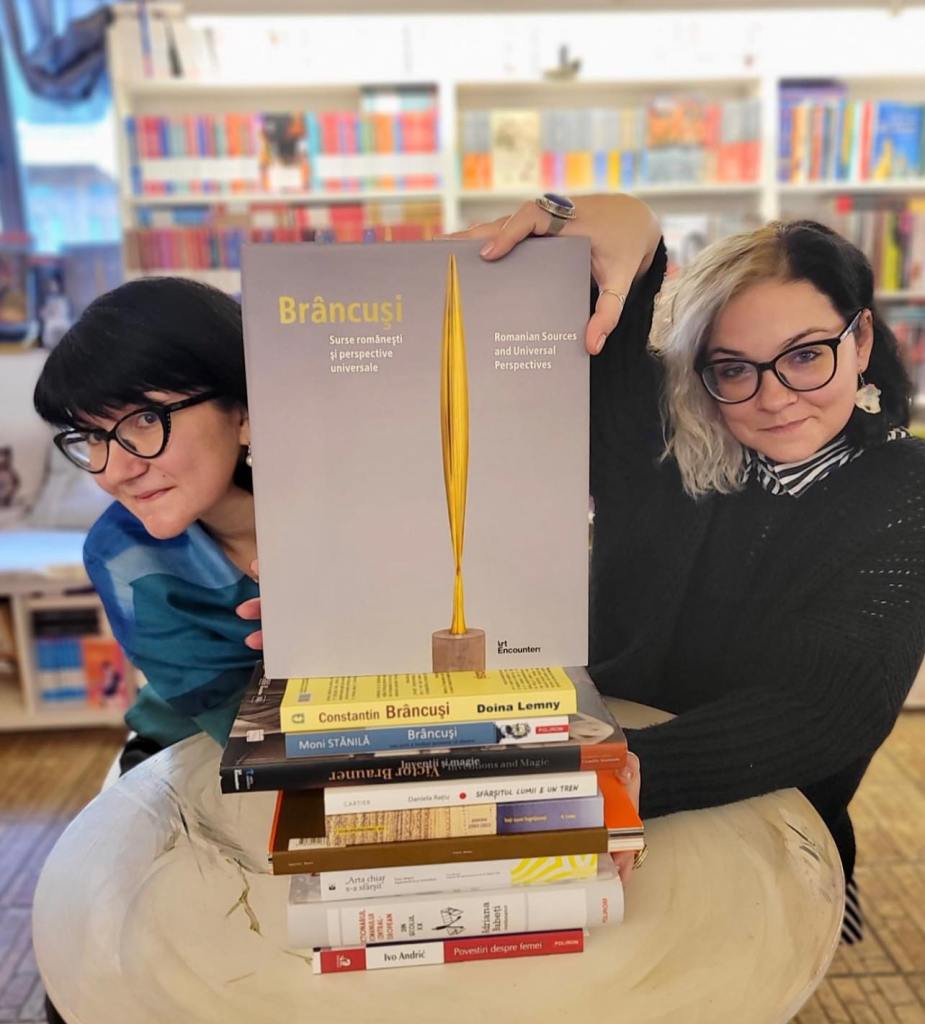
It followed 2023, the year of the European Capital of Culture, in which “it was good, for good,” says Oana. The bookstore was a partner in multiple events and sold a record number of copies, especially due to the collaboration with the Art Encounters Foundation, within the Brauner and Brâncuși exhibitions.
But 2024 came with a drastic decrease in sales, returning to the level before the cultural year.
“For six months we have minus monthly and it is very difficult to manage. It is like a hemorrhage. If we continue another month, this minus deepens and we will not be able to pay our debts to the suppliers. And for us, we have always worked with confidence and consignment, this is inconceivable.”
“We must stop the bleeding”
Although the reactions of the public were fast and full of solidarity, the founders say that the decision is irrevocable: “We decided to close. We have to stop the bleeding,” says Raluca Selejan, explaining that monthly financial losses have become impossible to manage.
“We have a summer in which we have to make returns and regulate the accounts with all our suppliers. Then we will be able to analyze the ideas that are proposed to us. We are grateful to those who want to save us. But before being saved, it must be said: the bookstore can no longer continue in the form in which it is now.”
The bookstore team counts six people, and the salaries – modest – have always been a considerable effort.
“When you make a simple calculation, you understand how hard it is to survive.”
“Salaries in a bookstore are close to nothing. And yet, our colleagues stayed with us for years, under the given conditions, because we were a family. Each of us probably supported another family member to continue,” added Oana Doboși.
The business model of the bookstore, focused exclusively on book sale, was one of the biggest challenges. “Over 90% of our turnover came from the book sale. From the price set by the editor, the bookstore receives a 30-35% discount. When you make a simple calculation, you understand how difficult it is to survive.”
“The symbolic capital does not translate into financial capital”
“We are in the famous but poor category,” says Raluca Selejan. For Timisoara “at two owls” it was more than a bookstore. It was a cultural space, a community of readers, a meeting place for writers, artists and public.
“I did events, campaigns, literary residences, but all this did not bring income. Only image, community, intellectual comfort. The symbolic capital we have is not found in financial capital,” she continues.
“People were coming, they were looking at books, we recommend them … and then they bought them online,” adds Oana.
The lack of a law of the unique book price makes the physical bookstores not be able to compete with online retailers, which offers high discounts, explains the co-founder. “In France, the law of the single price ensures that a book costs the same, whether you take it from the bookstore or from Amazon. This allows a quality competition, not on the price.”
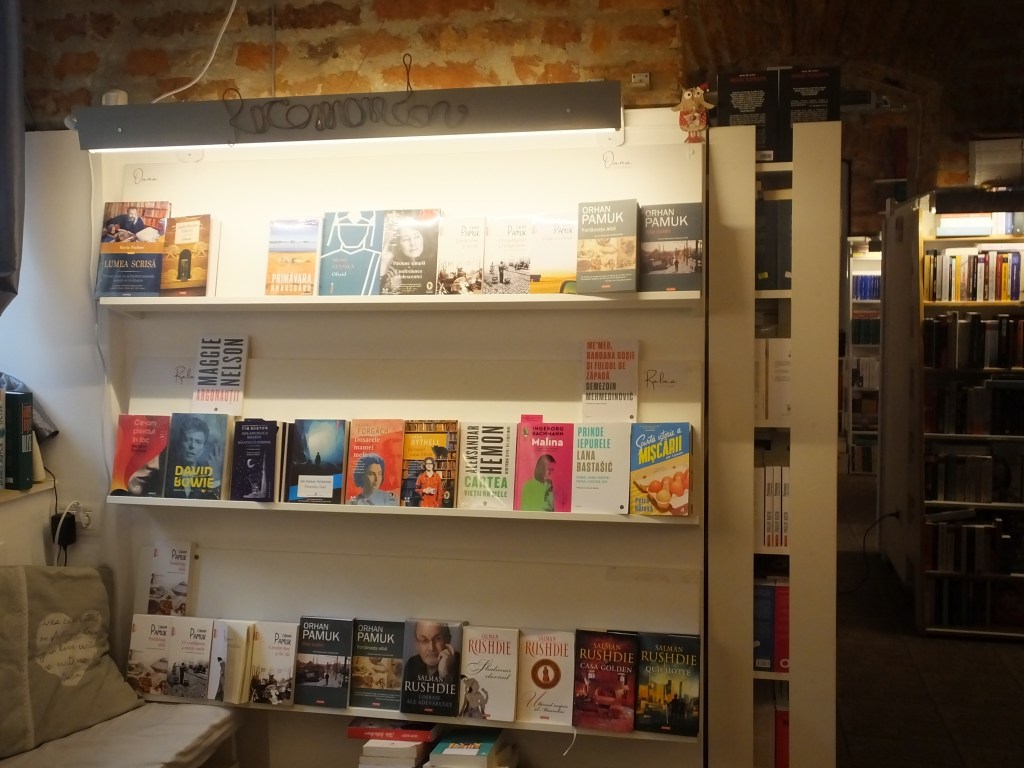
“You cannot pay the same taxes as a disco”
The founders of “two owls” criticize the lack of support for independent bookstores and emphasizes that the authorities should understand the economic specificity of the bookstores. “A bookstore that makes 50% of the turnover in the book should be supported-by tax exemptions, accessible rents. You cannot pay the same taxes as a disco or a restaurant. From a book with a book, in the happiest, you reach zero.”
And even then, says Oana, “you are most often on the minus and you have to bring money from home. You practically become a master – maybe a big word, but very real in the context of independent bookstores.”
“When you see minus after minus after minus you know you are going to stop“
Asked if they were expecting such a denouement, the answer is honest: “The thought we started when we opened the bookstore was to support ourselves from the book sale. When you see minus after the minus, you know that you are going to stop.
Finally, the founders draw attention to the fact that the problem is not related to a lack of readers, including their loyalty.
“Our readers were here, they bought, supported us. It is not about them. The problem is that, in this country, the ministers of culture and education are often changing, without long-term projects. Besides the fact that, yes, statistically, we must recognize, Romanians read and buy too little,” says Oana Doboși.
A bitter example: “In Pandemic, the Ministry of Culture has made a campaign to promote reading with a great online retailer, which was not even specialized in the book. While we, the bookstores, was a painful blow,” adds Oana Doboși.
The decision to close “two owls” is not a personal failure, say the two founders, but a symptom of a system that “does not support the culture”.
“Everything I did here almost without money and only for the book, writers and readers was absolutely fantastic. And I don't regret anything,” concludes Raluca Selejan.
Despite the closing decision, the founders say that the support of the community is still welcome, especially during this transition period. Those who want to help the bookstore in the last instance can do so: by purchasing books directly from the bookstore space until June 29, by buying one of the collection owls offered as a souvenir or through donations and sponsors directed to the Cultural Association to two owls.