Great Britain strengthens its defense: Buy planes that can carry nuclear bombs, build new submarines, set up a biological laboratory network

The London government announces a series of unprecedented measures in recent years to strengthen national defense, against a strategic evaluation that indicates real and imminent risks, including the possibility of armed conflict on the British territory, writes the Daily Mail.
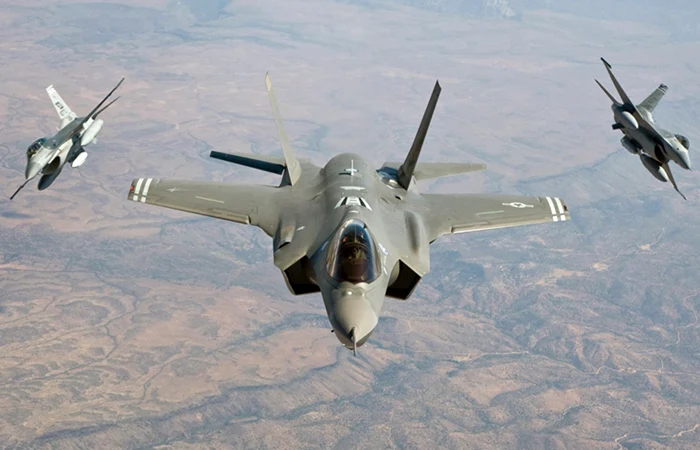
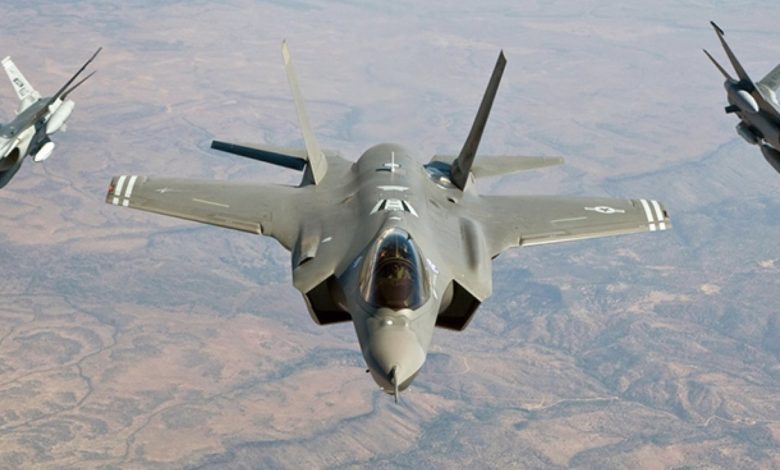
F 35/photo planes: Archive
While Prime Minister Sir Keir Starmer participates in the NATO Summit in The Hague, the British authorities confirm the purchase of 12 F-35A fighter jets-a version of those already equipped, but capable of transporting nuclear armament, especially the US B-61 bomb. The cost of a single unit amounts to about 80 million pounds.
This decision comes to complement another recently announced project: the construction of up to 12 new generation, nuclear propulsion submarines, meant to replace the current Astute class starting with the late 2030s.
The measures are justified by a new national security strategy, published on Tuesday, who warns that the United Kingdom must actively prepare for the scenario – until recently considered a direct attack on the national territory.
“For the first time in many years, we must seriously consider the possibility that the British territory will be targeted in the context of an armed conflict,” the document shows.
In the preface to the strategy, Prime Minister Starmer promises the allocation of 5% of GDP for defense and security until 2035 – a commitment that reflects the consensus between NATO leaders.
Reactivating the “blitz spirit”
In parallel, the government announces an investment program of one billion pounds for the development of a national network of biosecurity centers, in the context of increasing biological risks, whether accidental or deliberate.
The strategy includes a symbolic call to reactivate the “Blitz spirit”-that collective effort during World War II, when the British society mobilized exemplary in the face of Nazi bombings. The message is clear: future challenges will require a large social mobilization, solidarity and resilience.
Defense Minister John Healey said on Wednesday that although there is no imminent invasion threat, the document reflects a changing reality and the need to treat the territory more seriously.
The report identifies multiple sources of risk: cyber attacks from Russia, hostile activities of Iran on the British territory, as well as possible sabotage operations or actions meant to disturb the supply chains or the energy system. The importance of investments in emerging technologies – artificial intelligence, cyber security and defense industry is also underlined.
The new British strategy toward China
A distinct chapter is dedicated to China, characterized as a sophisticated, but ambiguous actor. Although spy activities and interference in British democracy are documented, the London government excludes a complete break, emphasizing the need for a “pragmatic” economic relationship.
David Lammy, Foreign Minister, told Parliament that the new British strategy for China is guided by “progressive realism” – an approach that combines the recognition of risks with the need for economic collaboration, since Beijing remains the third trading partner of the United Kingdom.
The debate was not without controversy. The conservative opposition accuses the government of making tacit concessions to China, in the context of its desire to build a large embassy in London. Former Conservative leader Sir Iain Duncan Smith reminded the record of the Beijing regime – from the threats to Taiwan, to the support given to Russia and Iran.
Minister Lammy's response was firm: there are no “hidden agreements” with China, neither related to the embassy, nor to other sensitive issues. The official also stressed that the United Kingdom will not hesitate to publicly denounce the illegal or abusive practices of the Chinese regime.
Finally, the national strategy draws three priority directions: protecting internal security, promoting a firm foreign policy and restoring sovereign capacities – including by investments in defense industries and new technologies.
In a world defined by “radical uncertainty”, as the text notes, the United Kingdom relies on a combination of technological adaptation, return to collective values and a deep reconfiguration of its defense tools.