That's how long it would take for Russia to take over Ukraine. New calculations by “The Economist”. Huge losses for Putin and almost no progress

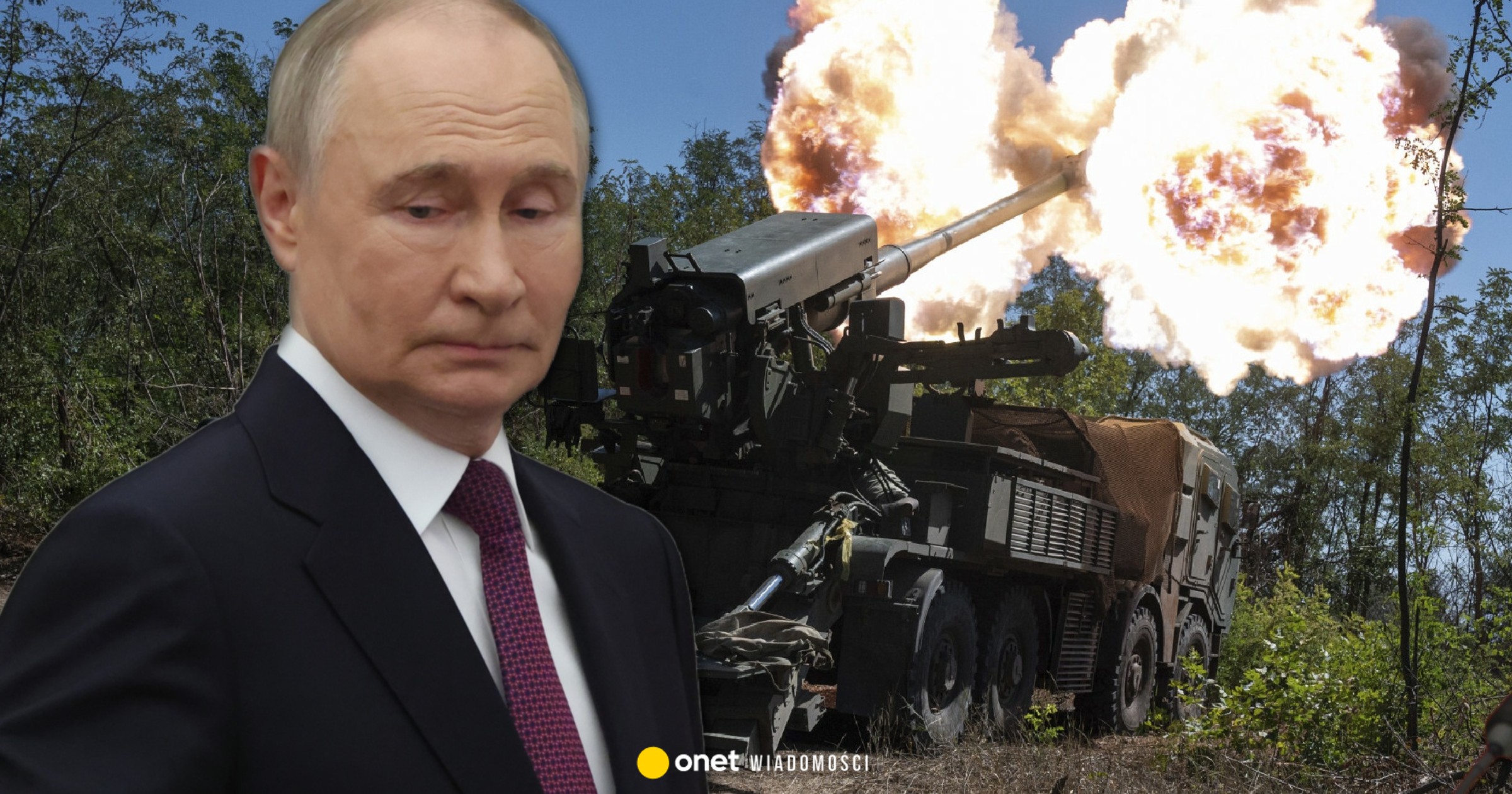
Calculations by “The Economist” indicate that during the summer offensive, Russia occupied only 0.4 percent. territory of Ukraine. It has already come to an end. Many experts and observers in the West focus on the slow progress of Russian troops and the shortage of Ukrainian soldiers. It is there though looking from the wrong side.
What's more striking is how little territory Russia took in its third and largest offensive — and what a huge cost it incurred in men and equipment. If no dramatic changes occur, Vladimir Putin will not be able to win the war on the battlefield. The fact that he continues to try despite this suggests that he is out of ideas.
In May, Russia launched a massive offensive aimed at breaking Ukrainian lines. Fierce attacks by Putin's soldiers in the following months led to fighting across the entire front line.
Russia's losses did not result in commensurate territorial gains. Since the front line stabilized after the end of Ukraine's first counter-offensive in October 2022, it has not changed significantly. No large Ukrainian city fell.
At the pace of the last 30 days, the occupation of the remaining parts of the four regions claimed by Putin – Luhansk, Donetsk, Kherson and Zaporozhye – will take until June 2030.
The offensive had enormous costs for Russia. According to estimates of “The Economist” this year in war over 100,000 died Russian soldiers. Russian forces have failed to achieve any important objectives, and key cities such as Pokrovsk are holding back the invaders despite constant attacks.
Meanwhile, negotiations between Washington and Moscow are taking place in the background. The U.S. threat to transfer lethal Tomahawk cruise missiles to Ukraine is likely one of the reasons why Vladimir Putin spoke to Donald Trump on October 16 and agreed to meet him in Budapest soon to discuss a ceasefire in Ukraine.
The article continues below the video
Trump claims that during the phone call he told the Russian leader: “Would you mind if I gave a few thousand Tomahawk missiles to your adversary?” However, the next day, during a meeting with Ukrainian President Volodymyr Zelensky, he seemed to withdraw from this proposal.
Regardless of whether and when America decides to provide Ukraine with powerful missiles, Putin has more serious reasons to worry. According to an analysis by “The Economist”, Russia incurs huge costs in exchange for minimal benefits on the battlefield.
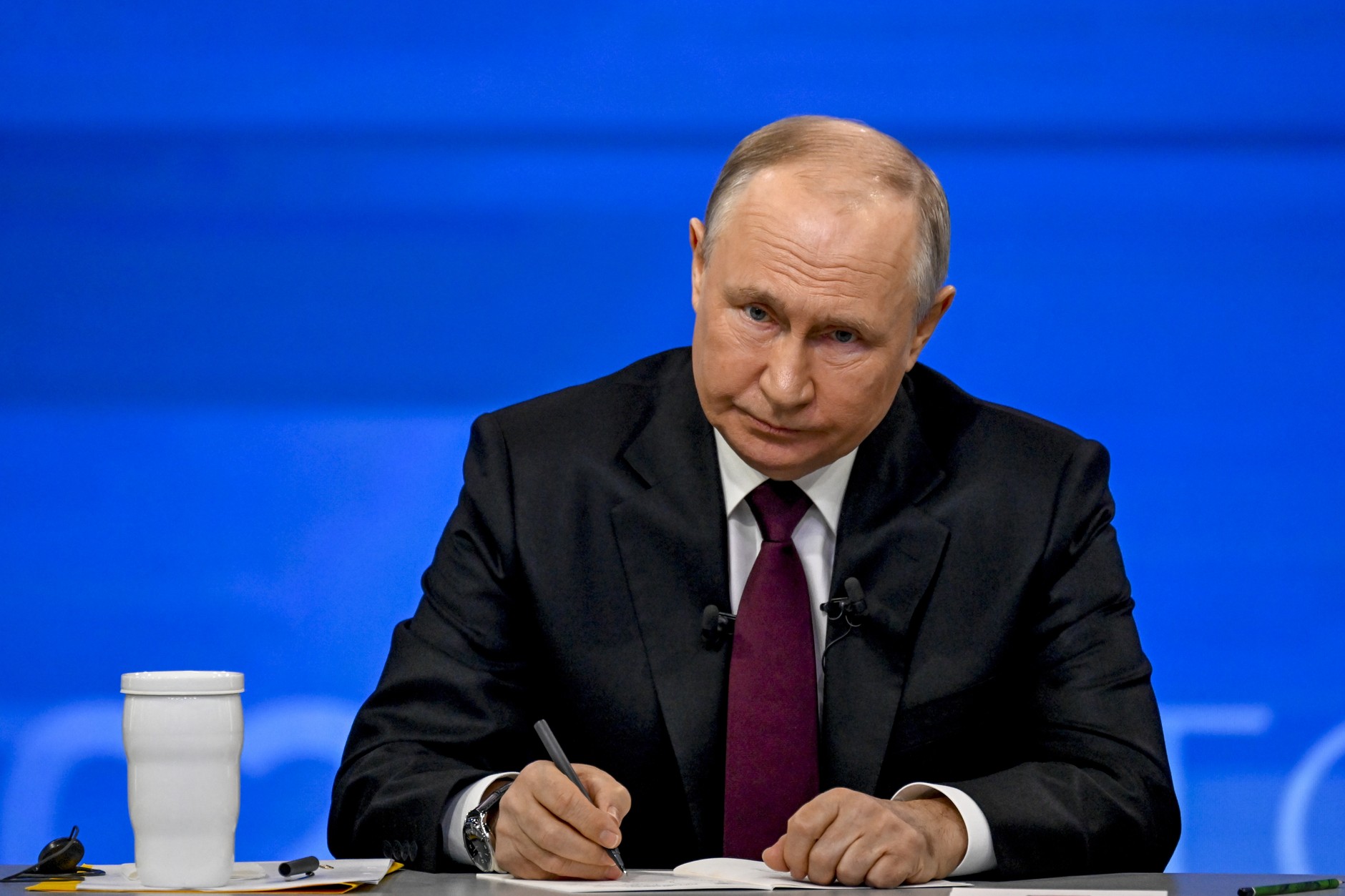
Vladimir Putinmiss.cabul / Shutterstock
“This summer's fighting appears to be much less deadly for Ukrainian soldiers than for Russian ones.”
It's impossible to say exactly how poorly Russian forces performed. However, satellite data and changes in military control areas suggest when fighting is intensifying, allowing rough estimates to be made. This is consistent with more than 200 credible casualty estimates provided by Western governments and independent researchers. Combining this data allows The Economist to estimate Russia's losses and track them over time.
According to British weekly estimates, from the beginning of the full invasion to January this year, Russian losses amounted to 640,000. up to 877 thousand soldiers, of which from 137 thousand to 228 thousand died. By October 13, these numbers had increased by almost 60%. — to the range of 984 thousand up to 1 thousand 438 victims, including from 190 thousand to 480 thousand killed.
Moreover, considering the way both armies fight, a sudden collapse of Ukraine's defense lines is unlikely. Constant drone surveillance combined with long-range precision weapons has made massing forces near the front suicidal. Gradual gains are still possible – though only at great cost – by sending small groups of soldiers into the “kill zone” to take forward positions.
It is difficult to break the Ukrainian lines. In the event of a breakthrough, it is extremely difficult to advance the grouped forces and equipment necessary to take advantage of the situation.
Perhaps that's why this summer's fighting seems much less deadly for Ukrainian soldiers than for Russian ones. We do not have enough data to estimate the costs incurred by Ukraine.
The UALosses website, which examines the losses of Ukrainian soldiers, has cataloged 77,000. 403 fatalities among Ukrainian soldiers since the beginning of the full invasion (it is estimated that another 77,842 people disappeared during the fighting). When it comes to death dates, there has been a clear downward trend since last fall, with 8,000 recorded this year. 668 deaths.
Even if the true number is twice as high, these figures would suggest that about five Russian soldiers have been killed for every Ukrainian this year.
With such indicators, the number of troops may soon become a more serious constraint for Russia than for Ukraine. When the offensive began, Russians were attracted by generous signing bonuses, and Putin's recruitment campaign outstripped Ukraine's by 10,000. up to 15 thousand soldiers per month. However, Russia's heavy losses this summer have likely erased this advantage.
Only some of Putin's wounded soldiers will return to the front line — according to the estimates of the think tank International Institute for Strategic Studies in 2024, it will be approximately 40 percent.
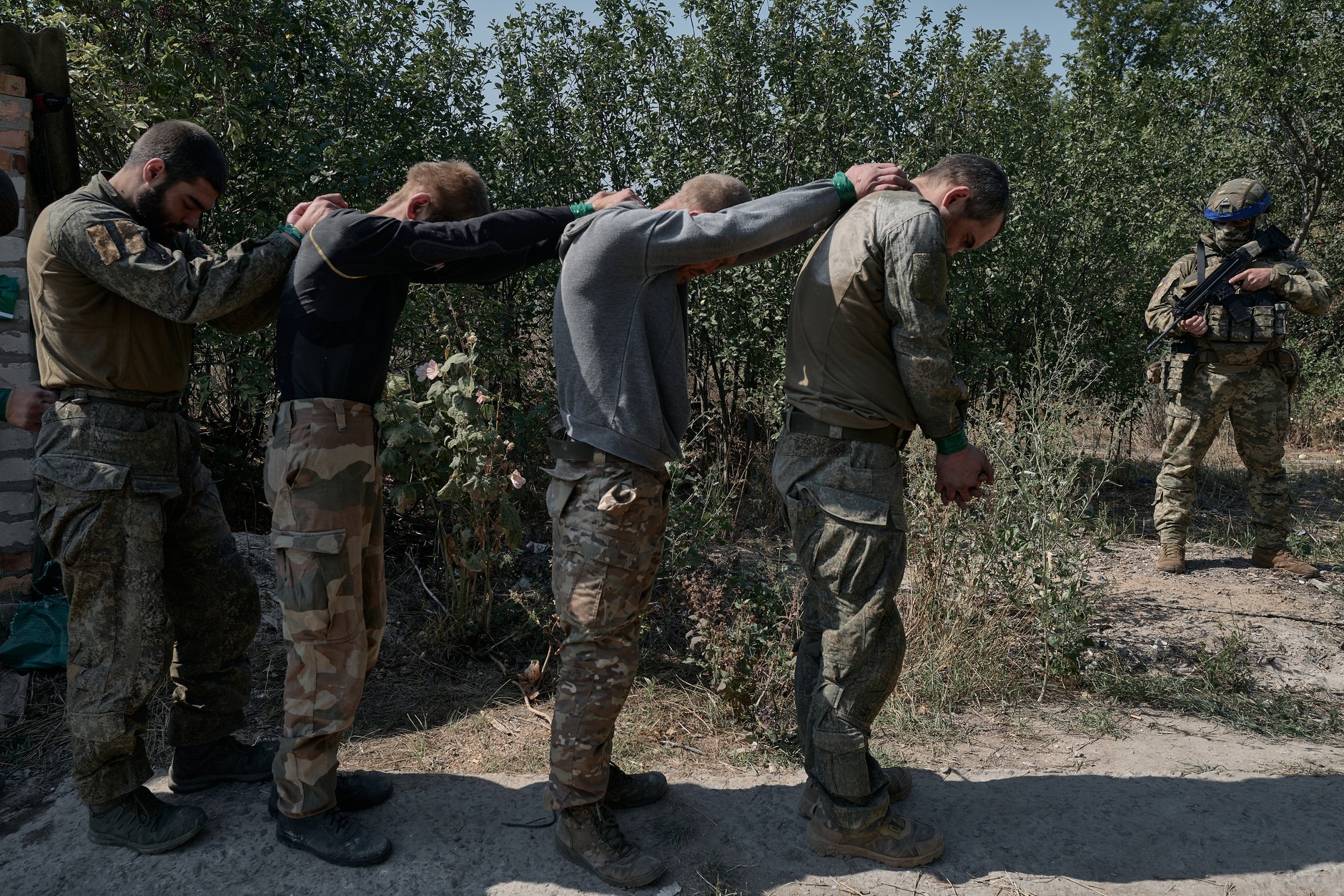
Russian soldiers captured in the Donetsk region of UkraineVlada Liberova/Libkos/Getty Images / Contributor / Getty Images
In the long run, the number of Russian men who can be sacrificed on the battlefields in eastern Ukraine is limited by the number of people of military age in Russia. Last year approx. 800 thousand young men there reached the age of 18. Insatiable demand with limited supply may mean that even larger bonuses are needed to get people to join the military. Otherwise, Putin could resort to military conscription, although this would be unpopular.
Calculations by “The Economist” show that the number of soldiers killed in the war is 0.5-1.2 percent. pre-war population of men under 60 in Russia, compared with 0.6–1.3 percent in Ukraine, taking as a starting point data on fatalities and missing persons from the UAlosses website.
“Russia's ability to continue the war at its current pace may be coming to an end.”
Another issue is equipment. Oryx, a Dutch website dedicated to collecting war data from open sources, confirmed the loss of 12,000. 541 Russian tanks and armored combat vehicles, 2 thousand 674 artillery and missile systems, 166 aircraft and 164 helicopters. All these numbers are minimum values.
Ukraine's daring attack on Russian airports and other targets in June, using drones hidden in trucks, destroyed perhaps one-sixth of Russia's strategic bomber fleet. Much of this loss can be replaced, but it is not cheap and is rarely done quickly.
After a pause in American aid in late 2023 and early 2024, when, among other things, a lack of artillery shells resulted in the death of many soldiers, Ukraine now appears to be much better supported by its allies. Aid cannot bring the dead back to life. However, given current trends, Kyiv may maintain the balance of losses in favor of Ukraine.
War changes in other ways as well. For years, Ukraine's economy has been destroyed by Russian missiles. It still suffers much more than Russia. However, it is currently responding to attacks at least to some extent, in part using relatively cheap, domestically produced missiles and drones.
If the front lines remain unchanged and the war turns into attacks on installations instead of fights for territory, Russia's advantage will no longer be so obvious. Although Russia's economy is much larger than Ukraine's, it is small compared to the economies of Ukraine's allies. Kyiv's partners, although they face individual acts of sabotage, are not harassed by Russian bombs. Several of these countries have even promised to increase defense spending by amounts exceeding Ukraine's annual budget.
Before the latest attacks on Russia's energy infrastructure, polls – which should always be treated with caution in Russia – suggested that Russians were optimistic about the economy. There is little indication of its imminent decline. If the West continues to support Ukraine, the war may continue, generating huge costs, and Russia will slowly gain more territory.
However, Russia's ability to continue the war at its current pace may also be coming to an end. And if Putin continues to act no matter what, he will run another risk. After three years of failed offensives, sudden collapse may become more likely for Russia's war economy than Ukraine's defense lines.