
The mystery of the medieval gate of Corvin Castle, the only door that survived the greatest fires in its history

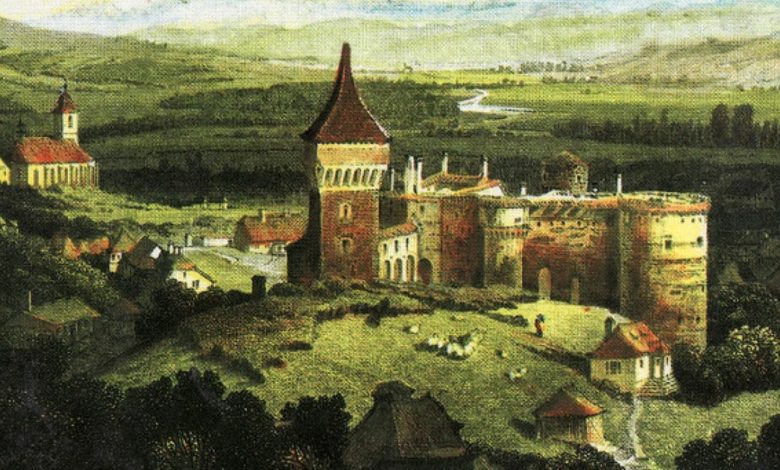
In the 19th century, Corvin Castle was destroyed by two devastating fires. The only original object that survived is the massive wooden door of the old prison, witness of the most dramatic episodes in the history of the castle.
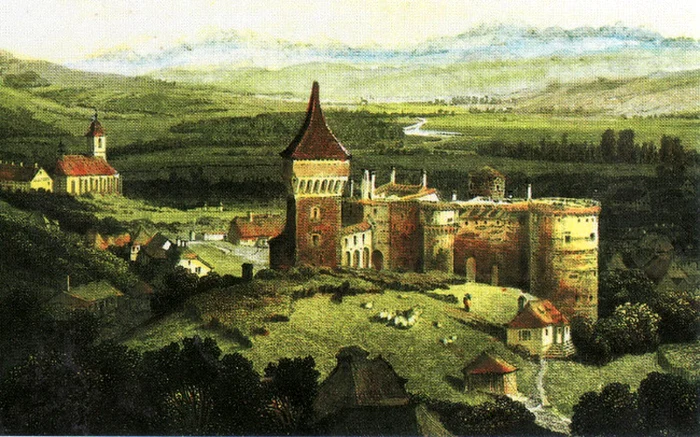
Corvin Castle after the fire of 1854. Grading by Ludwig Rohbock
In the 19th century, two major fires seriously affected the Corvin Castle of Hunedoara. Following them, the only furniture object that survived was the massive wooden door of the old prison, today considered one of the most valuable original pieces of the monument.
Lajos Aranyi, the forgotten Savior of Corvin Castle
After the second fire, spent in 1854, the Corvin Castle was saved from the ruin and due to the initiative of the doctor and archaeologist Lajos Arányi (1812-1887). Impressed by the advanced state of degradation he observed in 1863, Aranyi transformed the castle to rescue into a personal mission.
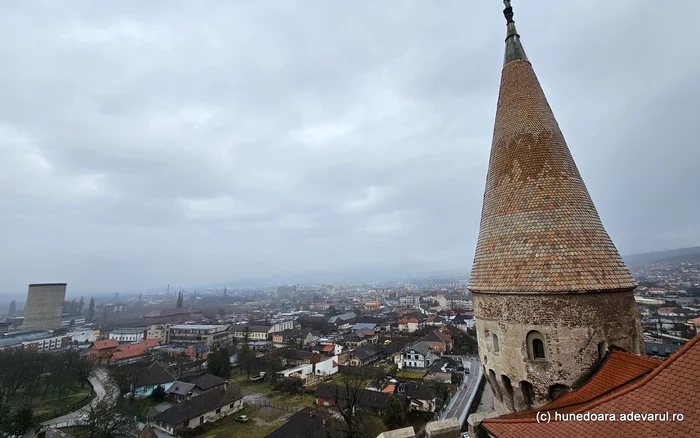
PHOTO Tower: Daniel Guță
He made models, mobilized donations and, in 1868, presented an ambitious restoration plan, which proposed the transformation of the castle into a royal summer residence and hunting palace.
The project was supported by the Austro-Hungarian authorities, and in the restoration works were involved the renowned architects of the time. For his efforts, Aranyi was rewarded, in 1875, with the title of “noble de Hunedoara”.
Corvin Castle, neglected by Habsburgs
Lajos Arányi described the catastrophic state of the castle in his book “Vajda-Hunyad Vára, 1452, 1681, 1866”, published in 1867. According to him, at the beginning of the 19th century, Corvin Castle-located between 1724 and 1867 in the care of the Austrian state-had reached a state of degradation. It had been transformed into a living building and iron warehouse.
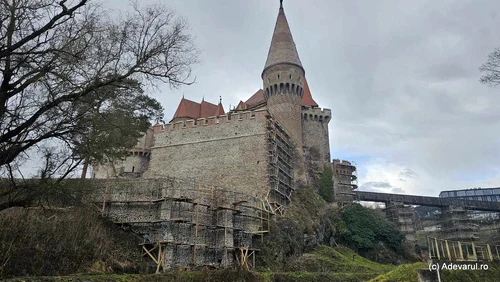
Image 1/27:
Corvin Castle of Hunedoara Photo Daniel Guță Adevărul (4) JPG
“In 1724, the local craftsmen who did not know the Gothic aesthetics nor the Renaissance style, began rustic changes, with disastrous interventions. They built the elegant windows, replaced the cornices and molds with a simple brick and destroyed the original frames of the windows and gates”Aranyi wrote.
Although in the first part of the 19th century some repairs were made, the real impulse for restoration came only in 1817, when Emperor Francis I of the Habsburg Empire visited Transylvania and spent three days at Corvin Castle.
“Impressed by the historical and artistic value of the castle, the emperor allocated 30,000 gold for restoration – a considerable amount for that period. But even when it seemed that the monument regained its brilliance, a new disaster: a lightning destroyed the chapel and other important parts of the construction.”Lajos Aranyi reported.
The fire would have taken place in 1824, and in the years that followed, with the help of donations, the castle was partially repaired and, in the middle of the 19th century, had become an attraction for foreign travelers, even used as a place of accommodation.
The 1854 fire that destroyed the Corvin Castle
A strong fire destroyed the Corvin Castle again in April 1854, marking one of the most dramatic moments in the history of the monument in Hunedoara.
“On April 11, at 11 o'clock in the evening, a fire broke out in the eastern part of the castle, under the roof. Pushed by the East wind, the fire rapidly included the southern roof, then the northern one. Due to the collapse of the roof, almost all the ceilings of the rooms collapsed and the fire was burned. Intentionally.”, Wrote Hölgyfutár Hungarian magazine in 1854.
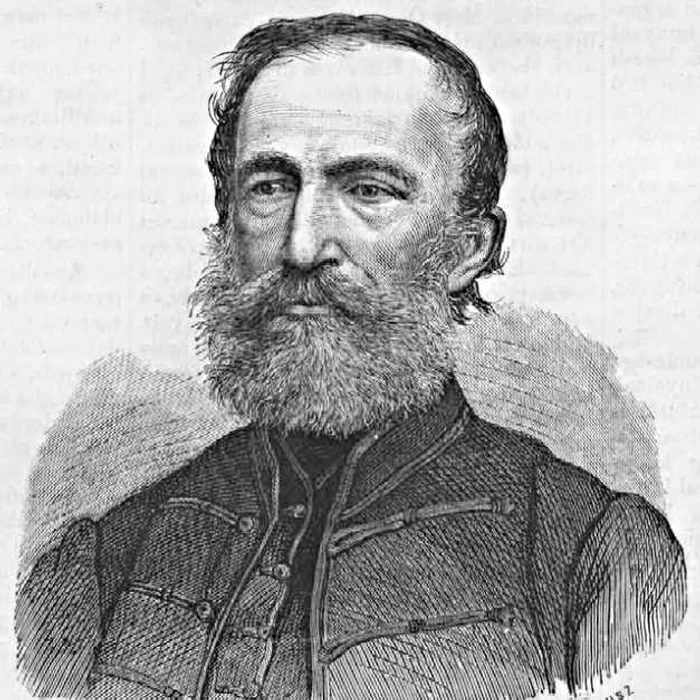
Lajos Aranyi. Engraving from the nineteenth century
According to other historical sources, the fire would have erupted near the gate tower, from the negligence of the Hunedoara net, Dombrády, and rapidly expanded, turning the castle into a ruin. Another hypothesis claims that the fire was caused by a lightning bolt that hit the northern roof on the night of April 13, 1854, around 23.
“Several newspapers relate how the famous historical castle in Hunedoara, in Transylvania, on the night of April 12 and 13, was consumed by flames. The fire broke out in the tower called Buzdugan and, fed by a strong wind, spread rapidly. The wind led the flames and beyond the walls, so that the walls of the city inform the Hungarian daily Budapesti Hírlap.
The severity of the disaster was also announced by the Sunday newspaper, which noted that only one tower remained whole after the fire.
The prison gate – the only original piece of wood that survived
Of all the original elements of the Corvin Castle, only the door of the medieval prison survived the fire of 1854. According to the museographers, this is the only original wooden door of the castle, over five centuries old, and has a special historical value.
Behind the massive door, the gloomy spaces in the dungeon of the Corvin Castle, the place that has been, the source of numerous historical legends and controversies, are depicted. Although some stories claim that Vlad Țepeș would have been closed here for seven years, the research denies this hypothesis: the castle prison dates from the sixteenth -XVII centuries, so she is too “young” to have hosted “Dracula”.
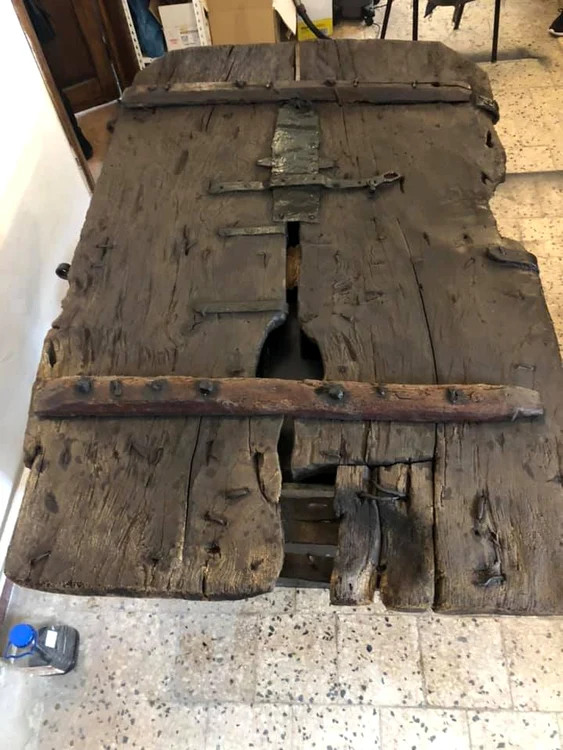
The prison door, restored in 2021. Photo Castle Castle Museum.
The place was used during Horea's uprising in 1784. According to documents, over 100 rioted servants were imprisoned in the cellars. They were to be executed, but they were rescued at the last moment, after the intervention of an Austrian officer who refused the request of the nobles to kill them on the spot.
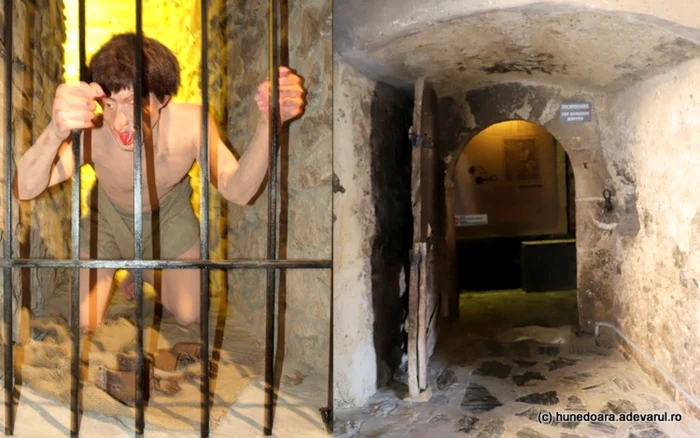
The gate and the inside of the prison. Photo: Daniel Guță. TRUTH
The medieval prison was a bleak space, with several levels and a dark “Oubliette” type room, where the convicts were left to die. Over the years, the dungeon has been transformed into smokers, and most of its traces were lost. The only authentic piece kept to this day is the massive wooden door, over 500 years old, restored in 2021.
Corvin Castle, in ruin after the fire of 1854
For a decade and a half after the devastating fire of 1854, Corvin Castle remained in ruin, but continued to attract the attention of visitors, curious to discover one of the most important medieval monuments in Transylvania.
“The rooms of the castle are largely destroyed, either by the fire that consumed a few years ago, or because of the neglect that followed. The big room and the adjacent rooms, the beautiful corridors are doomed to the collapse and are in a dangerous state,” note the English geologist David Thomas Ansted, following his visit to Hunedoara, in 1862.
According to Lajos Arányi, in Vienna, the Imperial and Royal Central Commission has been operating in Vienna since 1850 for the research and conservation of architectural monuments. It was informed, in 1855, by the Conservatory József Lorenz (from the Sighișoara area) about the fire at the Castle of Huniazilor, erupted on April 13, 1854. The Commission recommended to cover the building and to maintain it in an acceptable state.
After almost two years, in 1857, the Vienna Central Commission sent to the Local Administration in Transylvania that it is necessary to send an expert to Hunedoara, to evaluate the situation of the castle and to elaborate a restoration plan.
The Austrian state was asked to bear the expenses for repairs from public funds. However, as the national resources had already been allocated to other projects, the Commission appealed to the Ministry of Commerce. The amount requested for the rehabilitation of the Hall of the Knights and the Chapel was 17,000 forints, but the ministry approved only 400 forint and 34 creations – an allocation considered totally unsatisfactory.
Around 1870, Corvin Castle entered into one of the largest restoration processes in its history, works that continued until the beginning of the 20th century. The interventions saved the medieval monument, and the castle began to gradually regain its prestige and beauty lost in the flames of 1854.


