Irregularities in the work of two regional electoral commissions in Bielsko-Biała were revealed; The materials will be forwarded to the prosecutor's office for the checking proceedings – the spokeswoman of the Prosecutor General Anna Adamiak was reported in Wednesday.
“The District Court in Bielsko -Biała revealed irregularities after examining the voting cards from two regional electoral commissions. This raises serious doubts as to the reliability of the work of these committees. It also indicates the possibility of committing a crime” – wrote prosecutor general prosecutor Adam Bodnar on the platform X. on Wednesday afternoon.
The head of the permanent committee of the Council of Ministers Maciej Berek also referred to this issue on this platform. “An important, but also disturbing message of the National Prosecutor's Office about the results of the inspection of voting cards from two peripheral electoral commissions” – assessed Berek.
“The irregularities revealed by the District Court in Bielsko-Biała raise serious doubts as to the reliability of the work of the indicated election committees, as well as indicate the possibility of committing a crime” – on the other hand, the prosecutor Adamiak was emphasized.
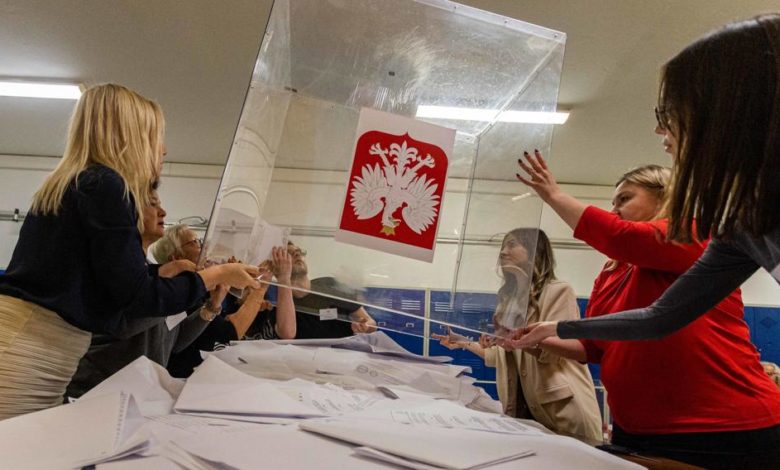
For several days, the media have been informing about irregularities related to counting votes in some committees during the second round of presidential elections. Informed, among others About cases when representatives of the peripheral committees submitted a post factum mistakes consisting in the reverse attributing to the votes to candidates – the votes cast for Rafał Trzaskowski were assigned to Karol Nawrocki. This was the case with the District Electoral Commission No. 95 at Krakow, as well as the District Electoral Commission No. 13 in Mińsk Mazowiecki.
Last week, in connection with the election protests brought in, the Supreme Court decided to inspect cards from a total of 13 regional election committees. These committees included Committee discussed in the media from Krakow and Mińsk Mazowiecki. Visual inspection was also ordered, among others In relation to two regional electoral commissions – No. 30 and 61 – from Bielsko -Biała.
As then passed “Supreme Court, the above evidence decided to conduct by court assistance by competent district courts.”
Prok. Adamiak announced on Wednesday that a meeting was held in the District Court in Bielsko-Biała regarding the inspection of voting cards from these two committees. “The meeting was attended by the prosecutor of the District Prosecutor's Office in Bielsko -Biała, authorized by PG,” she said.
As the PG spokeswoman revealed, as a result of this inspection, it was established that in one of the peripheral election committees “there were votes cast for individual candidates for the President of the Republic of Poland, which resulted in the erroneous assumption that Karol Nawrocki obtained a larger number of votes in this region, while they were actually cast to Rafał Trzaskowski.”
In turn, in the second committee – as Adamiak pointed out – “160 votes cast for the candidate Rafał Trzaskowski, among the total number of 959 all votes cast, were placed in a closed and sealed package with the votes assigned to the candidate Karol Nawrocki, and then incorrectly demonstrated in the election protocol as votes cast for him.”
“Materials in this respect will be forwarded to the Regional Prosecutor's Office in Katowice in order to designate the prosecutor's office competent and matter -of -factly to conduct the checking proceedings” – announced PG spokeswoman.
At the same time, prosecutor Adamiak stipulated that among the cases for which the Supreme Court decided to inspect the voting cards, “so far only the District Court in Bielsko-Biała informed the Prosecutor General about the date of the meeting in this regard”. In relation to other protests in which the Supreme Court ordered the inspection, PG was not notified of the dates of court meetings in this case. That is why PG asked the Supreme Court to provide information about the result of these other inspections.
The Supreme Court recognizes protests composed of three judges in non -litigious proceedings. “If the need to conduct evidence appears in the course of recognizing the protest, a decision is issued to allow and take evidence, e.g. from the testimonies of witnesses or inspecting the voting cards,” said the Supreme Court.
After recognizing the protest, the SN may leave it without further running. This means that the protest for formal reasons cannot be recognized in substance.
If the protest is recognized in substance, the Supreme Court may express the opinion that the protest is unfounded or that it is justified. “In the event of an opinion on the legitimacy of the allegations of protest, the Supreme Court indicates whether the irregularities found had an impact on the result of the election” – said the Supreme Court.
After recognizing all election protests, based on the report on the election presented by the PKW, the Supreme Court decides on the validity of the election of the President of the Republic of Poland – it must do so within 30 days of making the results of the choice to the public. This means that the last day that must be made this decision is July 2 this year.
The Prosecutor General consistently indicates that there is a need to exclude all judges of the Chamber of Extraordinary Control and Public Affairs of the Supreme Court from adjudicating in matters of electoral protests, as they were appointed as a result of procedures before the National Court Register after 2017 and “do not meet the requirements of independence and impartiality, and thus cannot be considered as established in accordance with the Constitution of the Republic of Poland.”
SN spokesman Judge Aleksander Stępkowski emphasizes that “the only chamber attached legally to recognize protests is the Chamber of Extraordinary Control and Public Affairs of the Supreme Court.” (PAP)
Nl/ MJA/ MRO/