Israel did in Iran, in a few days, what Russia failed in Ukraine in almost four years. The lesson Moscow ignores and Tehran learns in pain

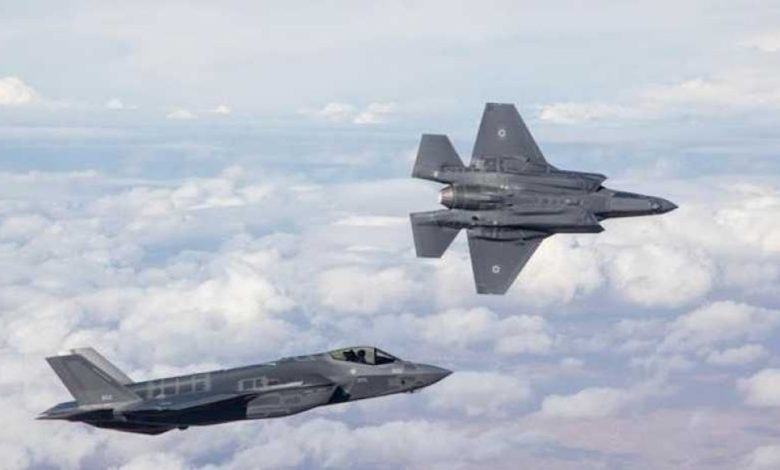
In just 48 hours from the beginning of the air campaign over Iran, Israel has claimed aerial superiority over a large area in the western country, including on the capital Tehran. Such a success, obtained with aircraft of the fifth generation and supported by a complex network of special information and operations, contrasts dramatically with the impasse of the Russian army in Ukraine, where, after more than three years of war, Moscow does not yet control the Ukrainian airspace.
The Israeli F-35 aircraft have dusted the Iranian/photo anti-aircraft defense: Archive
The difference is more than technological – it is one of strategic culture, preparation, information integration and risk assumption. And this contrast raises serious questions not only for the great military powers, but also for the global security architecture, which seems to frail exactly where it should be strengthened.
Air Superiority – the key to a fast campaign
The attack of Israel on Iran, triggered on June 13, did not take place as a conventional war, with tanks and infantry, but as a demonstration of precise and devastating air force. After neutralizing the Iranian anti-aircraft systems in the west of the country, including around Tehran, the F-35 aircraft began to hit strategic targets directly from the Iranian airspace. It was a radical paradigm change: Israel has passed from the use of long -range rockets and high -range bombs, such as jdam or spice – cheaper, faster, more abundant.
This is a strategic lesson that Russia has failed to apply in Ukraine. The lack of aerial superiority forced Moscow to resort to a war of wear, costly, bloody and inefficient. The Russian aviation, kept away from the Ukrainian sky by a dispersed and well -camouflaged anti -aircraft defense, was reduced to secondary roles. Israel, on the other hand, made a territory of domination – a difference that explains and why its offensive seems, for the moment, unstoppable.
Russia and Iran: Two lessons, the same mistake
International military officials and analysts point out that Israel has successfully applied a lesson that Russia has tried – and failed – to put into practice in Ukraine. The US-Kingdom in reserve David Depulation notes that when a part controls the air space, it has the freedom to hit, to handle and to dictate the rhythm of the campaign. When no one does – as is the case in Ukraine – the result is a violent deadlock.
Iran, like Russia, has relied on dissemination – through rockets, regional alliances and the image of impenetrable fortress. However, it underfined the anti -aircraft defense and neglected the modernization of the fighter aviation. Unlike Ukraine, who camouflaged and dispersed the defenses before the Russian invasion, Iran was taken by surprise. It was, experts say, a classic strategic mistake, doubled by the illusion that its regional allies – especially Hezbollah – could have discouraged an Israeli air campaign.
But these allies are now either destroyed or isolated. Syria can no longer offer an effective operational corridor. And the previous Israeli bombings on Syrian infrastructure have created what military sources call an “airway” to the heart of Iran.
When air superiority also means political superiority
Israel has not only achieved a technical advantage, but also a symbolic advantage. He managed to destroy strategic targets and leaders of the revolutionary guards, including the head of intelligence services, Hossein Salami. He showed that he has a capacity for infiltration and anticipation that contrasts with the repeated failures of Russia in Ukrainian field.
Analyst Michael Horowitz recently noticed that Israel made Iran exactly what Russia dreamed of doing Ukraine in 2022: to hit quickly, with the help of informants and special teams. The difference was of a political context: the Iranian regime is improper and fractured – a fertile ground for clandestine operations. Ukraine, on the other hand, has shown a remarkable national cohesion.
A lesson for Europe too
At first glance, the comparison between Iran and Ukraine seems artificial. But behind the obvious differences – geographical, political, military – there is an essential question for any state that matters on the protection of international systems: what happens when dissemination fails?
Both Iran and Russia have relied on fear – not on the real ability to prevent the blows. Both states suffered when the opponent was willing and able to hit decisively and quickly. For Europe, and especially for the eastern flank of NATO, this is not a theoretical lesson. It is a warning.
Air superiority is no longer a luxury, but a condition of strategic survival. And the control of information, cybernetics and electromagnetic space becomes a weapon itself. Israel understood this. Russia ignored. Iran teaches him now – in pain.