Russia's summer offensive will end in a humanitarian disaster in Ukraine

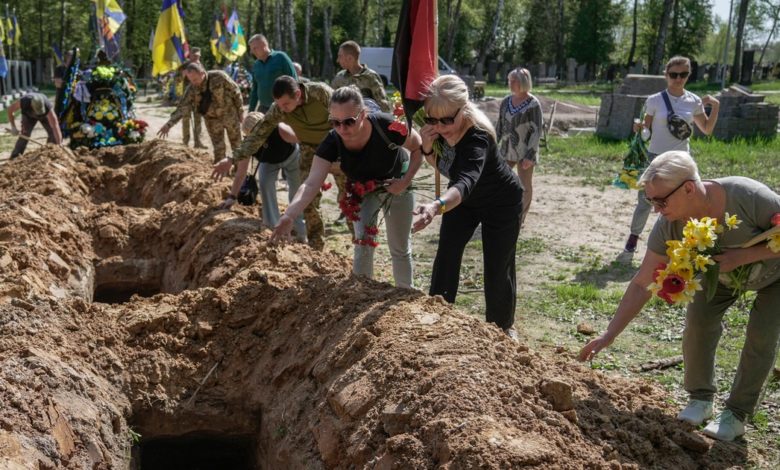
While some analysts consider this to be a subversive strategy aimed at dispels and weakening Ukraine forces, The risk of real territory should not be neglected and requires a reaction that goes beyond military planning.
At the beginning of June 2025, the Russian army deployed about 125,000 soldiers at the borders of Kharkiv and Sumski. The Kremlin used the negotiating window to rotate new equipment, additional workforce and improve drones, Preparing for long -term offensive operations on many fronts this summer. The evidence also indicates the simultaneous offensive plans in the south, east and north, potentially meaning that Ukraine must repel Russian attacks on many fronts for the second time from 2022.
However, the Ukrainian army is currently more insufficiently planted than in 2022. In turn, the army Russian showed readiness to absorb high losses in pursuit of tactical profits. The minimum goal of the Kremlin seems to be occupied at least four circuits (Lugansk, Donetsk, Zaporoski and Kherson) and the establishment of a militarized buffer zone in the northeast of the country (Czernihowski, Sumski and Kharkiv region).
What's more, these offensive preparations are not only part of the Kremlin's expansive ambitions. They can also lead to serious humanitarian consequences far outside the front regions. As in the case of previous offenses undertaken by the Russian army, there will probably be a rapid increase in forced displacement, the destruction of critical infrastructure and an increase in the number of victims.
Ukrainian organizations are already overloaded
In the light of the Russian military expansion Ukraine is in the face of a new wave of internal resettlementwhich it will be extremely difficult to deal with because of reduced financing and limited staff in the humanitarian sector in this country.
Currently, the humanitarian aid system remains critically underfunded, and until May 1, 2025, only 20 percent were obtained. from $ 2.63 billion [ok, 9,7 mld dol.]for which the humanitarian needs and response were requested to 2025. The situation is further deteriorated by the freezing of the financing by the US, which It has already hurt humanitarian activities in Ukraineweakening many programs and providing critical help with those in need throughout the country. 70 percent Ukrainian non -governmental organizations are involved in humanitarian activities and they cannot absorb the next wave of displacement without sufficient international help.
Currently, over 3.6 million civilians remain internally resettled in Ukraine, and many of them have been forced to escape repeatedly from 2022. What's more, until autumn 2025, when the Russian summer offensive will get worse, Over 200,000 may be resettled. civilians living near the front regions.
As part of the hybrid war, the Kremlin tries to destabilize Ukraine, preventing residence of selected front regions through continuous destruction of critical infrastructure. This can be observed in the Russian active use of fire, drones and rocket attacks in combination with increased attacks of land forces. Recently, these activities have led to several new waves of compulsory evacuation in the front regions. These evacuations are often hindered by continuous Russian fire and drone attacks.
Russians intentionally attack civilians
In the summary region, the Russian army recently took several villages and intensified fire, drones and rocket attacks throughout the region, especially in the sums. Over the past few weeks, numerous victims have been reported, including fatal and significant damage to critical civil infrastructure. Last week Local authorities ordered the obligatory evacuation of residents from 11 consecutive housing estates In the summary circuit, which caused that the inhabitants of 213 housing estates were covered by compulsory evacuation.
In the Czernihowski region, the Kremlin plans an offensive, constantly conducting attacks throughout the region, in particular using drones. Many of these attacks led to Damage to residential buildings and victims among civiliansbut evacuations remain limited due to the deteriorated security situation. For example, last week, only 17 civilians were evacuated from the affected border communities, despite the ongoing drones and fire attacks, and 770 civilians still live in a 5-kilometer border zone with Russia.
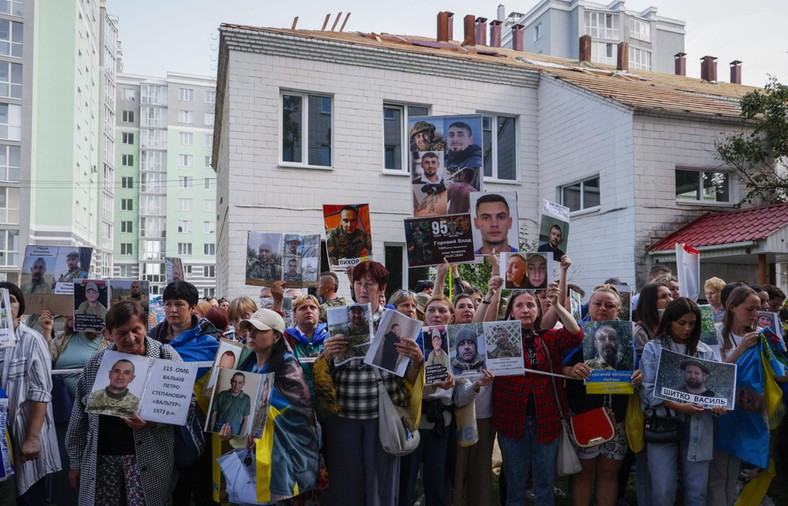
Families of prisoners are waiting for the return of their loved ones. Czernihów, June 10, 2025
Meanwhile, in the Kharkiv region, the Russian army intensifies its offensive in several places, especially in the vicinity of Wochańska and Kupiańska. From spring, there have been numerous connected attacks of drones and rockets on civil infrastructure, which often led to many victims among the civilians in Kharkov and the entire circuit. Due to the deteriorating security situation, the authorities are currently preparing to expand the evacuation zones with several new housing estates.
Over 305 people were evacuated in the Donetsk region in one day, including 34 children and 14 disabled people, because the attacks intensified in the vicinity of the cities of Czasiw Jar and Toreck. Recently, the head of the Donetsk military administration confirmed that The next rounds of evacuation are expected in connection with the new escalation. In addition, almost 2,000 civilians remain in Pokrowsk, a critical Ukrainian military and logistics center, where evacuation efforts are complicated by the Russian fire and drone attacks.
In the Zaporian District, the Russians began new offensive operations near the towns of Robotyne and Stepowe, aimed at logistics nodes and sediments on the front line. The Russian army methodically also attacks civil infrastructure with fire and drones, which led to several new mandatory evacuation of legal guardians with children in several new settlements.
And finally, in the Kersoan region, using drones, leads a brutal campaign to terrorize civilians and extortion. The Independent International Investigative Commission of Ukraine stated that almost 150 civilians were killed in 10 months, and the attacks of Russian drones were intentionally aimed at civilians.
The Kremlin sows fear by publishing recordings from drones stylized for video games, strengthening psychological pressure on civilians. Such actions are part of a wider hybrid strategy, aimed at military acquisition of front regions when they become unfit for living.
G7 must react
Developing offensive operations in the front regions will have Not only military, but also humanitarian consequencesthat can affect Ukraine's internal stability.
The buffer zone planned by the Kremlin is not only a military maneuver aimed at extending the Ukrainian troops as part of the Russian summer offensive. It is part of a wider hybrid strategy aimed at forcing resettlement, disruption of management and exhaustion of Ukraine's internal ability to accept newly displaced civilians.
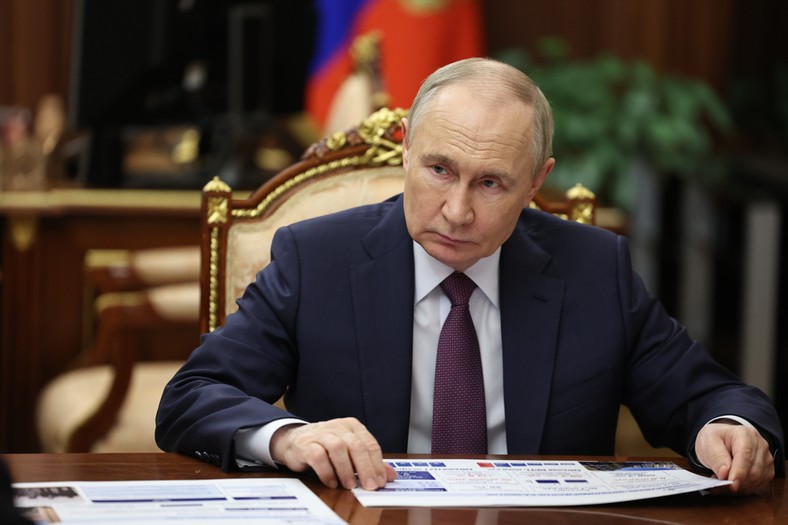
Vladimir Putin in the Kremlin. Moscow, June 16, 2025
To prevent this, Western leaders should urgently give priority to delivering military assistance to Ukraine, support Ukrainian civil infrastructure, which has been affected by negative effects, and to help Evacuation and shelter systems on the front lineto avoid overloading and collapsing under the influence of new waves of displacement on a large scale. If these steps are not taken, we can expect serious humanitarian consequences, which by the end of this year will affect not only Ukraine, but also on Europe.
These realities should be diligently dealt with on G7 peak in Canada this week, and not sweep them under the rug because of the challenges elsewhere.