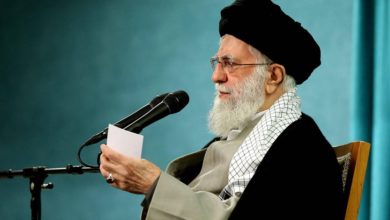
Israel's real goal can be something much larger than Iran's nuclear program

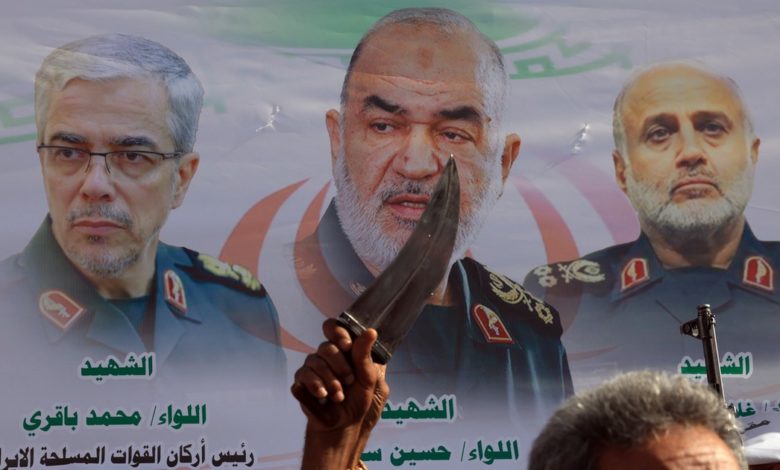
However, listening to Israeli comments about attacks and learning about their reach, including the murder of the highest -ranking of Iranian military, struck me that they did not rule out the possibility of changing the regime. If you look at these actions in the context of Israeli military activities from autumn 2023 – attacks that led to overthrow, helped overthrow or decayed many of the “regimes” allied with Iran in the Gaza, Lebanon and Syria zone – this does not seem so unbelievable.
The overthrow or at least serious weakness of the Iranian regime is also something that Israel can do on its own; He does not necessarily need the help of Americans on the offensive.
In his multi -layered preliminary remarks about Friday's attacks, the Israeli Prime Minister Binjamin Netanyahu said that the operation against Iran “will last as many days as it would be necessary to remove this threat.” He never limited the definition of this threat to the Iran nuclear program.
This is due to the fact that the Israeli government perceives the Iranian regimes itself, not just its nuclear and military infrastructure as a real threat. Considering that Iranian leaders, many of whom are die -hard followers of the extremist ideology of Shiite Islam, have long threatened to destroy Israel, this conclusion is not surprising.
When reports of attacks and murders appeared, I contacted several current and former American officials, as well as analysts, asking if the real goal of the Israeli is to change the regime.
Nobody ruled it out, and it was a group of people representing both parties.
– Why not? Sure – said one of the former high -ranking American officials anonymously, who dealt with the issues of the Middle East during Biden's administration. – Wouldn't that be great? He added.
Behnam Ben Talebl, an analyst at the Jastrzębia Foundation for the Defense of Democracy, pointed out that Israeli attacks went beyond infrastructure and were aimed at command and control of Iran, which means that this operation cannot be simply “described as preventing proliferation [gwałtownego rozwoju zbrojeń jądrowych]”.
Hope for a fall
Many members of the Iranian diaspora – a group known from the internal divisions, in which the hopes for the reform of the Iranian regime have long expired – he hopes that this is the moment they have been waiting for for a long time.
Reza Pahlawi, a former prince of Iran, whose father, Shah, was overthrown by Islamic revolutionaries in the late 1970s, called ordinary Iranians to use the occasion, and Iranian security forces to break with spiritual leadership.
“The regime is weak and divided. It may fall,” he wrote in social media. “As I told my compatriots: Iran belongs to you and you have to recover it. I am with you. Be strong and we will win.”
As time passed on Friday, after the publication of this article, Netanyahu expressed similar calls to the Iranians, telling them that the Islamic regime “was never weaker” and that Israel “paves your way to freedom.”
“It is time for the Iranian people to unite around its flag and historical heritage, fighting for freedom from a bad and oppressive regime,” he said.
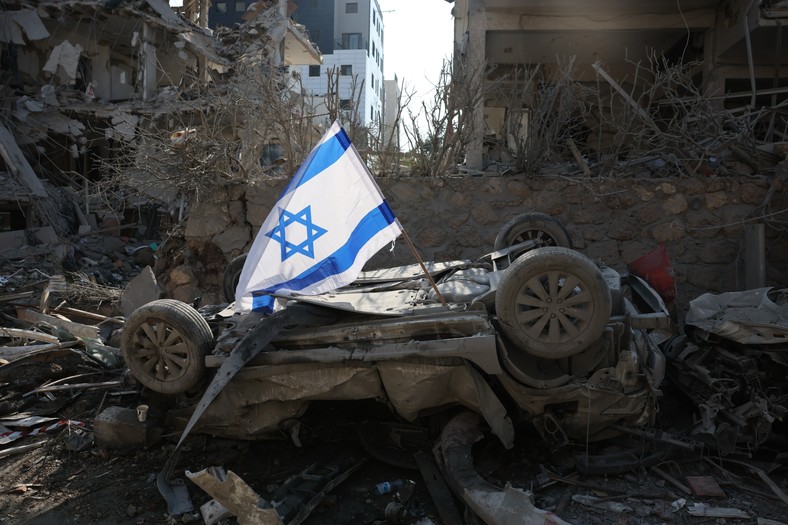
Israeli flag on a damaged car after hitting a ballistic missile in a residential district in Ramat Gan, near Tel Aviv, Israel, June 14, 2025.
What next?
However, there are many unknowns.
Is Israel really able to carry out an operation that will change the regime?
Military analysts agree that Israel would need the help of the United States to destroy the entire nuclear infrastructure of Iran, a significant part of which is deeply buried underground. However, if Israel continues the attacks, including Iranian political leadersthe fall of the regime is not excluded.
Iran has already started retaliation against Israel, using drones and rockets. Israelis must decide how long they are ready to endure such bombings – as long as Iran can continue them. The United States and some Arab countries will almost certainly help Israel in defense, as they did earlier.
However, their reaction may depend on Israel's tactics.
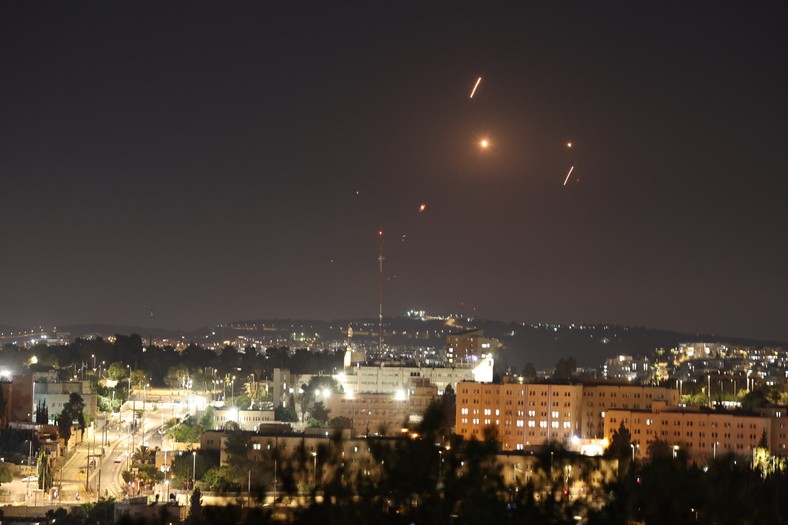
Rockets fired from Iran seen on Jerusalem, June 13, 2025.
“Busts limited to military and nuclear purposes will be a blow to the prestige of the regime, while impacts causing broader economic and civil damage can cause a different type of social reaction,” noted Michael Singh, who served in the National Security Council for George W. Bush.
Even if the Iranian government survives the Israeli offensive, it can be weakened so much that its fall will occur faster than it would happen otherwise. However, this may depend on how strong the pressure continue to exert external powers, especially the United States, on the regime, the foundation of which is anti -Americanism.
Already from the capitals around the world there are voices calling Israel and Iran to avoid escalation of the conflict. Considering Israel's previous actions in places such as Gaza and Lebanon, I would not count on listening to these appeals. Sometimes such appeals sound empty, especially if they come from Arab countries that would be happy to receive the fall of the Iranian regime.
Uncertain position of the USA
Even Trump, for whom Netanyahu practically ran an election campaign, does not seem to be able to influence Israel's decisions.
He has long been afraid of entanglement in the war in the Middle East and – at least publicly – called Israel to wait until nuclear negotiations between the USA and Iran have made further progress. Israel, however, hit the next round of talks, which was to take place on Sunday.
In his last social media posts, Trump used the threat of further Israeli attacks to convince Iranians to conclude an agreement that would limit their nuclear program (Iran has long claims that his nuclear program is peaceful and does not serve the production of weapons).
“Iran must conclude an agreement before there is nothing and save what was once known as the Iranian Empire,” wrote Trump (maybe he meant the Persian Empire, which has long ceased to exist, but this is not the point).
“It can always be worse”
Even if the regime falls, there is no reason to be sure that he will replace something better – they warn the present and former officials. The fallen, leadership of the Iranian state could become a breeding ground for all kinds of new problems. Power could be taken over by a much more militarized autocracy, without hesitation seeking to capture nuclear weapons.
“History shows us that it can always be worse,” Jonathan Panikoff, a former US intelligence officer, wrote in an online analysis. “Israel may be in a constant, ongoing and much more intense war, which will no longer take place in the shade, as it happened over the years.”
Israel, however, may not run so far into the future, argued one of the American officials who has long been involved in the Middle East. “I don't think they are too worried about what will happen as long as the threat to Israel is too weak,” he said.
**
Nahal Toosi is a senior Politico correspondent for foreign affairs. In her career, which led her to various corners of the world, reported wars, genocide and political chaos. In its “Compass” column, he analyzes the decision -making processes of the world elites responsible for national security and foreign policy and their consequences.