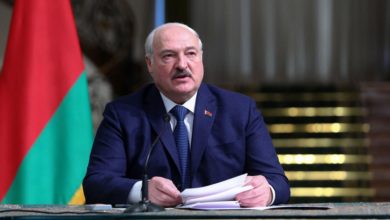
Our children will not be able to be safely born, “if the infanticide is legal and if sub -Saharian engineers with knives in teeth imported around the centers of integration of foreigners will take over our lives” – this is how the return to demographic normality looks like Grzegorz Braun, president of the Polish Crown Confederation. And this is just a fragment of his vision of solving on the Vistula River smoking demographic problems.
Demograph forecasts are known and disturbing: in 2060 the number of inhabitants of the Commonwealth will shrink from the current 37.4 million to 31 million. Meanwhile, in the Czech Republic, where normality is measured on a completely different scale, someone like Grzegorz Braun would never gather the number of signatures required to start in the election. Above the Vltava, his views on the issues of natural growth would have the support of a group no greater than the average Puba Pub would accommodate.
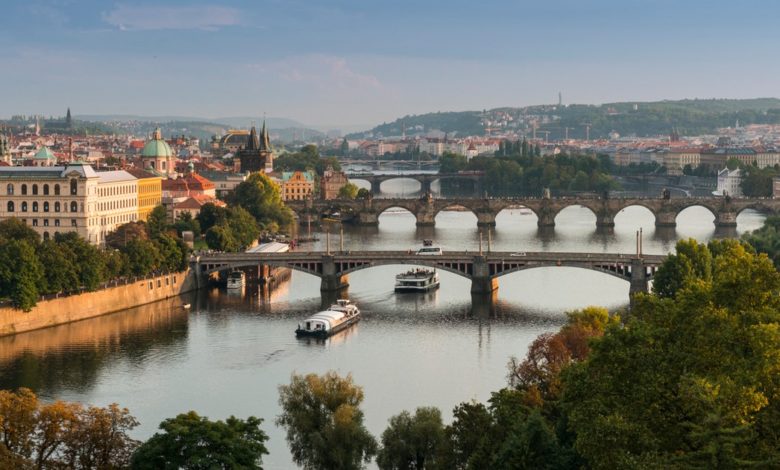
There is a lot going on in the Czech Republic in terms of demography. Although “infanticide” is legal, as a politician calls for secular greeting in Polish, more residents are born in Prague than he dies! Thus, a common trend in Central European metropolises was detained, where the number of inhabitants increases, but only thanks to migration processes.
The demographic crisis in our southern neighbors began earlier than in Poland. Earlier – and more effectively – they began to react to him. Real demographic changes in Prague are a result of completely different than Pisz 500 plus or 800 plus, actions of the authorities. Playing is also free from the “councils” of the Church, which brings the opposite to the expected. On the Vltava, the church focuses on its role. He doesn't try to impose anything on anyone – the Czechs have long been associated with a weekend trip to a more or less valuable architectural monument.
A specific parental allowance
According to the Czech statistical office (Český statistický úřad, ČSú), in 2024 the number of inhabitants of Prague increased by 13,000. 148 people and at the end of December 2024 amounted to 1 million 398 thousand. ČSú also adds what the Czechs are particularly pleased with during this period in Prague, 12,000 were born. 85 children, and 11 thousand died 792 people. Which means that there were 293 more births than deaths.
It is worth noting that Prague is for now the only city of the Czech Republic, where we can talk about positive natural growth. Although more and more children are born in other large cities, such as Brno and Pilsen, and it looks like a negative birth rate and will go down in history. And 20-30 years ago, both in Prague and in other cities, a disturbingly high negative natural increase was recorded.
One of the basic factors contributing to the growth of fertility in the Czech Republic is Rodičovský Prišpěvel (parental allowance). Parents have the right to obtain it until the child is fourth, employed in the Czech Republic for an employment contract. Everyone receives this benefit, regardless of earnings. A quite large group of Poles is employed in the Czech Republic who also praise Rodičovský Prišpěvel. Its amount is 350 thousand. crowns (approx. PLN 60,000) per child and 535 thousand crowns (approx. PLN 91,000) if a second child appears during the payment of the benefit. The parental allowance is paid monthly and parents can decide on the amount of monthly tranches.
When downloading the add -on, it is possible to perform gainful work provided that the child's care is provided (e.g. nursery, babysitter or care of another family member).
In the Czech Republic, parents also receive special benefits (Přídavky) for a child. Their amount depends on the child's age: in the range of 0-6 years the monthly Přídavek is 830 crowns (PLN 143), for a child aged 6-16-970 crowns (PLN 167), aged 15-26 years-1080 crowns (PLN 184). In the case of parents with low earnings (rare in the Czech Republic), this allowance is about 500 crowns per month (PLN 85).
The Way of the Czechs to demographic success does not lead through the constant “adding” money. According to Eurostat in Poland, in 2020, we spent 3.5 percent on pro -family policy. GDP, meanwhile in the Czech Republic 2.15 percent were allocated to it. GDP.
Rodičovský prišpěvek is a large financial injection for young people, although 40+ parents are increasingly happening. This add -on is so high that after the birth of a child, most Czech mothers stay at home and bring up their comfort. This phenomenon is confirmed by statistics – in our southern neighbors the employment rate for women with children up to three years is one of the lowest in Europe! It is safety and predictability that undoubtedly have a key impact on the decision to have a child.
It is worth looking at how the Czech ministry encourages his countrymen to give birth: if the Czech will quickly decide to give birth to another child, then the unused part of the benefit receives in the form of a one -off payment, and for the next comfort – another benefit. As you can see, a special emphasis on the welfare of the family is placed above the Vltava.
Být V Pohodě and civic duty
Být V Pohodě – is a Czech phrase, basically irresistible for most languages. In a nutshell, it means a state of peace, slack, safety, and life satisfaction. Czech couples, both those who were born in the 21st century and these 40+, recognize that nowadays one of the elements of this state is … the burning of the child. And preferably two or three. And in the low time as possible. The Czechs explain it like this:
According to many Czechs, the conclusion of a traditional marriage does not affect the V Pohodě in any way. Probably why as much as 49 percent Children are born today in informal relationships. You can also hear another argumentation that “childbirth is a civic duty”, on the Vistula River nowadays. As you can see, the Czech obligation and diligence also took over this area of life.
Být V Pohodě with two or three children is helped by a constant sense of security and concern for both parents and later about their children. In the Czech Republic, where, as in all civilized Europe, up to the 12th week, abortion is legal, no one will think to delay the procedure or hide behind the rape moral standards. Doctors in poviat (and not only) hospitals do not play with pregnant women in a ciuubabka.
No politician will come to the hospital and abuse of doctors who perform his duties. An abortion pill has been available in the Czech Republic for over 10 years, which can be used until 49. After the last menstrual period. Access to contraception is also easier. Tablets “day after” can be bought without a prescription.
Another phenomenon distinguishing Poland from the Czech Republic is that older women, aged 35-40, also decide to do children. In most hospitals, in large cities and in the province, the level of gynecological care is very high.
The same applies to the clinic.
According to the Eastern Studies Center, the deductible tendency in the number of abortion also contributes to the better demographic results of the Czech Republic. This inheritance has been recorded since 1990.
A well-functioning state medical service sector also supports women's decisions by the possibility of using in vitro fertilization (for women aged 18-40).
Thanks to this method, about 7-8 percent are born in the Czech Republic. kids. Meanwhile, in Poland, we returned to state fertilization in vitro only a few months after the election of October 15, 2023.
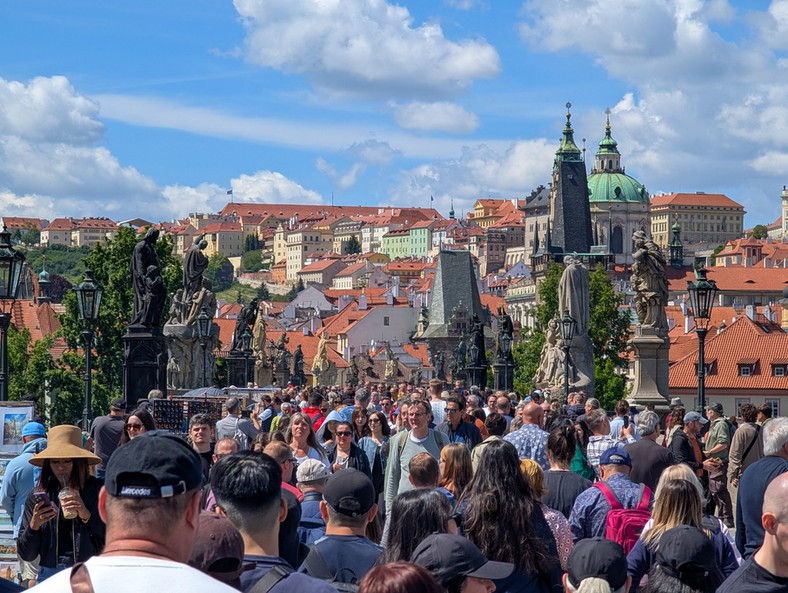
Prague
Climate for upbringing
Our southern neighbors do not complain that raising a child or children costs a lot. This is also valued by many Poles whom fate threw to the Czech Republic in search of work.
It is easier to save children in a nursery or kindergarten than in Poland. In smaller towns this place in kindergarten is waiting for a child, not the other way around! State nurseries and kindergartens are cheap. They cost around 700 crowns per month (approx. PLN 120). Children's meals are also inexpensive. Similarly, various extracurricular activities do not ruin the home budget.
The healthcare system in Czech schools is much better than the Vistula. There is no problem with access to virtually any doctor. Polish parents in the Czech Republic pay attention to free dental treatment for all children in schools.
There are no Polish layettes for students, with little exceptions covering the poorest families or couple. Despite this, providing a child with all school essentials has never been a problem for parents.
The climate conducive to upbringing and development of children is also influenced by the attitude of most Czech employers who understand the needs of mothers. This is confirmed by statistics. They show that Czech and Polish reality differ very much. Today only 20 percent Czech with a child (children) up to four years old. Almost 60 percent go to work in Poland. mothers with children in this age range. After a few years, the situation changes radically. The employment rate for Czech mothers with a child (children) at the age of 5-14 is the highest in Europe and amounts to as much as 93 percent!
Being the V Pohodě with a bunch of todders and then teenagers is also a joyful spending of free time – most often in a group of parents with their children. While in the Polish mountains we will most often meet young people around thirty, on the Czech trails in the Karkonosze or Beskids, when we see their peers, they are often with children who have just taken their first steps, or have it before them.
Parents transport them to the top or to the shelter in fancy, sometimes carriers and holds they produce. They go V Pohodě. With friends, neighbors, colleagues from the university or from work. And with a traditional Czech beer in a plastic mug, bought or in a kiosk in the middle of the trail, or an extracted “self -service” from the river, for a few crowns thrown into the wooden piggy bank next door. Because it is also one of the elements of being the V Pohodě and the essence of the small (for now?) Prague Baby boom to understand the essence of the small (for now?).