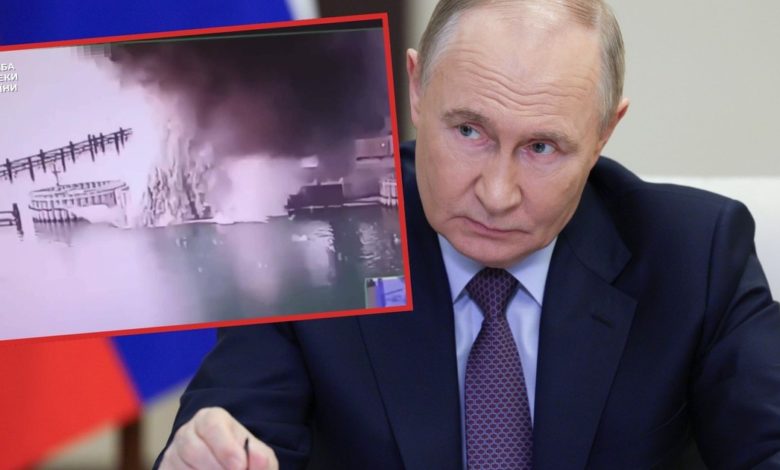
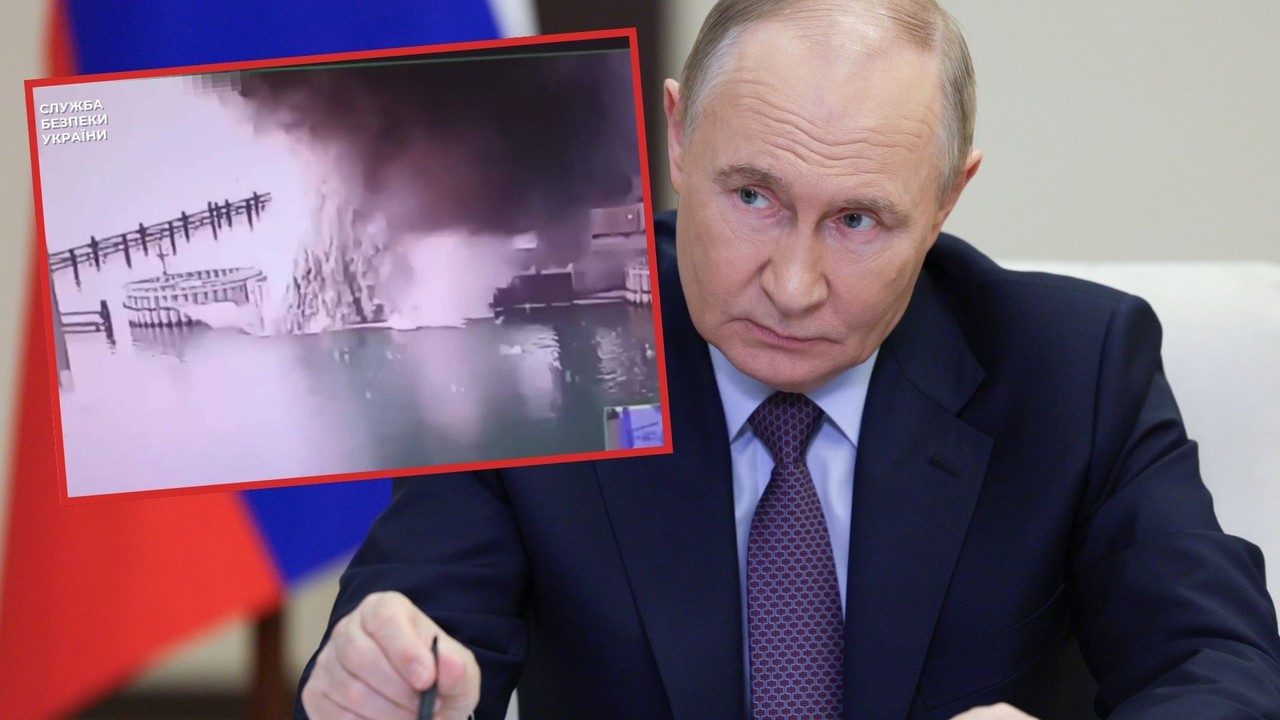
The car traffic on the Crimean Bridge, which, according to the Ukrainian SBU special services, is in the “catastrophic state”, was resumed. However, after the coordinated attacks of Ukraine, nothing is routinely. While Russian telegram channels are hyperkathered from nerves, the head of the Crimean Tatars Medjl, Refat Czubarov, turned to Russian colonists in Crimea: “As soon as the bridge in Kercz [mieście okupowanym przez Rosjan na wschodzie Półwyspu Krymskiego] It will be destroyed – and this moment is fast approaching – you will be imprisoned, “said Czubarow in a video.” Russian generals do not hesitate to use you as human shields to save yourself, “he added.
A picture of what may be the target of Ukrainian attacks from recent days is gradually emerging: Crimea. After an explosion on the bridge on Tuesday, June 3, explosions were reported to the only two crossings between Crimea and the continental part of Ukraine. Already last week, partisans blew up important railway bridges and signaling devices on the territory of Ukraine occupied by Russia and the entire freight train on the way to Crimea. On Tuesday evening, an air alarm was announced all over Crimea.
The last days have clearly revealed Russia's weakness.
The bridge in Crimea still stands and is “only” damaged. However, the explosive charge (according to SBU 1100 kg in the TNT equivalent) was placed directly at the foundation. In addition, there were reports of subsequent explosions, probably caused by underwater drones. The bridge is therefore practically a wreck. Since the first attack with a bomb truck in October 2022, the railway line running through the bridge is very limited. Then the entire section of the road of the bridge collapsed.
From the point of view of Russia, however, this route is the safest way to supply Crimea and troops in the south of Ukraine. In addition, the railway infrastructure in the southern and eastern part of Ukraine, occupied by Russia, is not adapted to a large east-west transit from Russia to Crimea. The routes have recently been expanded, but Russian occupiers are dealing with the increasing attacks of the ATESZ guerrilla group, which deliberately attacks this infrastructure. In addition, the transitions from continental Ukraine on Crimea are within the range of Ukrainian drones, rockets and maneuvering missiles. In this way Crimea gradually falls into the siege.
Continuation of the material under the video
The peninsula plays a key role for the Russian regime, both in military and symbolic terms. The Crimean activist and journalist Alim Aliw calls Crimea the “imperial fetish” of Russia. Annexation in spring 2014 brought Putin the highest results of surveys in his entire career.
Since then, Russia has been strengthening its claims to power through hard occupation and colonization policy. Opposition is punished with repression, deportations and arrests. According to Alim Aliew, after the annexation of Crimea by Russia, from 70,000 went towards Ukraine. up to 80 thousand people. However, since 2014, at least 800,000 came to Crimea. people from Russia, including members of security services, officials, families, pensioners.
Panic displacement of Russian troops
Current attacks can cause panic in Crimea and in its area. Atesz reports about the hasty transfer of Russian troops to the Kinburn Spit, an exposed promontory near Crimea in the Kersoan region, at the mouth of the Dnieper.
Russia is apparently afraid of the Ukrainian landing operation. During panic displacement, there were misunderstandings, and consequently to the fighting between Russian troops (80. A separate mechanized brigade and 61. A separate sea brigade), in which at least two people were killed.
However, Ukraine faces a huge problem: Russia has planned for a large -scale propaganda and militarization camps for Ukrainian children from the occupied areas of Crimea. There is a fear that Russia can use these children as live shields.
I’m Ashley Davis as an editor, I’m committed to upholding the highest standards of integrity and accuracy in every piece we publish. My work is driven by curiosity, a passion for truth, and a belief that journalism plays a crucial role in shaping public discourse. I strive to tell stories that not only inform but also inspire action and conversation.