Ecstasy in China. One transaction warmed the real estate market

To understand this, just look at the house in the Changraign district in Shanghai. It is kept in a style reminiscent of traditional German architecture and has a large garden at the front, which is a characteristic feature of the most exclusive districts of the city. However, what really catches the eye is its price.
On May 27, the property was sold for a stunning amount of 270 million yuan (about 143 million), which caused a sensation in the Chinese press. Price 500 thousand Juan (about PLN 261,000) per sq m makes it one of the most expensive real estate auctions in recent years. The fact that the wealthy buyers are ready to pay such an excessive price is interpreted as a sign that a huge and endless crisis on the Chinese real estate market can finally end.
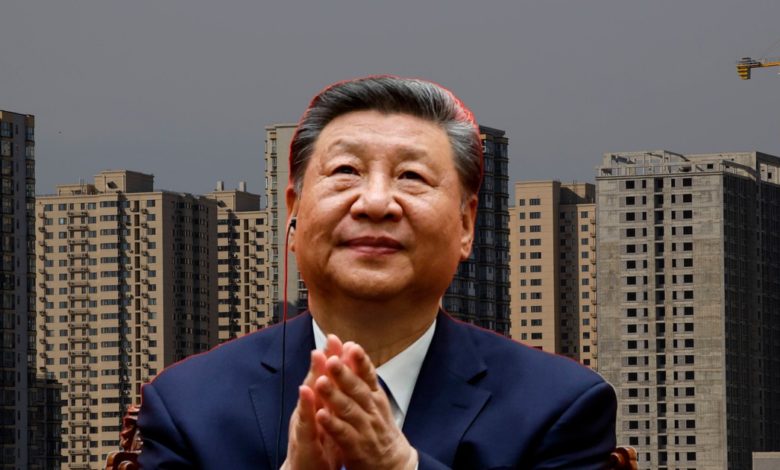
Speculation about changing the situation appears at dinner, in conference rooms and at symposia devoted to state planning. The excitement is not surprising. Real estate, in a broad sense, accounted for about 25 percent. GDP on the eve of the crash in 2020. Currently, they constitute 15 percent. Or less, which shows how much the decrease in the economic situation affected GDP growth. It is difficult to overestimate the negative impact of falling prices on ordinary people. In 2021, 80 percent household assets were related to real estate; Currently, this percentage has fallen to 70 percent. Hundreds of developers went bankrupt, leaving behind unpaid bills. Weakening of trust helps to explain poor consumer demand.
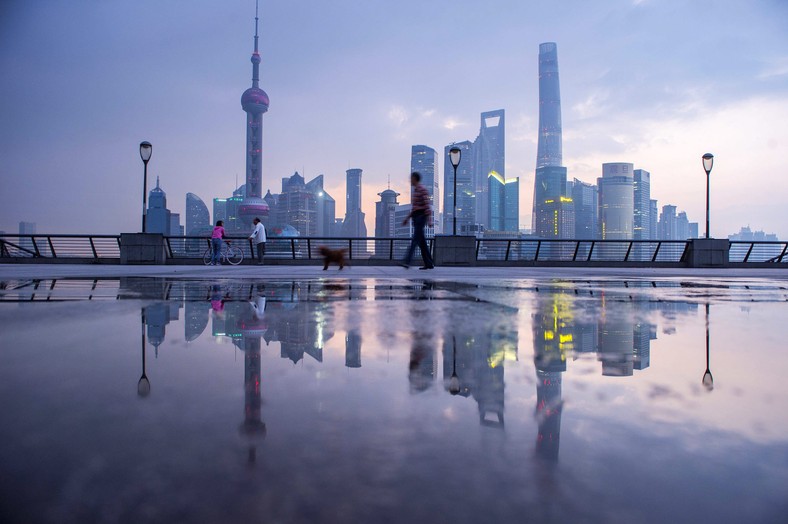
Panorama of Shanghai, China, November 9, 2015.
End of crisis
But Although the market is still falling, for the first time since the beginning of the crisis you can extend convincing arguments that the end is already close. In the first four months of 2025, the sale of new houses in terms of value fell by less than three percent. compared to the previous year. In 2024, the decline was 17 percent. Analysts of the S&P GLOBAL rating agency estimate that in the rest of the year the transactions will continue to fall, but only slightly.
One of the biggest problems was that millions of apartments were built, but they were never sold. Last year, as many as 80 million of them were empty. Currently, in the cities of the “first row”, such as Beijing, Shanghai, Kanton and Shenzhen, this problem disappears. According to CRIC, the service providing real estate data, at the end of January, the supplies of developers in these cities would be enough for about 12 and a half months at the current sales rate. This is a decline from almost 20 months in July 2024 and not much less than the average from 2016-2019 for 100 largest cities in the country, which was 10 months. In other words, the surplus begins to look less scary.
Shanghai's renaissance illustrates this trend. From February to April, the number of transactions increased slightly compared to the previous year, which makes it one of the few cities in which prices grew a month after month in terms of year to year. There are still restrictions on who can buy real estate and in what number. However, according to Fang, real estate agents, luxury houses begin to be bought quickly. In her opinion, the prices of standard real estate will probably continue to grow this year, but the most expensive houses are even faster.
What has changed?
What explains the achievement of DNA by the market, from which it can finally affect? Simply partially the passage of time. According to the IMF survey on the collapse of real estate prices around the world in 1970–2003, the average duration of the crisis on the real estate market is four years. The authorities in Beijing began the deflation of the bubble, limiting the developers with access to loans in mid -2020, and at the end of this year investors began to panic about the solvency of powerful developers.
However, in addition to the passage of time, the government is more determined than ever to put an end to the economic slowdown. Local authorities were encouraged to buy unused land and surpluses of apartments from funds from special bonds. Some of them distribute subsidies for the purchase of houses. The plan to renovate poor districts can create a demand for a million houses. In May, the central bank reduced interest rates, reducing the interest rate on mortgage for the purchase of new homes. According to Guo Shan from Hutong Research, a consulting company based in Beijing, this resulted in the revival of the sale of real estate.
Uneven chances
However, there are threats. The trade war weakens trust. Houses prices in 70 cities covered by the National Statistical Office's survey fell by about two percent in April. compared to the previous month. The sale of new houses and the start and completion of housing projects fell on a monthly basis. In April, fewer cities recorded a increase in prices compared to the previous month. The situation does not deteriorate significantly, but probably will not improve without additional government support – says Larry Hu from the Macquarie Investment Bank.
In Wenzhou, an industrial city on the south-east coast of China, prices are still rapidly falling. Locals say that the trade war with America undermines trust. Mr. Zhou, the owner of the restaurant, claims that official data does not take into account huge discounts reaching over 50 percent. for some new houses in excessively built -up areas. He is blamed in the industry and Trump's trade war.
Most likely, the crisis in large, rich cities, such as Shanghai, has already ended, but in smaller cities such as Wenzhou, it can take longer. According to the S&P agency, the prices of new houses in first -order cities will remain unchanged this year, and in the next ones they will increase by one percent. However, in third -row and lower cities they will fall by four percent. This year and two percent next. Small cities are full of unwanted houses.
China leaves the nightmare on the real estate market. Despite this, China's communist party must ensure that not only expensive residences in Shanghai look attractive.