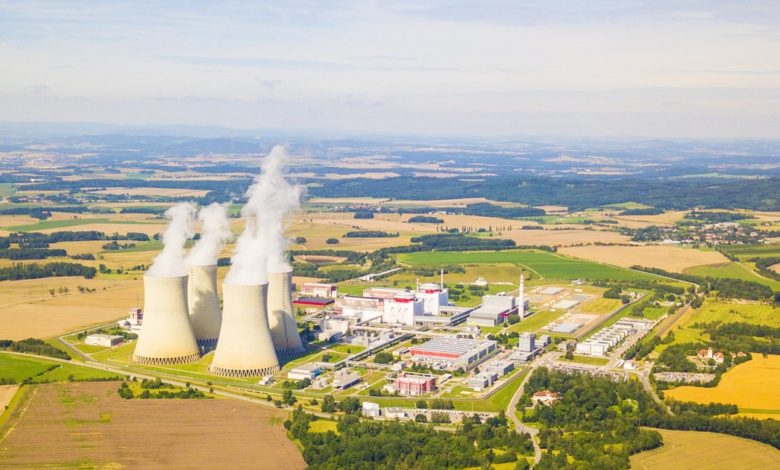
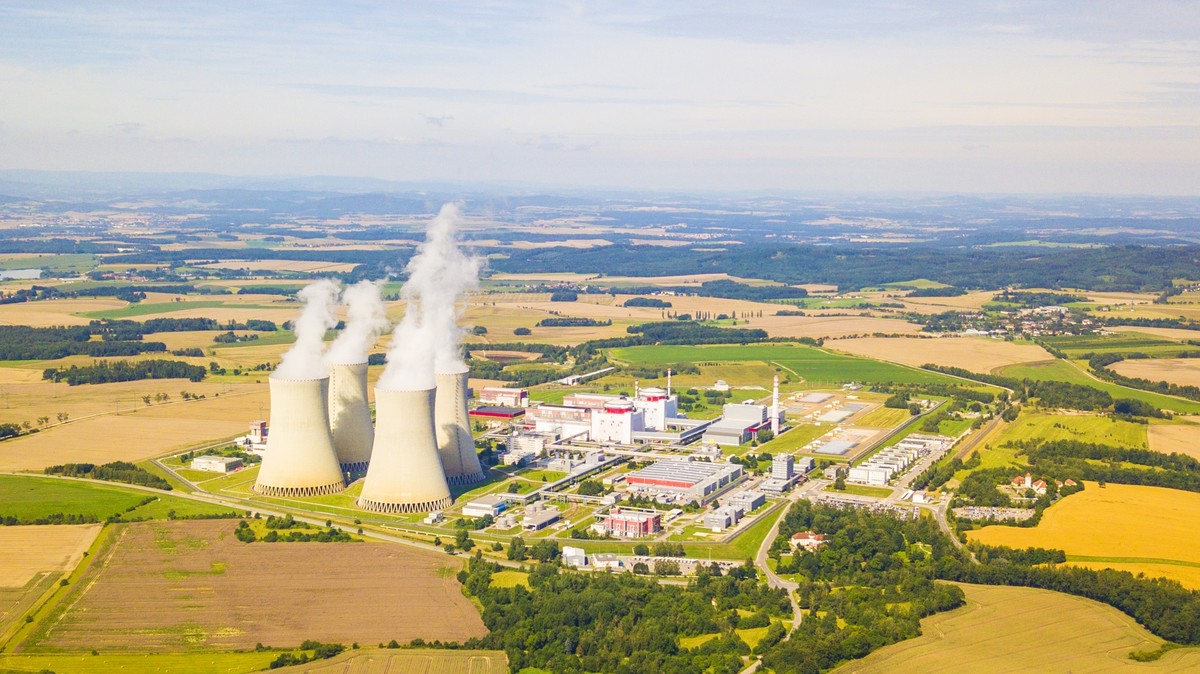
The Government Plenipotentiary of Strategic Energy Infrastructure, cited by PAP, Wojciech Wrochna, confirmed that The two main considered locations for the second power plant are Bełchatów and Konin – Centers related to the operation of brown coal today. As additional spare locations, the Ministry of Industry takes into account Połaniec and Kozienice, where today there are burning hard coal ENEI manufacturing units.
In addition to started consultations, the ministry managed by Marzena Czarnecka also proceeds to talks with potential contractors of the second power plant, among which entities from the USA, France or Canada are mentioned. As Wrochna added, “we would like to have feedback from the market at the end of this year.” The proxy also encouraged companies interested in the role of the investor to undertake the first preparatory work, but he stipulated that they must do it at their own risk. According to the announcement, the participation of Polish companies, i.e. Local content.
Read also: Second Polish nuclear power plant. The government is looking for a partner
“Real need for community”
Bełchatów is commonly considered the favorite of the race for the place of the investment. Due to the exhausting resources of the raw material, the first blocks at the brown coal power plant (according to the Foundation Data, in 2023 it covered over 13 percent of national electricity consumption) will be excluded in 2030. Adam Błażowski, an expert of the Fota4Climate Foundation, indicates that the Bełchatów election is part of the concept of just transformation, which is to ensure a dignified future and stable conditions for further development to regions so far related to coal energy.
– Coal sector employees in Bełchatów are actively striving for this investment. The construction of a nuclear power plant means the creation of many jobs. This is a real need for a local community, which is also supported by trade unions; Interestingly, the same, which just a few years ago, as part of the opposition to climate policy, did not want to agree to the nuclear project – he says. The owner of today's complex, i.e. PGE Górnictwo and conventional energy, is also actively in favor of Bełchatów's choice.
Agnieszka Skorupińska, a partner managing a team of sustainable development and energy transformation at the Baker McKenzie office in Warsaw, also draws attention to the social dimension of investments in this place. The expert points to the arguments of PGE Giek regarding the water resources available in Bełchatów, which are necessary for cooling the power plant.
Adam Błażowski is also calm about access to water. – Like any thermal power plant, the nuclear power plant can be hybrid cooled (in combination of water and air cooling – editor's note), which a little reduces its efficiency, but does not cross such an investment. This is not a blocking problem today – he states.
Competitive choice
Novum compared to the first power plant, whose contractor-the American consortium Westinghouse-Bechtel-was chosen “free-hand”, is to be tender procedure. Wanda Buk, a partner at the Business Law House law firm and an energy expert at the Sobieski Institute, emphasizes that the use of a competitive mode is the requirement of the European Commission, and all potential suppliers can offer Poland “mature and proven technology”, which has already been tried in other countries.
– Thanks to the tender procedure, we can also count on more competitive conditions in terms of budget and date. The moment of “bringing” the project will definitely be one of the key criteria when choosing a supplier – says Buk, while stipulating that the deadline for launching the first blocks of the second nuclear power plant in 2040 (the entire power plant is to start working three years later) considers it too optimistic. – We are just starting the discussion on this subject; We are in the foreground of any real planning – he adds.
Read also: We have a bridge agreement and what next? Polish atom requires staff
Agnieszka Skorupińska is also perceived as a “step in the right direction”. – This is the most desirable mode also due to the future need to obtain the consent of the European Commission to grant public aid – diagnoses the expert. As he says, the so -called nuclear renaissance, so An increase in interest in atom currently observed in Europecan result in faster development of the industry, and thus – faster implementation and lower costs.
– Poland should use its relatively strong position in the Union for lobbying for facilitating nuclear projects and later the functioning of the power plant. All this can also translate into better financial conditions – adds Skorupińska.
Atom and the energy market
The investment financing model is a related issue. The reference point here may be the current notification process, in which Poland applied to the European Commission for permission to recapitalize the construction of the power plant in Choczew with the amount of PLN 60 billion, including in the formula of a two -way differential contract (payable to the difference between the market energy price and the reference price – editor's price) for a period of 60 years.
Adam Błażowski notes that the rules of the EU energy market, on which renewable sources have priority, are not conducive to nuclear energy, whose technical purpose is constant work in the system base, not the role of the “spare” peak source, such as gas.
– As in the case of the Czech Republic, the commission may demand that the atom give way to windmills and photovoltaics, which will significantly increase its price. If nothing changes in the EU policy towards the energy market and does not bet on the so -called technological neutrality, The functioning of both the first and second nuclear power plant will be extremely expensive – he explains.
A way to get out of the impasse and an alternative to the sale of energy on the market may be the model of a kind of energy cooperative, in which after the construction of the power plant the state will be taken over by large energy companies, but also local governments or other enterprises.
Cooperative or British model?
– When the risk of launching and finishing the project is decreasing, the state will start to get rid of the auction shares, and the shareholders would then be required to accept. This could be interested in large industrial plants in need of constant access to clean energy, but also data centers, or entire metropolises, which the energy from the atom could use for municipal purposes – says Błażowski. As he says, the quasi-parting solution worked well in Finland, where the third block in the Olkilouto power plant successfully operates in the described model.
As Agnieszka Skorupińska says, the concept of financing the second power plant may evolve, and the decisions on the current notification application, which concerns the first investment, will be an important signpost here. – Perhaps we will be able to be inspired by the approach used in Great Britain, where as part of the RAB (Regulated Asset Base) the investor has secured revenues at the construction stage, which reduces the cost of capital – says the expert.
As for the political dimension of nuclear energy and its continuity, regardless of the possible change in power, Wanda Buk states that The continuation of both projects is not threatened. – Such large projects cannot be stopped so easily. Considering that the current government, despite some changes, continues the project started by its predecessors, I express supported rational premises that Also in the next term of the Sejm, the priority for nuclear energy will be preserved – says.