Romania can become a European model in digital medicine. Ștefan Botez, Micromedic MedLife Manager: “We have the chance to provide a diagnosis of accuracy and safety not until now”

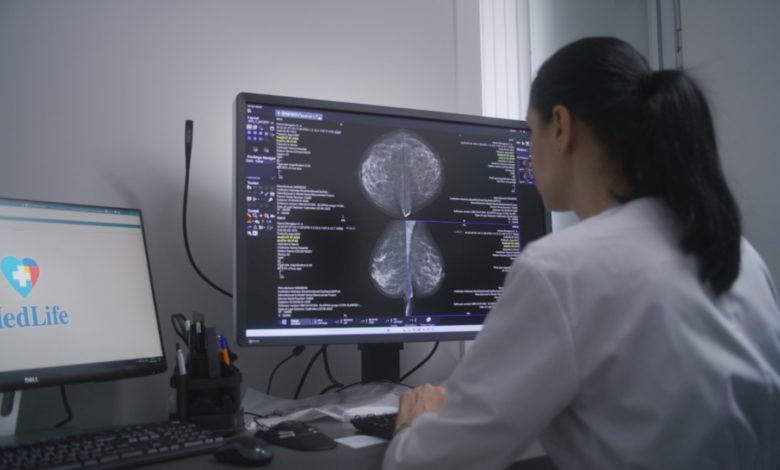
Artificial intelligence has reached a level of maturation that offers doctors more than analysis or automation speed: it offers real support in making better decisions for patients. In Romanian medicine, this change is already beginning to take shape through a research pilot project, launched for the first time by MedLife, where radiologists work side by side with an algorithm, created to ensure coherence and accuracy in medical reports. With this project, Romania-through private medicine-enters a new era of medical research, in which AI and Big Data can bring real changes for both the patient and the system, by the value of the data they can generate. Thus, MedLife strengthens its leading position in private medical research, acquired during pandemic, and opens new horizons for health innovation. “This is the era of augmented medicine, in which we do not replace the doctor, but we offer additional powers,” says Stefan Botez, Microfe Micromedic manager and Coordinator of the AI & Big Data project in medical imaging.
The MedLife pilot project combines two rare strengths: a massive MRI images archive (almost one million investigations) and a medical team that has defined, by consensus, which means a high quality imaging ratio. “Golden our standard is the definition of the perfect medical report,” explains Stefan Botez. And the algorithm learns precisely from this human expertise, being trained to recognize not only pathologists, but also what a complete, relevant and rigorously written imaging report implies.
“We considered it responsibility and, at the same time, our privilege to be the pioneers who unite this data treasure with the power AI, to transform the huge potential into something concrete for each patient: a diagnosis of accuracy and safety until now,” says the specialist.
“AI can simultaneously analyze thousands of invisible features of the naked eye“
While an experienced radiologist views, perhaps, 50,000 investigations throughout his career, the algorithm developed by MedLife “sees” 20 times more cases in a single training stage. But the real difference is not in volume, but in the ability of the AI to identify subtle details, invisible to the human eye: micro-asymmetries, tissue densities or statistical patterns. Like a meteorologist who predicts the weather based on clouds and atmospheric pressure, the algorithm can detect the early signs of a disease just before they become clinically evident.
“It is no longer sufficient to react to the disease; we must anticipate it,” says Stefan Botez and explains: This deep analysis capacity turns AI into a prediction tool, not just confirming the diagnosis. After “studying” hundreds of thousands of cases, it begins to recognize not only obvious pathologies, but also the early indications that foresee a medical problem.
How do you have a medical collaboration
The system acts as a smart assistant who checks in real time what the doctor writes in the imaging report. If an information is missing or formulated ambiguously, the AI reports it. “He is an extremely smart concealer, specialized in medicine, who works in real time with the doctor,” explains baptism.
For example, if the classification of bi-rads is omitted in a breast report, the system warns. If the doctor describes a disc herniation, the AI may signal if the contact with the nerve is missing. If a description is too vague, it suggests the reformulation. The doctor remains in complete control, but is supported by a mechanism that helps him not to omit essential details and to draft a document without errors.
“The car brings a superhuman ability to rigorously check the text in relation to thousands of rules and standards, ensuring consistency and completeness. The man, the doctor, keeps what is fundamentally non-algorithmic, being an analogy process: the act of looking at, to make the clinical correlations, to understand the patient's context and to formulate the diagnosis. It is ensured that the doctor's genius is transposed into an impeccable report, “details the specialist eliminating any suspicion related to the” replacement “of the doctor with artificial intelligence.
The breast and lumbar column, the first segments included in the project
The Medlife project is, until July 2025, in the stage where the AI is trained on two segments: the lumbar spine and the breast. The two areas chosen for the pilot phase are not accidental. In the oncology of the breast and in the pathology of the lumbar spine, the details in the radiological report can decisively influence the treatment options. Any ambiguity can lead to incorrect delays or decisions.
“A column surgery or a breast of breast treatment depends crucially on the details described by the radiologist. The challenge is not in the image, but in the text: a doctor can use slightly different terms, it can omit a secondary measurement or it can describe a lesion in a way that leaves the interpretation. Which writes it, contains all the critical information, presented in a standardized and unequivocal format, ”says Stefan Botez.
What the new era do you have for patients
“For the patient, the benefit is the clarity and safety”, is Stefan Botez's answer to the most important question: How does the progress help in the age of patients? A full and standardized report reduces the risk of misinterpretations and provides clinicians a solid basis for decision making, he explains. In an increasing medical world, the clarity of documentation is as important as the image itself.
And one of the major objectives of the project is precisely the personalization of the diagnosis and the treatment: “AI, by reading and structuring a million reports, creates a huge and perfectly organized statistical database. It transforms the free text into analyzable data. Subsequently, using this database, doctors and researchers can ask extremely accurate questions: a weaker response to kinetotherapy? ». By identifying these large -scale patterns, we can discover new prognostic indicators directly from the text, which opens the way to much better personalized treatment strategies, based on solid statistical data. “
MedLife, in the forefront of medical research
One of the big problems in the Romanian medical system is the lack of well -developed databases. A strategic advantage of this project is that it transforms the medical text into an analytical database. The AI can automatically extract information from hundreds of thousands of reports and can structure them: dimensions of injuries, classifications, locations, types of symptoms.
“Most of the medical information is blocked in text format. Our AI is the key that unlocks this treasure. We can study, for example, the evolution of certain pathologies at national level, we can evaluate the effectiveness of certain diagnostic criteria and offer a colossal resource for epidemiological and clinical studies,” explains Bapt. Thus, researchers can analyze correlations between various variables and can generate new hypotheses, opening the way to diagnosis and personalized treatment.
Through this project, MedLife reaffirms its position of active player in applied medical research. After years in which private medicine has been perceived especially as a service provider, the company shows that it can generate significant contributions to scientific innovation. The AI & Big Data project opens new borders in medical research in Romania, by transforming unstructured information into accessible databases for epidemiological, clinical and public health.
“By structuring the data from the imaging reports, we create a clean data set, ready to be interconnected with other sources. Our integrated computer system is already designed to make these connections,” says Stefan Botez.
Romania – not only a user, but a creator of you medical
One of the most ambitious goals is that Romania is no longer just a beneficiary of technology developed in other countries, but to create innovation. “We do not import only technology. We build our own, adapted to the needs of Romanian doctors and patients, but with global applicability,” says Stefan Botez.
The next stage is the scientific validation of algorithms in collaboration with academic centers and the extension of the project to other imaging areas, such as cerebral MRI or prostate oncology. “Another direction, much more complex and representing the future, is to connect this with another, specialized in the direct analysis of the images. At that time, we will be able to create a double verification system: one that reads the image and another who verifies whether the doctor written by the doctor reflects completely and correctly what is seen in the image. This is the long -term vision”.
***
Read also other informative articles, on medical topics, in the section we well.
This article is supported by MedLife, the largest network of private medical services in Romania, and aims to be a source of information and inspiration for a healthy and balanced life.
Health is the main source of happiness of Romanians. At MedLife, the happiness of people enjoys us and motivates us to offer medical solutions to the highest standards.
Regardless of the specialty, at MedLife you will find good doctors at any time, whose expertise is complemented by the most advanced medical technologies and a modern infrastructure, ensuring personalized care for each patient.
Find out more details about all services on https://www.medlife.ro/
Article supported by MedLife