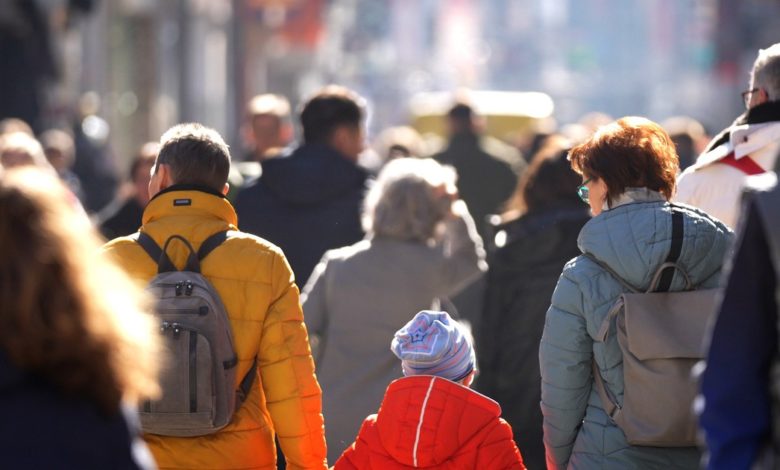
82 percent The Germans claim that he belongs to the middle class. According to the 2019 survey, 15.3 percent In turn, he believes that he belongs to the working class, 2 percent – to the lower class, and only 0.5 percent – to the upper class. The reality looks completely different.
Germany was exactly in the middle of the European ranking and took 14th place for 28 countries. The result is proof of clear deterioration of the German situation. In 2007, Germany was ninth. From that time They were overtaken by Greece, Belgium, France, Finland and Poland. What's more, only one country recorded a larger decrease – Estonia fell from 18 to the 25th place.
In recent years German middle class gradually shrinks – shows the analysis IFO Economic Research Institute based in Munich. As a result, Germany experienced a painful fall to the lowest places of European rankings. What's more, the German middle class is still getting smaller, and it is harder to live to representatives of this group.
To determine what the middle class is, the authors of the IFO test used network income. In this way, experts calculated the median how much the Germans earned in 2019.
According to the findings of the Organization of Economic Cooperation and OECD development, the lower class includes those who earn less than 75 percent. this amount. People whose income is twice the median, in turn, belong to the upper class.
Of course, there are huge differences in how many people share a given income in the household. The median for 2019 was calculated taking into account three cases. For singles it is 23.3 thousand. euro (PLN 102 thousand), for childless couple – 34 thousand 950 euros (PLN 150,000), and for a couple with two children – 48 thousand 930 euros (213 thousand PLN).
The rest of the text is under video material
Continued article under video material
According to IFO researchers, in 2019 only 63 percent The Germans belonged to the middle class, which is almost 20 pp less than it resulted from a survey conducted in society. About a quarter of people who think they are representatives of the middle class, In fact, it does not belong to her.
In turn, the percentage of members of both lower and higher class is much higher than suspected. Almost a third of German citizens belongs to lower class. Eight percent of the society are representatives High -income classesalthough only 0.5 percent respondents are classified in this group.
More rich and more poor
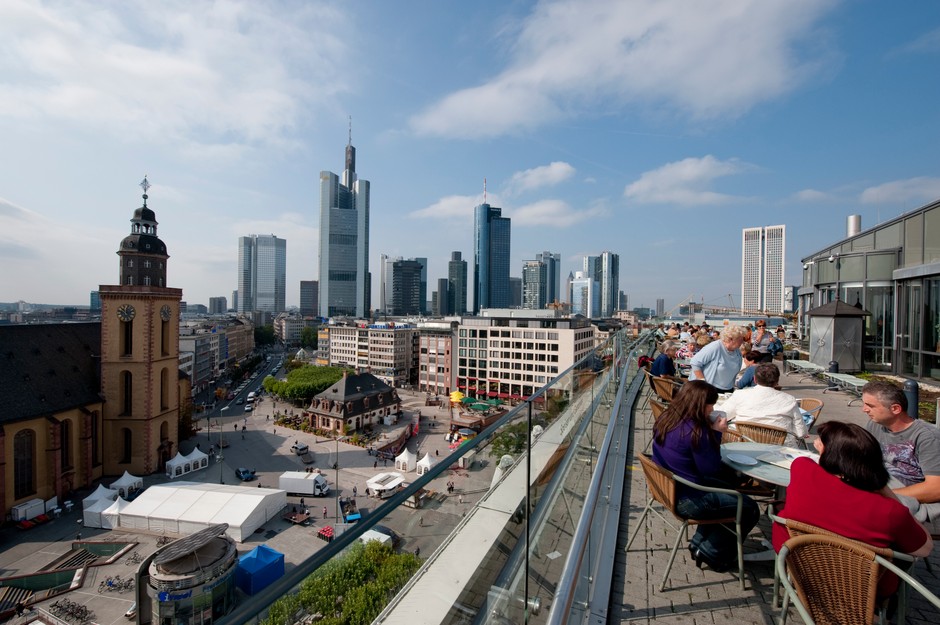
It is doubtful whether a lonely person who earns 50,000 a year. euro net (PLN 221 thousand) – i.e. about 90 thousand Gross euro (PLN 399,000) – belongs to the upper class. In cities such as Frankfurt Whether Munichmany people can boast of their income, but the costs of living, including rent, are incomparably higher. However, the analysis did not take into account this fact.
A place with a view of Frankfurt.Thomas Winz / Getty Images
Changes over time and comparison with Europe seem to be much more important. For example, the percentage of German citizens belonging to the middle class fell by three percentage points in 2007-2019, which can be seen as part of a longer process.
– This means that the phenomenon of German middle class shrinking, which could be observed in the late 1990s and at the beginning of the 21st century, continues – the authors of the study write. The decline is caused by both promotion and social fall. Simply put: both the number of rich and poor, is growing.
This is not a purely German phenomenon, but it is clearly seen in Germany – and not in other European countries. Similar conclusions come from another study recently commissioned by the Hanns Seidl Foundation, which compared the size of the middle class throughout Europe.
Uncertainty on the German horizon
In fact, the middle class is in Germany the group most charged with various types of taxes and contributions. Households in the German system pay more income tax and statutory social security contributions than they receive as part of budget transfers.
The shrinking middle class is dangerous for the cohesion of society. – an increase in economic uncertainty and increasing fears of economic fall or social inequalities can in the long run weaken the political stability of democracy – IFO experts write.
The authors of the study also conducted an economic analysis, which refers primarily to the tax and contribution system. According to her, high taxes paid by the middle class mean that its representatives do not pay to work more. It can be fatal in times shortage of workforce.
IFO calls for a fundamental reform of the tax system. – There is a need for further development of the social market economy in such a way that work efficiency pays off to all groups and that getting rich thanks to your own efforts, even as a middle -class household, was possible.
I’m Ashley Davis as an editor, I’m committed to upholding the highest standards of integrity and accuracy in every piece we publish. My work is driven by curiosity, a passion for truth, and a belief that journalism plays a crucial role in shaping public discourse. I strive to tell stories that not only inform but also inspire action and conversation.