What happened to the workshop in the country that exported luxury products to America and Germany. Real jewelry was created from wicker canes

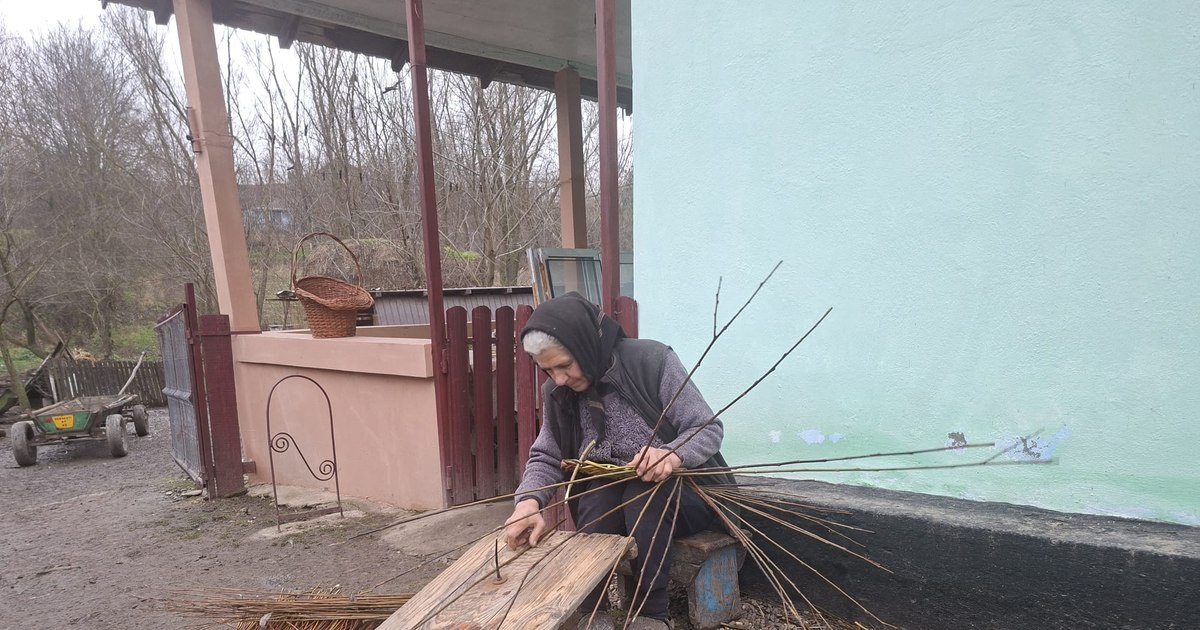
In a commune in the north of Romania, there was a peasant cooperative that managed to export luxury wicker products to the United States and Germany for over two decades. People say it all collapsed because of Asian competition.
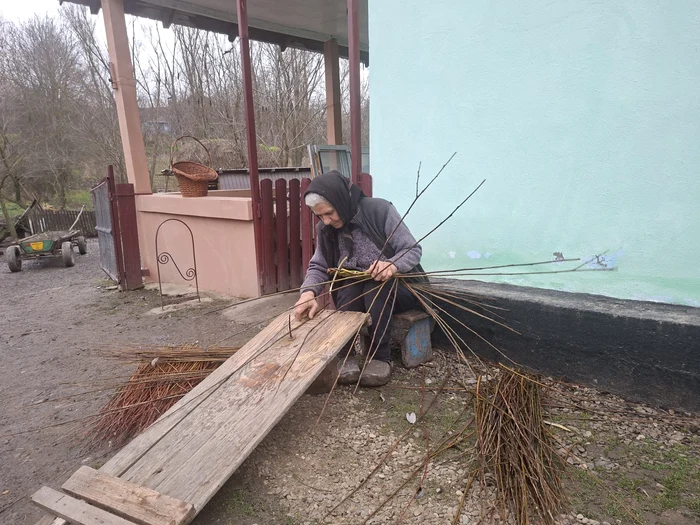
Tanti Georgeta still weaves baskets for the household PHOTO Cosmin Zamfirache
In the extreme north of Romania, in Botoșani county, not far from our country's border with the Republic of Moldova, is the commune of Durnești. An area populated with farms and livestock farmers. The commune is known especially for the fact that the famous Coroi, the last outlaw in Romanian history, was born on these lands, and for the groves and the Guranda monastery. However, few people know that one of the most successful village cooperative workshops in Romania operated on these lands at the end of the country. It began to function during the communist period, but also withstood the first decade and a half of transition. It produced the best quality export goods made from wickerwork. Handcrafted jewelry from Durnești reached the United States and Germany.
A cooperative from the end of Romania
Georgeta and Costică Ciomaga are among those who worked at the wicker handicraft workshop. I live in an old house, on one of the streets of the village. They are over 65 years old, but they are in power and take care of household affairs. For Georgeta Ciomaga, wickerwork braids are a passion. Almost every day he pulls out his work “board”, a wide board equipped with a nail driven into the top, and begins with enviable skill to create true samples of folk art. It mainly makes simple baskets, which are useful in the household. However, he remembers very well the time when his skillful hands made luxury objects, also from wicker. A good part of her life was identified with the wickerwork workshop in Durnești. She worked for more than 20 years side by side with her husband, Costică, weaving baskets and all kinds of objects from wicker canes.
The story of the workshop began in 1981, says Georgeta Ciomaga, in the last decade of Romanian communism: “It opened in 1981. It was a knitting workshop near Ocolul Silvic, in Trușești. It opened because at that time there were young people who were finishing vocational school, high school and didn't have jobs. And then they sent them to the workshop, to process wicker. Quite quickly, the number of employees increased. There were over 60 people.” At that time, she was 21 years old and she was happy to have found a job, especially since her husband, Costică, also worked there. Initially, the young people were learning how to process wicker. It was a painstaking and difficult process that left deep scars on the hands of the village.
In the 1980s, conditions were tough. “The reed had to be soaked, peeled, to be so white. Which was left unpeeled had to be boiled. It was difficult at that time because it was very cold in the winter. I got sick on my hands”the villager confesses. The specifics of the workshop were not chosen by chance. There were many wickers in the area (not a species of willow), given the ponds and the imposing forest in the commune. In addition, the people had a special tradition and skill in making wicker objects. It was natural, they had a lot of raw material. Initially, it seemed just a workshop like many others from the communist period, not very profitable, without much economic utility, but which gave work to people and met the 0% unemployment criteria of the national economic strategy during the Ceausist dictatorship.
“Everything was going to export”
In reality, the skill of the craftsmen from Durnești, a few well-placed samples and several successful negotiations have set up a veritable mini-industry of wickerwork in the commune on the Romanian border. The people of Durnești did not make baskets to put corn cobs or apples, but luxury goods for the West. As Georgeta Ciomaga explains, they worked on different models, different shapes, with a multitude of utilities: “Wicker things were produced, but of the best quality. There were laundry baskets, umbrella baskets, dog baskets, shuttles, bottle baskets. A lot has been done. There was a great diversity. And of exceptional quality. Whatever was asked of the employees here, was done. In any form, for whatever you needed. God, what other things were being done here. It's a pity that I'm not here anymore”.
Wicker was peeled or boiled, depending on the type of material, well cleaned, braided in the desired shapes and in the number requested by those who made the order. Afterwards, the product was varnished and packaged accordingly. “The baskets were dried, then they were put in the lacquer bath, they were varnished, and after that they were wrapped in white paper with string. Like in respectable factories”adds the villager. Impressed by the quality of the works, the Westerners demanded woven wicker items from Durnești on a conveyor belt. The workshop had contracts with economic agents from the United States and Germany.
“Everything went to export. There were many orders. Round laundry baskets, square laundry baskets, there were several specialties. They went to America, to Germany. Absolutely everything went to export. We received the orders, executed them and sent them”states Georgeta Ciomaga. For such an export commodity, in order to receive further orders, the master weavers had to have some essential qualities. “You had to have skill, a desire to work, a will to do the best you can, a love of the craft. We worked on basket wagons and all kinds of objects. There were many orders”Costică Ciomaga also testifies.
A world that has changed
Thanks to orders and sustained export, the Durnești workshop also withstood communism and the first decade and a half of transition. However, it could no longer resist the changes on the market and the new trends. The Ciomaga couple and other villagers testify that all these handicrafts suddenly became too expensive for a market where similar objects, but made of plastic, coming mainly from the Asian area, had made their way, much cheaper. “There were less and less orders and in 2004 the workshop was closed. Since then I've worked, but only for what I needed besides the house. We find some wicker, here and there, for us, for the house“, confesses aunt Georgeta.