The most spectacular portion of highway in Romania: “It will be as in the Alps” / details about the project where the drivers will move from 26 m high to -15 m underground in just a few kilometers

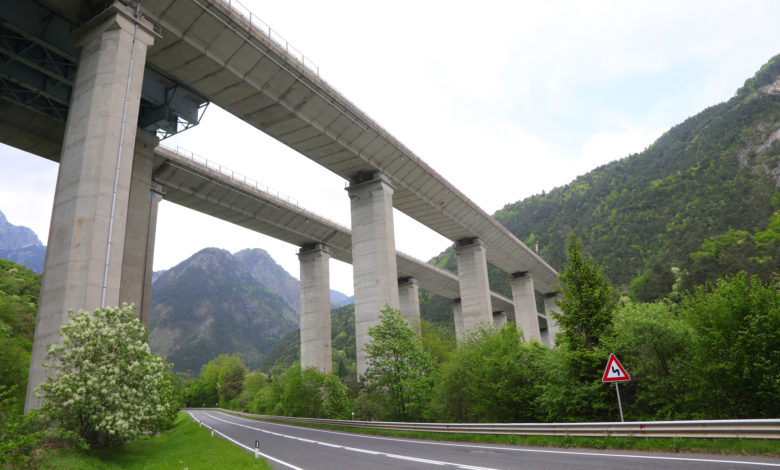
Between Sibiu and Pitești, on 5 kilometers, we are working on what will be the most spectacular portion of highway in Romania – a succession of tunnels and viaducts that cross the mountains, the Olt river twice, the national road DN7 and the railway.
Section 2 of the A1 Sibiu – Pitești highway (31.3 km) is one of the most complex high -speed road sections that will be built in Romania. Swing on both sides of the Olt, on the narrowest area of the Olt Valley, the highway built by the Turks from Mapa-Cengiz will be full of tunnels, bridges, passages and viaducts.
On the direction of traffic from Sibiu
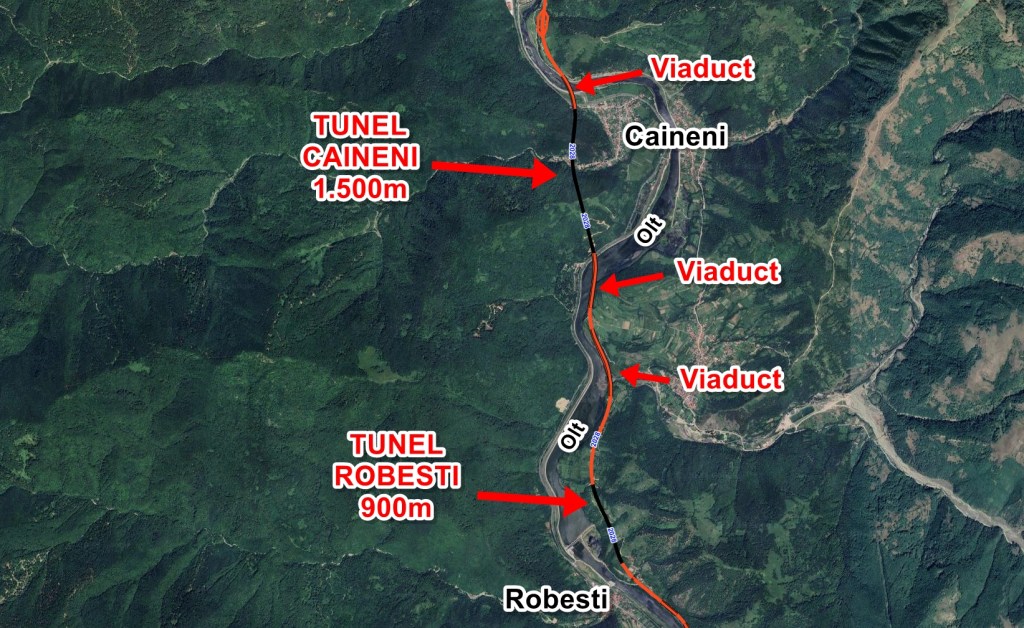
A section, in particular, will be the most spectacular: on the direction of traffic from Sibiu to Pitești of the highway, on about 5 kilometers in the Câineni – Robești area, “the most spectacular works of the project will be performed, being a succession of tunnels and bridges that cross the River Olt twice”, according to the information.
From kilometer 31+00 to 36+500 the highway will cross, at height, through two tunnels and three major viaducts.
“The design of this route was made in this way due to the sinuosity of the Olt river on this portion of the highway that makes it impossible to carry out the route on a single shore, due to restrictions related to the design speed and the size of the curves,” explains CNAIR.
Ionuț Ciurea from the Pro Infrastructure Association, one of the most active organizations in the civil society that monitors the implementation of the big infrastructure projects, explained for HotNews readers that section 2 of the Sibiu – Pitești highway will look like the types of highway known by Romanians in the Italian Mountains, Switzerland or Austria.
“Indeed, Lot 2 of the A1 Sibiu-Pitești highway will be nothing more than the highways in the Alps, crocheting beside and over Olt, DN7, Râmnicu Vâlcea-Sibiu railway and crossing the steep slopes of the gorge through 7 tunnels: Boița and Lazaret (two), Remember the more than 50 bridges on the route.
“New restrictions on DN7, partial and total closures await us”
“Prepare you from the steroids. Beyond the +50 bridges, 7 tunnels and an ecoduct in Lazaret, the terraces and the consolidation works of the slopes are not to be neglected,” details the Pro Infrastructure representative.
“In fact, we have several places where the highway will look very much like the famous hill of the bats in Șoimuș, also on A1, near Deva. The almost vertical slopes will be terraced and torcretated (see the railway tunnel from Bata/Bătuța), and the highway will be in the slope, as well as in the slope. Mureș and DN76, ”says Ciurea.
It warns that such complex works will generate big, but temporary, circulation problems on the Olt Valley.
“New restrictions await us on DN7, partial and total closures, even at these points that I speak now, but also in others where the job is needed to execute the highway,” says the expert who requires the transport authorities to explain “transparent how long the works will be on DN7”.
Viaduct – tunnel – viaduct – viaduct – tunnel
For the section from km 31 to km 36.5, hotnews.ro asked CNAIR what are the details of the project and how these works will be.
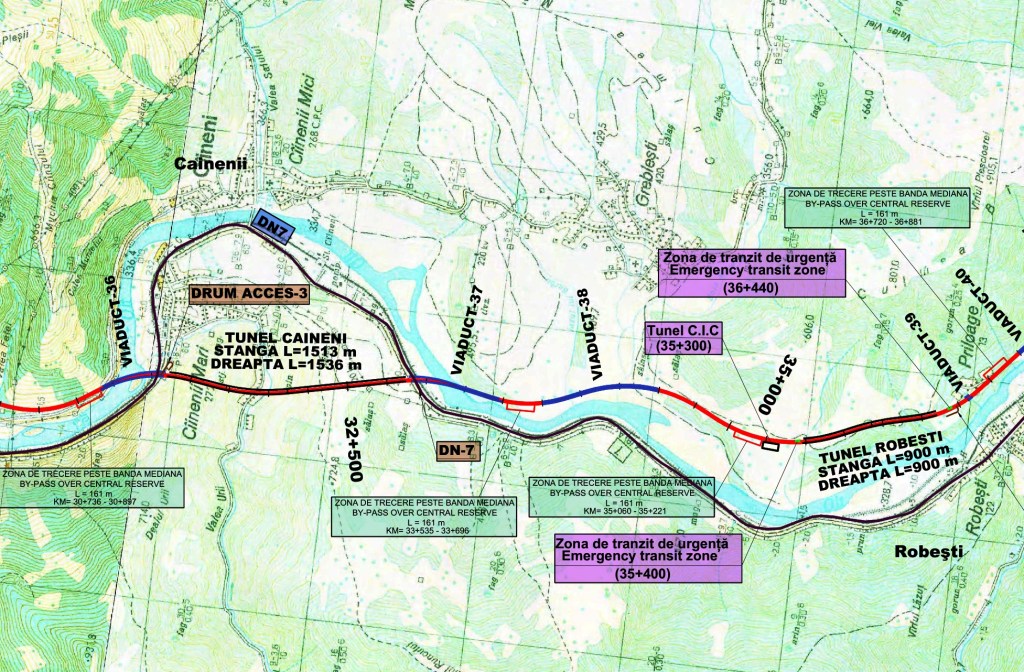
On the direction of traffic from Sibiu to Pitești of the highway, the order of art works is as follows: Viaduct V36; followed directly by the Câineni tunnel; At the exit of the tunnel, the v37 viaduct and viaduct V38 follow directly; and after about 1 kilometer, the Robești tunnel will enter.
Viaduct 36, the first of this succession of works, will be a long structure of almost 400 meters and with a main opening of 90 meters, made of steel beams and with overburd plate.
“This solution was necessary because the bridge is downstream of the future dam of the Câineni hydroelectric plant and it was necessary that the water drain area after the dam should be without obstacles in the minor riverbed. Through the same bridge, on the shore, the railway from DN 7 will be crossed, from Pitesti of the bridge, being located at the CNI.
The construction of the bridge will involve special technical operations, due to the difficulty of installing the main beam, which is over the Olt river, at a height of 16 meters from the water gloss. “The bridge is on a tight curve, which will involve a special geometry of the metal structure and will make practically the use of a beam launcher on the shore,” CNAIR admits.
Tunnel at -15 meters below Valea Urauri
In the continuation of the viaduct 36, the longest tunnel on this section comes directly: the Câineni tunnel. The length of this tunnel is 1500 meters (1,513 left gallery, 1,536 right gallery). The tunnel, like all in section 2, will be executed by the NATM method (New Austrian Tunneling Method).
“The main execution difficulties of this tunnel are related to the area of the two portals, entrance and respective exit, which are in areas with very inclined and rocky slopes. Also near the portals are DN 7”, details CNAIR.
About one third of the entrance to the tunnel, from the Sibiu Directorate, the tunnel will subtract the valley.
“The depth of the tunnel in this area is 15 meters. Here, special attention will be paid to the works in this area due to the geological faults in the area, the water wire and the fact that this area is inhabited in the immediate vicinity of the project,” details CNAIR.
Of the tunnel, directly on the viaduct over Olt, 26 meters high
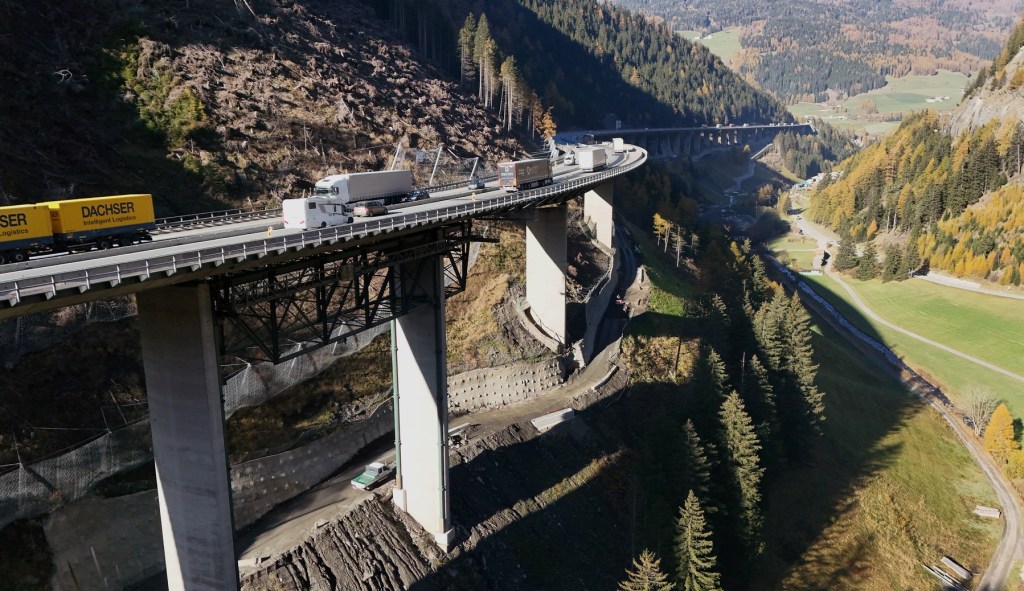
Immediately after the tunnel, the highway moves directly to the viaduct 37 passing over DN7, the railway and over the Olt river. The V37 viaduct will have a length of 592 meters and a maximum height of 26.4 meters (next to the Pile P3, measured from the level of the road at the water level). The viaduct will have 9 openings and will be built with composite steel beams in a metal sheet in cooperation with reinforced concrete plate.
“And in this case, the bridge will be in the immediate vicinity of the exit from the tunnel. Its construction will be made on a rocky slope, almost vertical. The first opening of the bridge will be made from a metal beam, which will overcome DN 7 and the railway through the same opening,” says CNAIR.
In this area, on the Olt river is the accumulation lake of the Robești hydroelectric dam, so due to the very large width of the water in this area, two of the foundations of the bridge will be in the middle of the river and two of them towards the left and right bank.
“The solution taken into account for the installation of the superstructure is the launch of the board along the bridge, with the help of a beam launcher,” explains CNAIR.
Viaduct built by a premiere method in Romania
After crossing the river, the route of the highway is in a direction parallel to the Olt river, on its left side and follows viaduct 38, practically the longest on the highway sector, about 750 meters long and 16 openings of 40 meters and 50 meters.
“It crosses a marshy area, related to the mouth of the Boia river. Due to these conditions, the method of execution chosen was the system MSS (Movable Scaffolding System – mobile scaffolding system)which is a premiere in Romania and greatly simplifies the execution of the superstructure. In this system, the bridge tablet is poured from concrete to the final position, on a whole opening, followed by its tension. After these operations, the mobile scaffolding system is opened with the help of hydraulic systems and subsequently moved to the next opening of the bridge. It is estimated that such a work cycle can be achieved in 2 weeks ”, details CNAIR in the response transmitted hotnews.ro.
After crossing the Boia river, the highway will be for about one kilometer in mixed profile, with a succession of fillings and excavations.
At kilometer 35+500 the Robești tunnel begins, a tunnel with a double gallery in length of 900 meters. The galleries, which serve the two meanings, have different kilometric positions, but their lengths are equal.
“Its construction was necessary due to the existence in the area of Robești hydroelectric arrangement, it was necessary to bypass the dam. The initial design speed was 100 km/h, but following the analysis of the optical comfort, the visibility distance and the reaction of obstacles, it was changed to 80 km/h”, the response to CNAIR was transmitted to CNA.
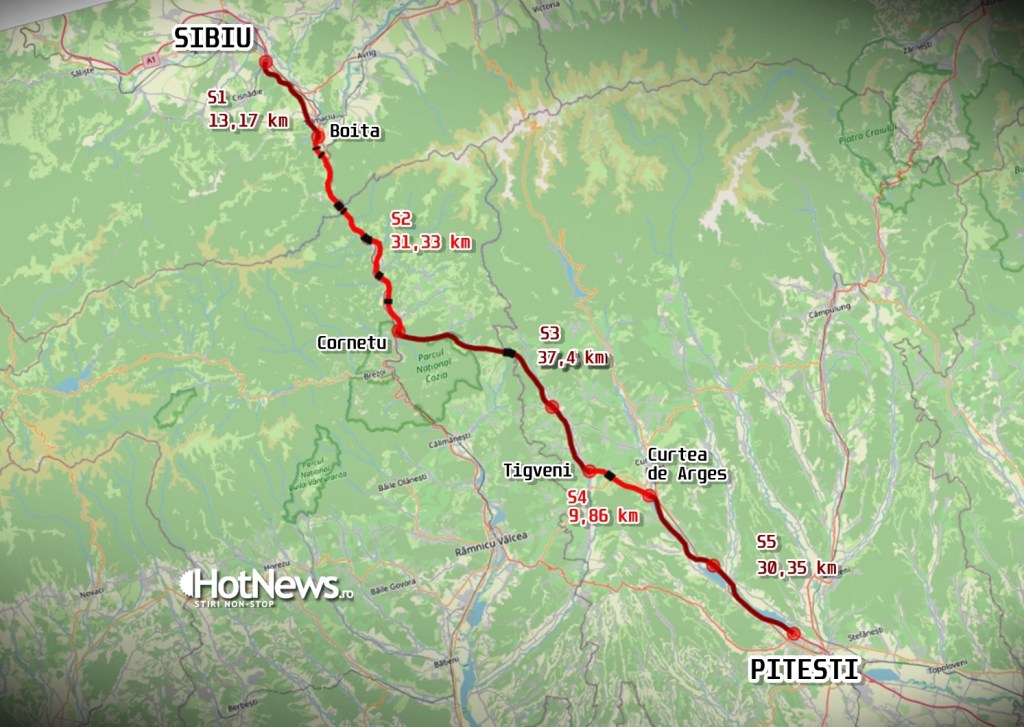 Highway A1 Sibiu – Pitești, on lots / source: hotnews.ro
A1 Sibiu – Pitești, section 2 – Boița – Cornetu
- Length: 31.33 km
- Builder: Maps Sleat Ve Ticaret As – Centgiz Sleat Sanayi Ve Ticaret AS
- Value: 860 million euros
- Contracted: February 2022
- Term: 18 months Design + 50 months Execution (T4 2028)
- Stage: Design / works started at the end from Boița
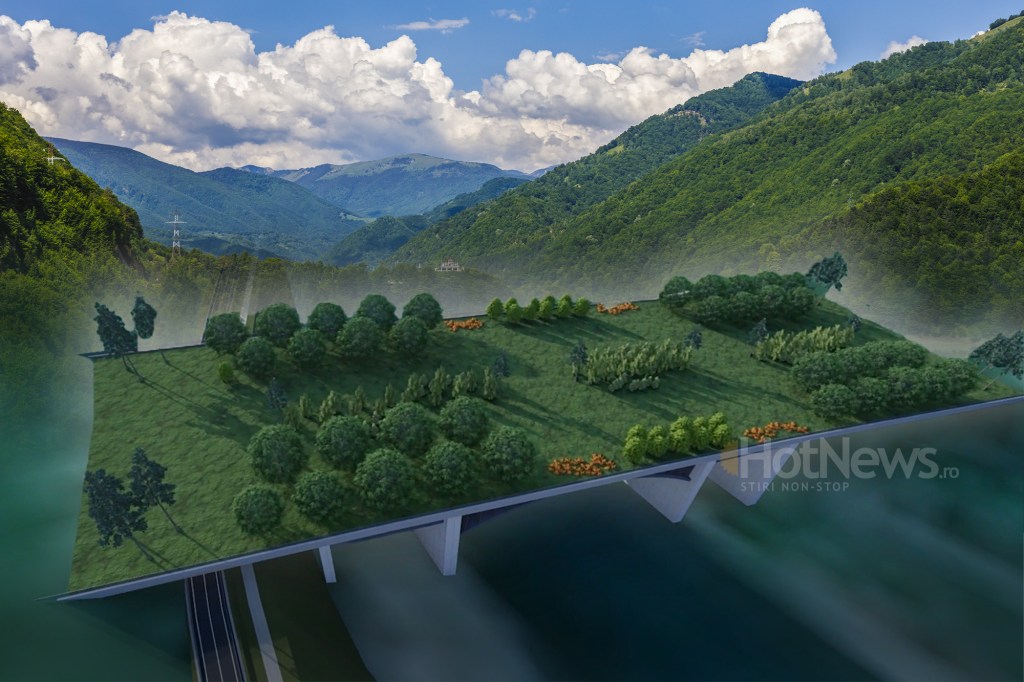 Video Romania builds the largest bridge in the country, for the animals in the mountains to pass the Olt: what the structure will look like