Marcin Wyrwał: Why does Putin torpedoed the peace process [KOMENTARZ]

On the same day, Putin put up a counter-proposal: Russian-Ukrainian negotiations in Istanbul “without preliminary conditions” on May 15.
Putin's rapid answer had several goals: promoting Moscow as an initiator of peaceful efforts, delaying during subsequent western sanctions on the Russian economy struggling with his problems (although still far from collapse) and above all delaying any decisions regarding the interruption of warfare.
All subsequent activities of the Russian delegation in Istanbul were subordinated to these purposes, from the maximum reduction in the rank of the meeting.
Presidents and ministers versus advisor
Putin himself did not go to negotiations. Since he did not go, Donald Trump did not arrive, who had previously stated that they would only appear on them if Putin was. At that time, Wołodymyr Zelnski refused direct participation in negotiations, determining his delegation for this purpose. Thus, the rank of conversations was reduced, according to the intention of the Russians.
At that moment, however, there was still a chance for a high -level conversation. On -site talks in various formats were to be attended by the Defense Minister of Ukraine Rust Rust, head of SBU Wasyl Maliuk Chief of the General Staff of the Armed Forces of Ukraine Anatolij Hnatow, head of the office of President Andrij Jermak or Minister of Foreign Affairs Andriy Sybiha.
The American Secretary of State Marco Rubio was also ready to join the talks in Turkey. Readiness to participate was expressed by highly tall Turkish officials, including President Recep Erdogan.
Except that the Russians playing for a maximum reduction in the rank of the meeting appointed a delegation of officials with nothing to the functions of ministers and bosses of important offices.
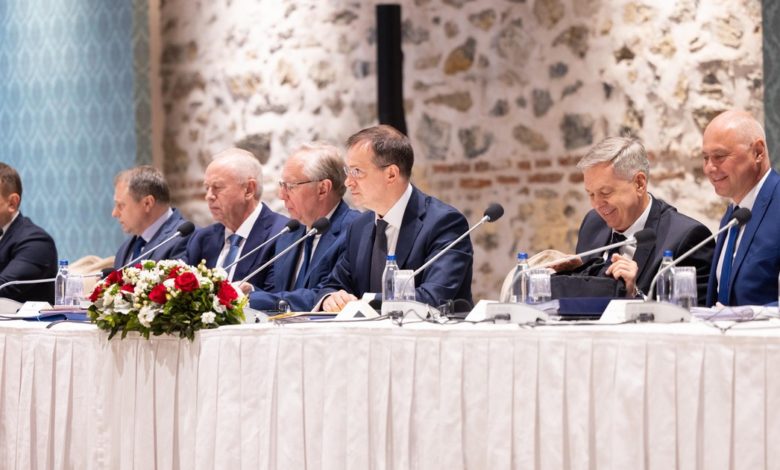
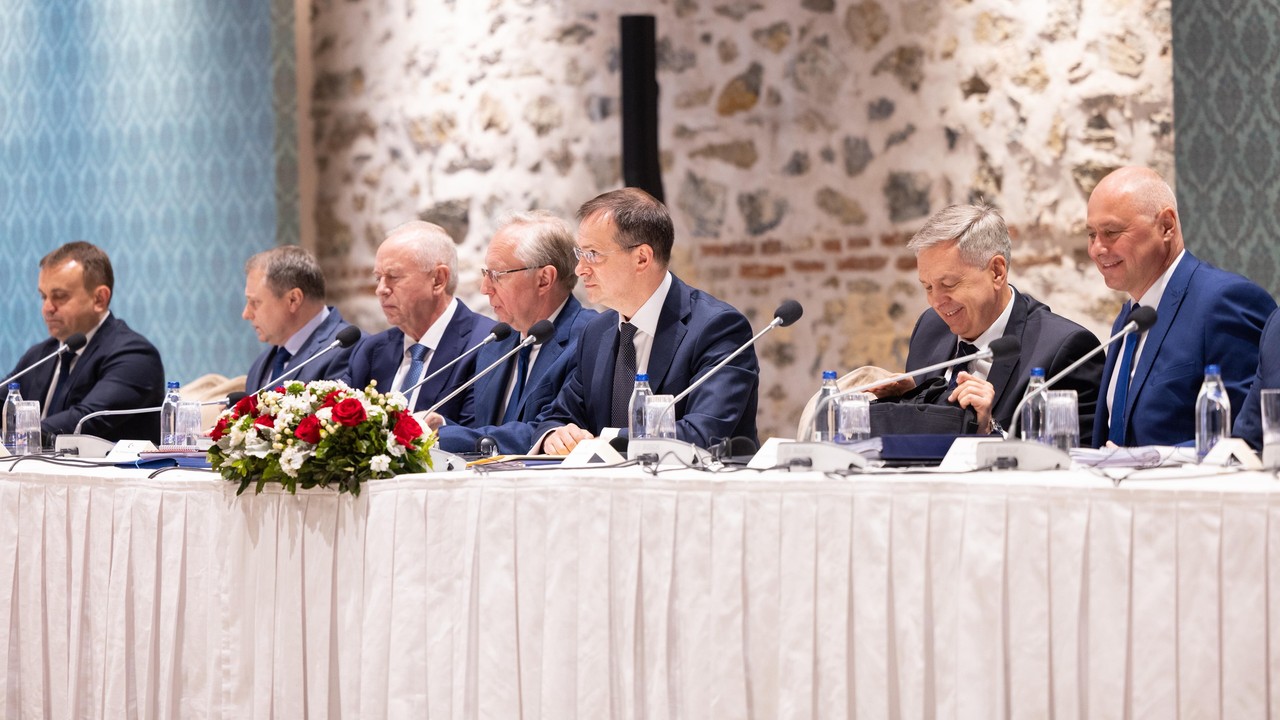
The Russian team was headed by Vladimir Miedinski, the same who managed the Russian delegation during negotiations in Turkey from 2022. Miedinski is a Kremlin propagandist with definitely conservative and anti -wistic views.
Traditionally, in such situations, Putin took care of the anti -Subsequent Sching of his representative. Although Miedinski is a Ukrainian by origin, his views on Ukraine are entirely overlapped with the Kremlin line – from negating Ukrainian nationality and statehood to propaganda related to “Nazi collaborators” and full support for the Russian invasion of this country. When in 2014 Russia attacked Ukraine, he organized camps of Russian military-historical society during the occupied Crimea, during which a simplified “young soldier's course” was conducted for teenagers.
The composition of the Russian delegation was completed by the deputy head of the Russian Ministry of Foreign Affairs Mikhail Gałuzins, deputy head of Russian Ministry of National Defense Aleksandr Fomin and – the only member as a boss – head of military intelligence GRU Igor Kostiukow. It was also impossible not to see the difference in the rank of both delegations.
Nominating people on the negotiators on appropriately lower than the adversaries and as offensive to Ukrainian positions is Putin's constant tactic. During March Russian-American conversations at Riyadh, the Kremlin was represented by the adviser to the director of the FSB, who planned a full-scale invasion of Ukraine from 2022. Sergei Biesda and Putin's representative to consider his application to the Council of the Russian Federation regarding the use of the armed forces of this country on the territory of Ukraine in 2014.
Istanbul fun in kitty and mouse
Throughout the day of May 15 in Istanbul there was fun in the kitty and mouse. Putin's sending of lower -ranking officials for conversations clearly upset the Zelanski, who was in Ankara, who publicly complained that, in comparison with the rank of other bands, “the level of Russian delegation seems decorative. The Ukrainian president was still trying to press Putin's arrival: “We can't run all over the world and look for a man” – he said.
The head of the Russian Ministry of Foreign Affairs Sergei Lavrov reacted instantly, calling negotiations “intrigue” – no matter that they were initiated by the Russians – and the “pathetic man” himself – and Zelanski himself. Oil was quickly added to the spokeswoman for this department Maria Zacharowa, who described the Ukrainian president as “a cheater and a jester”.
When everyone finally reconciled with the compositions of the Russian and Ukrainian delegation, it soon turned out that it was not really known which one was. The confusion around possible negotiations increased. Early afternoon Turkish television TRT Haber said that the talks began, while the Russian media claimed that they did not.
Around The 16th delegation from Moscow appeared at the Russian consulate in Istanbul, where its chairman Vladimir Miedinski gave his statement for the press, in which he stated that the Russian side was ready for talks.
Then it turned out that the Ukrainian delegation was just heading to Istanbul, where it would arrive late in the evening. In the meantime, President Zełnski also managed to properly reduce her rank. Only the defense minister Rust Rust died from the intended composition. The rest of the delegation consisted of deputy ministers, deputies and advisers.
If at this stage of reading readers get the impression of chaos, this is a accurate impression. Such was the Kremlin tactics from the beginning, and the Ukrainians familiar with it (after all, for decades they were part of the Soviet Union), they skilfully entered this game, although for a different purpose – pointing to Russia as the main brake peace process, and not without reason.
The day closed Marco Rubio with a great care: “The US does not have great hopes for the results of talks in Turkey about the regulation of the issue of Ukraine.”
Russia joined the Friday negotiations before their proper start – in its own style. In the preceding conversation, the Shahed fired 112 battle drones at the Ukrainian cities (73 were shot down). She used identical measures before all peaceful negotiations of recent months.
Friday negotiations – it could not be otherwise – began in a tense and hostile atmosphere caused by the events of the previous day. Now the Kremlin was easy to realize the original plan of the conditions that are beyond fulfillment.
Concert of unfulfilled conditions
Although the Russian delegation declared negotiations “without preliminary conditions”, it was known that the real conditions of Moscow remained unchanged.
It is quite A permanent set of demands, the fulfillment of which would de facto mean the surrender of Ukraine. Moscow requires the withdrawal of the Ukrainians from the parts of the circuits they control, which Russia annexed illegally, as well as their recognition as Russian by the international community. He also wants the cessation of military and intelligence support for Western for Ukraine and the limitations of the Ukrainian armed forces or even demilitarization of the country. To this they add “denazification”, which in the translation of the Kremlin language means the resignation of Zelanski.
What about Ukrainian conditions? Kyiv insists on the territorial integrity of the country. Russia also wants to pay war reparations. And also demands Russia to recognize her responsibility for war crimes. Russia will not agree to any of these conditions. On the Ukrainian side, it is possible to soften the position in a few of these points. However, it is difficult to recognize that they would give the Russians out of their own will, the lands still controlled by them, or waived the right to those occupied.
So much to the Russians is enough to deny negotiations in place.
Without any preliminary conditions, however, Ukrainians are ready to agree to immediately suspend their weapons for 30 days or more. But this is the condition that the Russians do not want to agree above all. Why?
Why Putin doesn't want to stop
Russia avoids the interruption of hostilities because it has specific reasons for it.
First of all, interrupting them at this moment would be completely incomprehensible to the Russian society, which is fed by propaganda with a specific vision of victory. In the maximum version it is the fall of the government in Kiev and thus the Ukrainian state.
However, there is also a less ambitious version – it is a control over the illegally annexed by Russia Crimea and the Craperson, Zaporoskie, Lugansk and Donetsk. The Russian army is far from achieving this goal. While it occupied almost the entire Lugansk region, there are about 40 percent under the control of Ukrainians. Donetsk region and about 30 percent Kherson and Zaporoski Districts. How is the leader of the “Great Empire” to explain to citizens that large tracts recognized as Russian territory are under the control of the enemy? Russia has a long and rich tradition of melting in the blood of weak leaders. Putin certainly does not want to turn out like that.
The second reason is Russia's advantage on the front. Although the front is relatively stable, Russia has been gaining the area for two years. Last year she took about 4,000 km of sq m of Ukrainian territory, and in the first quarter of this year less than 2,000 sq m, which indicates an increase in tempo.
Despite the lack of significant breaks, The progress of the Russians is constant, and especially in recent weeks, disturbing signals flow on the Ukrainian side.
Unfortunately, these signals flow from a place that is sensitive to keeping the front on Donbas. It is about Pokrowsk, to which they lead from the Ukrainian facilities of the road and railway lines, which makes this city the main hub of supply to the front of everything he needs – from weapons and ammunition to food and water.
Although the city itself is surrounded by Russians from the east and south, it seems quite solidly fortified. It is much worse on the routes with which the deliveries from Pokrowsk are powered by the Ukrainian front. It is primarily about the northeast asphalt, from which Ukrainians feed a good 60 km of the front in such key areas as the cities of Toreck and Timew Jar, which are fiercely fiercely fighting today.
In recent days, the Russians took this road on a good 10 km section. Ukrainians are condemned to bring logistics to detours, i.e. in the dramatically poor condition along the dirt roads. The Deep State analytical group similar to the Ukrainian Ministry of Defense alerts: “Drones control everything, Kacaps are able to take over new positions It is thanks to the disturbances in our logistics. Their embarrassment are able to take our positions precisely because (…) Our infantry cannot ensure the right number of equipment, provisions and people. “
In the days preceding the meeting in Istanbul, the media also informed about the preparations of the Russians for another large offensive. Ukrainians signaled the intensified attacks of the Russians in the summary region, which was directly confirmed by the Polish volunteer fighting there in the podcast “Fonts of War”. [emisja w Onecie w sobotę o godz. 18].
In this situation The interruption of even 30 days of hostilities would give Ukrainians a chance to regroup and strengthen supplies to the front. In addition, Moscow definitely does not want to allow.
Everything ended as it ended. The Russians have done everything to implement their plan. The war will last.