On Monday morning, oil prices fell significantly on global markets, marking the fourth consecutive session of decline for this crucial economic commodity. The drop is influenced by comments from U.S. President Donald Trump, which, despite containing threats and escalation elements, may signal a potential agreement in the Middle East.
As of Monday morning, the price for a barrel of West Texas Intermediate (WTI) crude oil for October delivery was $98.38 on the NYMEX in New York, reflecting a decline of 1.9%. Meanwhile, European Brent crude for November delivery fell to $101.90, also down by 1.9%.
The latest drop in oil prices marks Brent’s longest streak of declines since June. Investors are closely monitoring efforts aimed at ending the U.S. conflict with Iran.
Trump Outlines Three Possible Scenarios
Futures market behavior indicates that traders are starting to price in stabilization in the Middle East, as contracts for upcoming months are being quoted lower while the premium for immediate deliveries decreases.
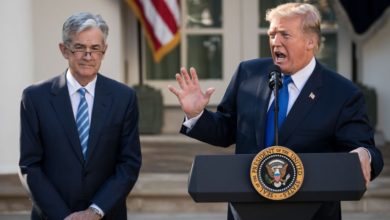
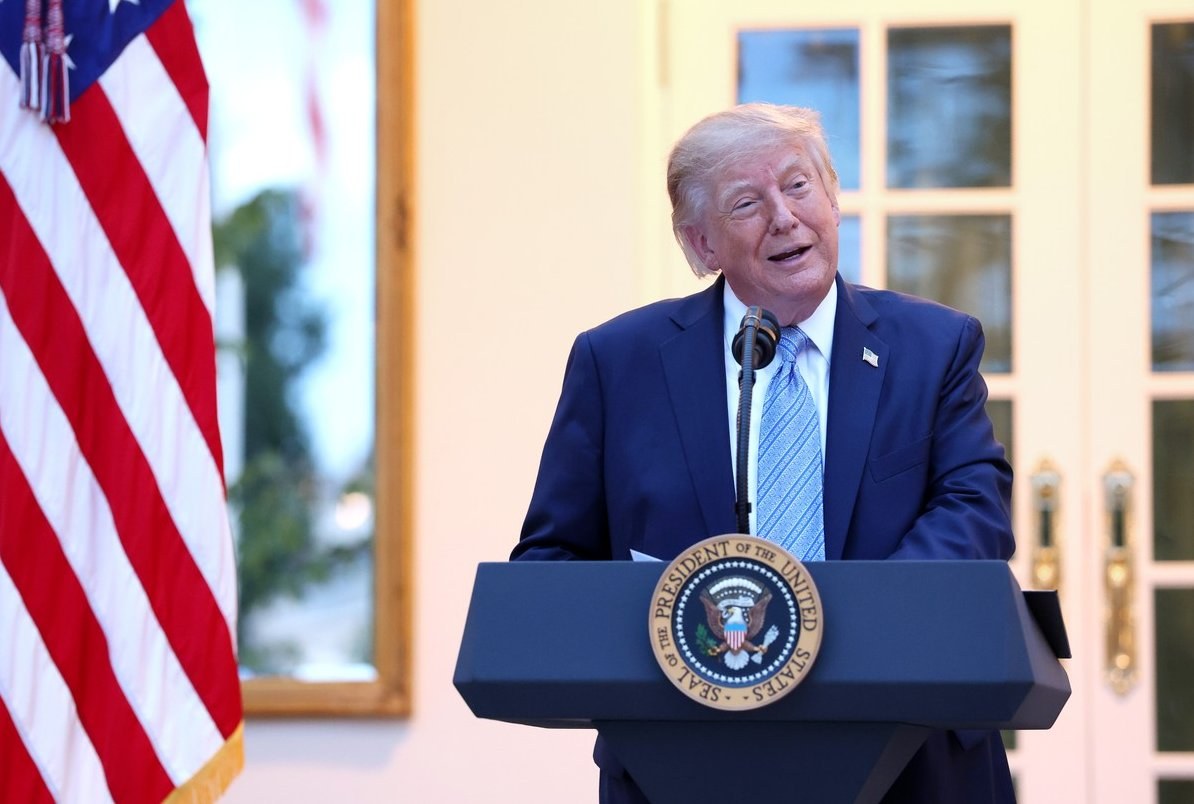
In an interview with Fox News on Sunday, President Trump mentioned he must choose between “destroying the whole country,” implementing further sanctions, or negotiating an agreement with Iran. He did not rule out a meeting with Iranian President Masoud Pezeshkian in New York.
Trump emphasized that he is in a “decision-making mode” and has three options to consider: “whether and when to destroy the whole country, allow them to suffer economically, or decide to make a deal.” Previously, he has threatened catastrophic attacks on infrastructure to incapacitate the nation or even “civilization as a whole.”
When asked about a potential meeting with President Pezeshkian, who will lead the Iranian delegation at the UN General Assembly, Trump responded that he would “probably be open to it.”
This year, WTI prices have surged by over 71%, while Brent has increased by 67.6%, primarily because the war in the Middle East has disrupted oil flows through the Strait of Hormuz, and Ukraine’s ongoing conflict with Russia has targeted Russian energy infrastructure.
On Saturday evening, Trump unexpectedly returned to Washington from Camp David, where he was initially scheduled to remain until Sunday. This, alongside warnings issued by U.S. embassies to citizens in the Middle East, has fueled speculation regarding a potential escalation of conflict with Iran or operations against Houthi rebels attacking Saudi Arabia.
At the same time, U.S. Admiral Brad Cooper, commander of U.S. Central Command, reported that oil and liquefied natural gas (LNG) flows through the Strait of Hormuz have hit a six-month high.
Gas Prices Also Decline
Gas prices in Europe also dropped on Monday morning, driven by the same factors: investors are hopeful for renewed diplomatic efforts to end the U.S.-Iran conflict.
Benchmark gas contracts in Amsterdam (ICE Endex Dutch TTF) decreased by 2.9% to €77.20 per MWh. However, gas prices remain more than double what they were prior to the U.S.-Iran war.
Investors are counting on the resumption of diplomatic efforts to conclude the conflict with Iran, as progress on the “diplomatic front” could improve fuel flows, particularly LNG, through the Strait of Hormuz, where there have been significant disruptions in energy transport since March.
European countries are currently working diligently to replenish their gas reserves. According to Gas Infrastructure Europe, EU gas storage levels stand at 69.6% compared to a five-year seasonal average of 85.4%. Currently, there are approximately 787.82 TWh of gas in storage.
In Germany, gas storage levels are particularly low, at 56.6%, compared to a five-year average of 84.2%. In Poland, gas storage is at 98.4% of capacity with 36.27 TWh of gas, compared to a five-year seasonal average of 97.6%.