In a strategic move reported by media outlets, the Kremlin is set to dissolve the “Spraviedlivaya Rossiya” party, referred to as the “second leg of power,” following recent elections. This decision is aimed at showcasing a perceived consolidation of society around the ongoing war.
Results from 92.84% of processed ballots indicate that the ruling party, United Russia, has garnered 57.84% of the vote, with the Communist Party of the Russian Federation (CPRF) trailing at 13.82%. The Liberal Democratic Party of Russia (LDPR) has received 8.93%, while the New People party secured 7.97%. Furthermore, Spraviedlivaya Rossiya achieved just 4.96%, nearing the five percent threshold.
Originally established in 2006 through a merger of several political entities, Spraviedlivaya Rossiya was intended as a backup party for the ruling establishment. Former presidential administration deputy head Vladislav Surkov framed it as a “second leg to step on when the first one goes numb.” In previous elections, its performance has varied, with results of 7.74% in 2007, 13.25% in 2011, 6.22% in 2016, and 7.46% in 2021.
Sources indicate that current Kremlin internal policy overseer, Deputy Head of the Presidential Administration Sergey Kiriyenko, opposed maintaining the party in the new State Duma composition.
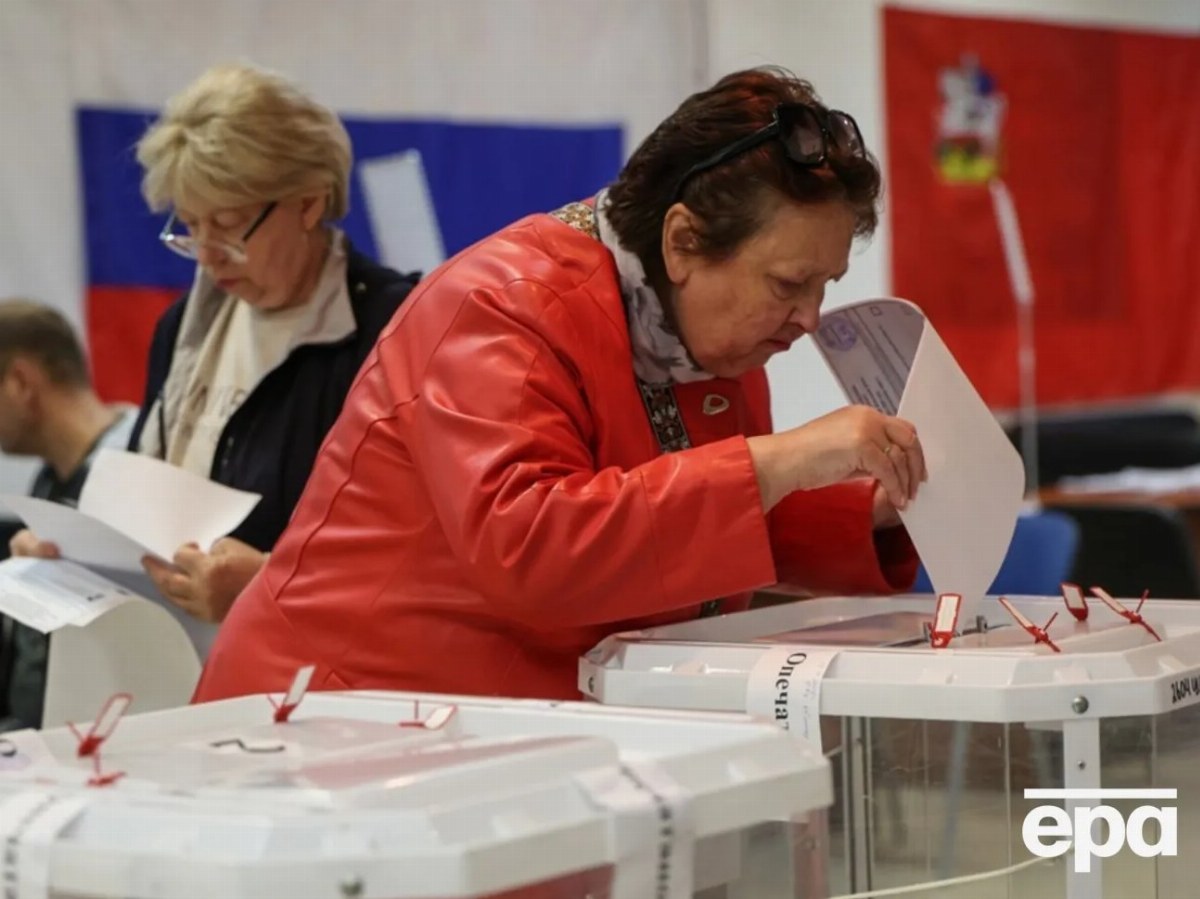
The dissolution is predicted to allow the Kremlin to illustrate a stronger societal consolidation around the war than would have been possible with the party’s continuation. Preliminary data suggests that United Russia’s performance is exceeding that of past elections, potentially enabling the formation of a constitutional majority. Voter turnout also appears higher than five years ago, reflecting an apparent demonstration of support for President Putin’s call for backing the war through voting in the Duma elections.
Context
- The State Duma elections took place from September 18 to 20, during which Putin urged citizens to participate and support “true patriots.”
- Voting also occurred in temporarily occupied territories of Ukraine, facing strong protests from Ukrainian officials who condemned the actions as illegal.
- Despite Moldova’s protests, 17 polling stations were opened in the unrecognized Transnistria region for voting.
- This year, Putin cast his vote online, appearing to scrutinize his choices while confirming his selections with quiet affirmations.