The German anti-immigration party AfD is poised to achieve another electoral victory in an eastern state this Sunday. However, regional leader Manuela Schwesig, a Social Democrat, is gaining ground in polls and hopes to be the one to halt the rise of the far-right party. A notable loser in this battle is Conservative Chancellor Friedrich Merz.
In Mecklenburg-Western Pomerania, Schwesig’s Social Democratic Party (SPD) has narrowed the polling gap and is neck-and-neck with the AfD, led locally by former radio presenter and local celebrity Leif-Erik Holm.
The elections in this state coincide with those in Berlin. Holm aims to leverage his party’s success, which saw the AfD garner about 44% of the votes in Saxony-Anhalt on September 6, sending shockwaves through Merz’s government.
The SPD, currently leading a coalition government in Mecklenburg-Western Pomerania, strives to withstand this surge.
“The choice is very clear,” said Schwesig during an electoral rally in the port city of Rostock. “Either the AfD becomes the main political force or the SPD remains that force.”
A Potential Disaster for Merz and His Conservatives
Polling data published recently by Bild shows the AfD at 37%, the SPD at 35%, while Merz’s CDU is trailing at just 7%, perilously close to the 5% elimination threshold.
Other surveys indicate that the gap between the AfD and SPD may be as slim as one percentage point, with the CDU at about 6%.
The regional parliament may also include the radical left party (Die Linke) at 10% and the Greens, who are polling at 5%.
If the CDU were to be excluded from the regional parliament—an unprecedented situation in contemporary Germany—the pressure on Merz could become overwhelming, especially amid ongoing rumors about his potential replacement.
In light of this, Merz has scheduled a meeting with CDU leaders for Sunday, just before the polls close, to assess their support and attempt to convince them he has a plan to turn the situation around.
Merz also canceled a planned speech at the United Nations General Assembly to remain in Berlin and address the internal consequences of the CDU’s electoral results.
To rally support, Merz emphasizes the need to avoid turmoil in Berlin during a period of instability for Europe.
Schwesig: A Critic of Her Own Government
To win in this region of former East Germany, Schwesig, a former Minister for Family Affairs and cancer survivor with high personal popularity, positions herself as the sole solution against the AfD.
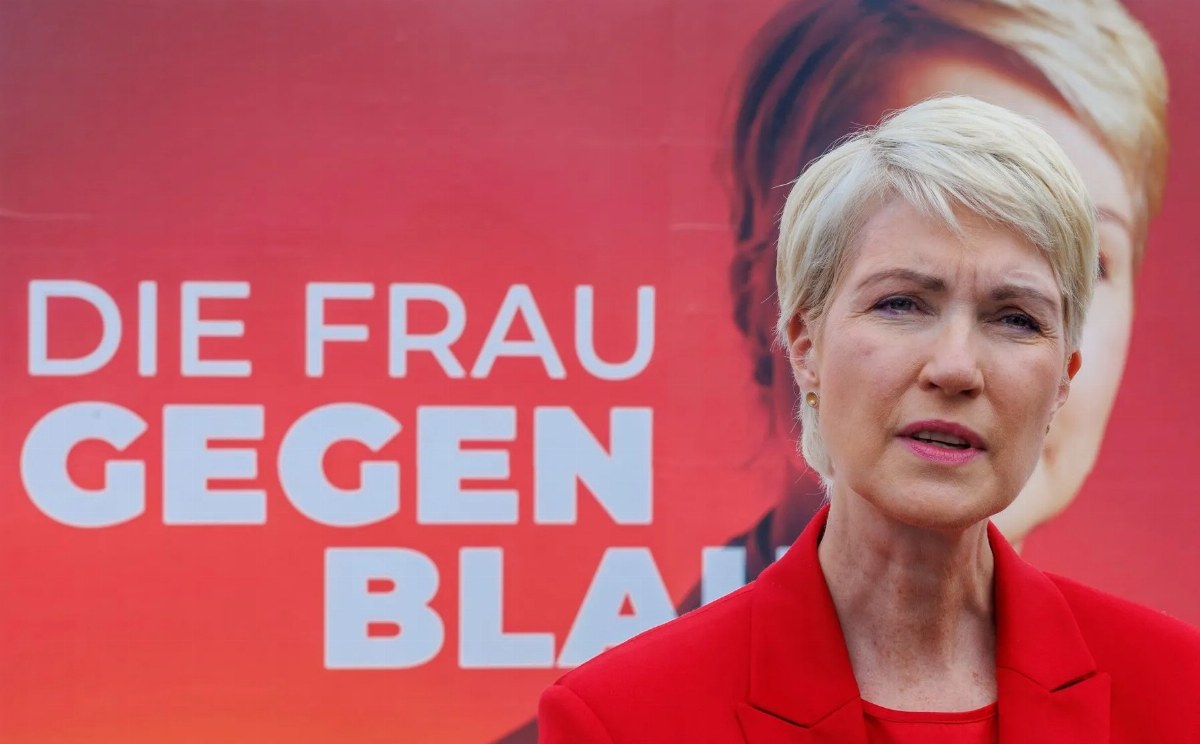
Her campaign slogan, “Frau gegen Blau” (“woman against blue”), references the AfD’s color, illustrating her strategy.
Her Social Democratic Party, a coalition partner with Merz, has lost significant ground nationally, prompting Schwesig to criticize the federal government on various issues, adopting a conciliatory tone toward Russia and opposing proposed pension reforms that the AfD has exploited.
While the AfD is performing well, it is not as strong as in Saxony-Anhalt, where it nearly achieved a majority, which could eventually allow it to form a coalition with a populist left party.
Without allies, it seems unlikely that the AfD could secure a majority in Mecklenburg-Western Pomerania, and even if it finishes first on Sunday, the most likely regional coalition would include the SPD, the Greens, and the far-left Die Linke, provided the Greens surpass the 5% threshold.
Challenges in Mecklenburg-Western Pomerania
Once part of communist East Germany, Mecklenburg-Western Pomerania is one of Germany’s smallest states, with a population of only 1.5 million. Due to its history behind the Iron Curtain, it faces specific grievances related to reunification turmoil.
Like other eastern regions, Mecklenburg-Western Pomerania, which has one of the lowest immigrant populations in Germany, is experiencing a skilled labor crisis, and its healthcare and elderly care systems heavily rely on foreign doctors, nurses, and caregivers.
The area is still recovering from years of sluggish economic growth, worsened by rising gas prices, which particularly impact this largely rural state, where many rely on cars for transportation.
The term “remigration” plays a significant role in the AfD’s campaign. However, local business leaders warn that expelling immigrants from Germany would be disastrous for the economy.
Mecklenburg-Western Pomerania has a significantly older population than most other German states and is less populated, facing severe demographic changes.
Nonetheless, the AfD’s promises to restrict immigration and regain access to cheap Russian energy by restoring ties with Moscow resonate with voters in former communist eastern states, where many remain hostile to the West-dominated political establishment of the major parties.
“Schwesig Cannot Suddenly Present Herself as an Opponent”
The AfD seeks to associate Schwesig with Merz’s government, which has reached an 88% disapproval rating.
“Voters see that their votes can truly change things,” Holm explained, expressing his desire for a victory on Sunday to “dismiss the Merz government.”
“Schwesig cannot suddenly present herself as an opponent,” he noted.
And yet, she manages to make an impact even from this position.
“I expect the Chancellor and the entire federal government to chart a new political course,” she stated following the AfD’s victory in Saxony-Anhalt earlier this month.
She believes that the planned reforms to social protection systems by the CDU/CSU and SPD are heading in the wrong direction.
“I expect reforms to ensure that those who have worked their entire lives and paid contributions are not the ones who bear the heaviest burdens,” she said, referring to plans to eliminate the retirement age of 63 for those who have contributed to the pension fund for an exceptionally long time.
She also enjoys support from her party, with growing discontent toward the two co-chairs of the federal SPD, Lars Klingbeil and Bärbel Bas.
There is open speculation about whether Schwesig should replace them as party leader. Amid the SPD’s current crisis, there are compelling arguments for the last popular Social Democrat to take the helm.
Good Relations with Russia
Her political rise has been rapid: local politics in Schwerin, the state capital, Social Affairs Minister in Mecklenburg-Western Pomerania, and eventually federal Minister for Family Affairs in the government led by former Chancellor Angela Merkel.
Her opponents have underestimated her. A CDU politician once derisively referred to her as “Barbie of the Coast.”
This tenacity almost proved fatal during the dispute over the Nord Stream 2 gas pipeline. In 2017, Schwesig returned to Mecklenburg-Western Pomerania to succeed state premier Erwin Sellering, who was gravely ill at the time.
Sellering had maintained very close relations with Russia, and Schwesig continued his policy, according to Deutsche Welle.
This included supporting the construction of the Baltic Sea pipeline, which was to transport even more Russian gas to Germany despite criticism from Eastern Europe, the United States, and some voices within Germany.
When the U.S. threatened sanctions in 2021, Schwesig even sought to secure the project’s completion by establishing a “climate foundation” funded by Moscow.
After Russia’s invasion of Ukraine in 2022, her position became politically burdensome. Schwesig made a radical shift in her stance and acknowledged her mistakes. However, she continues to defend the logic behind her previous decisions.
This has not caused her lasting harm; currently, 60% of voters in the state would support Schwesig again for the presidency.
Elections Also in Berlin
In Berlin, where other regional elections will also take place this Sunday, the Chancellor’s party is polling better.
However, things still might not go smoothly.
According to polls, the CDU is at 20%, trailing slightly behind the far-left Die Linke, which is credited with 21%.
The AfD is also performing well in Berlin, with a projected score of 18%.
Here too, the outcome could be very disappointing for the Chancellor. A significant decline in CDU’s support could lead to the removal of the conservatives from municipal leadership, replaced by a coalition of leftist parties.