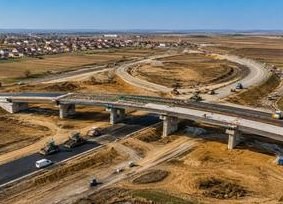
The construction of highways, express roads, metro line expansions, or other public utility investments often leads to the expropriation of privately owned land and buildings. For affected property owners, a central concern is the amount of compensation and whether the sum determined by the expropriator truly reflects the property’s actual value. In many infrastructure projects, Law No. 255/2010 is applicable, supplemented by provisions from Law No. 33/1994 regarding compensation assessments. The starting point is Article 44, paragraph (3) of the Romanian Constitution, which states that expropriation is only permitted for a public utility cause, as defined by law, with fair and prior compensation.
Judicial Review of Administrative Compensation Amounts
Under the procedures regulated by Law No. 255/2010, the expropriator identifies properties within the project corridor and estimates compensation amounts. According to Article 5 of the law, individual sums are estimated based on a valuation report that considers appraisals prepared and updated by notary chambers. However, just because a specific amount is established through administrative procedures does not mean that a dissatisfied property owner must accept it as final. Article 22 of Law No. 255/2010 allows the expropriated individual to request a court review of the compensation amount.
When significant discrepancies exist between the actual state of the property and the data used for valuation, or when the owner believes the amount does not meet legal criteria, legal counsel specializing in expropriations can evaluate the documentation to determine if a judicial appeal is warranted.
The Role of the “Notary Grid”
In common terminology, owners often refer to the “notary grid” as the values derived from market studies prepared for notary chambers. These values play an essential role in the administrative phase of expropriation, as Law No. 255/2010 requires the expropriator to consider them when estimating compensation. However, it is incorrect to conclude that compensation in a legal process must be solely determined by taking values from these studies.
According to Decision No. 78 dated November 15, 2021, which is binding for courts, it has been established that Article 22, paragraph (6) of Law No. 255/2010 must be interpreted to mean that both appraisals prepared and updated by notary chambers at the time of the property transfer, and the criteria outlined in Article 26, paragraph (2) of Law No. 33/1994, must be considered.
Determining Value in Court
Article 26 of Law No. 33/1994 stipulates that compensation comprises the property’s actual value and any damages incurred by the owner or other entitled persons. To determine this value, experts and the court must consider the prices at which similar properties typically sell in the relevant administrative-territorial unit at the time the appraisal report is created, as well as the damages caused by the expropriation.
This means that two plots of land with the same area do not necessarily have the same value. Factors such as location, road access, utilities, street frontage, parcel shape, usage category, urban versus rural status, zoning regulations, and actual usage possibilities are relevant. For buildings, technical characteristics, area, purpose, condition, and other elements influencing value must also be considered. Therefore, analyzing compensation for expropriation should not be reduced to simply multiplying the affected area by a general price per square meter.
Real Estate Advertisements Are Insufficient
Another common mistake is the automatic comparison of compensation with prices quoted in real estate advertisements. Law No. 33/1994 refers to the price at which similar properties typically sell. Therefore, in judicial evaluations, comparable transactions and their real degree of comparability with the expropriated property are crucial.
Partial Expropriation May Cause Additional Harm
In infrastructure projects, it is common to expropriate only a portion of a plot. In this situation, the owner retains the remaining area, but its value or utility may be adversely affected. For instance, the remaining land may lose access, become difficult to utilize, be harder to develop, or diminish in economic functionality. In such cases, Article 26 of Law No. 33/1994 allows for consideration of the damages incurred by the owner.
However, damages are not presumed simply because the expropriation is partial. They must be identified, demonstrated, and evaluated concerning the specific situation.
Owners Can Accept Compensation and Still Contest Amounts
A crucial question is whether an owner must refuse compensation to seek a higher amount in court. The current wording of Article 19, paragraph (11) of Law No. 255/2010 allows for the release of compensation to rightful holders who disagree with the established amount, provided they prove their rights to the property. If a definitive court ruling later establishes a higher amount, the expropriator must release, upon request, the difference between the amount set by the court and the administratively determined one, proportionate to the right held.
Thus, accepting the administratively determined amount does not automatically mean relinquishing the right to request a review of the amount under the law.
Deadline for Contesting Compensation
According to Article 22, paragraph (1) of Law No. 255/2010, an unsatisfied expropriated individual may approach the court within the general prescription period, which runs from the date the decision establishing the compensation amount is communicated. The general period provided by Article 2.517 of the Civil Code is three years. It is important not to confuse this moment with the date the owner learned of a project affecting the area or the publication date of the Government’s decision initiating the procedure.
Contestation Does Not Suspend Property Transfer
The action regarding the amount of compensation has a precise objective. Law No. 255/2010 stipulates that the expropriated individual cannot contest the transfer of ownership to the expropriator through this method, and pursuing any appeals does not suspend the effects of the decision establishing the compensation amount and the transfer. To resolve the case, the court must form a commission of three experts: one appointed by the court, one designated by the expropriator, and one from among the expropriated persons. The compensation granted by the court cannot be lower than that offered by the expropriator or exceed the amount requested by the entitled person.
The law also provides that requests for determining the right to compensation and its amount are exempt from judicial stamp duty. However, the costs for necessary appraisals must be advanced according to common law.
Not All Compensation Will Be Increased
The possibility to contest the amount does not imply that every administratively determined compensation amount is incorrect or that every legal process will result in an increase. The analysis must begin with property documents, cadastral documentation, affected area, usage category, existing constructions, urban planning status, the appraisal report, and, if applicable, the effects of the expropriation on the remaining part.
Ultimately, the property owner’s right is not to receive any requested amount, but to benefit from the fair compensation guaranteed by the Constitution and the opportunity for the administratively determined value to be reviewed by a court based on legal criteria.
The information provided is general and relates to the legislative framework in force at the time of publication. Each property situation must be analyzed separately, based on concrete documents and circumstances.