U.S. President Donald Trump conversed last week with Pakistan’s powerful military leader, General Asim Munir, prior to his visit to Tehran on Monday, according to three Pakistani sources. One source indicated that the primary request from the U.S. was for Pakistan to leverage its influence to bring Iran back to the negotiating table, as reported by Reuters.
Last week, Trump warned of economic repercussions for any nation providing “vital support” to Iran as part of his efforts to isolate the Islamic Republic. In response, Iran vowed to halt all oil exports from the Gulf.
This previously undisclosed phone call was initiated by Trump, according to two Pakistani sources.
The White House press office did not immediately respond to a request for comment from Reuters. Details of the discussions between Munir and Trump remain unclear.
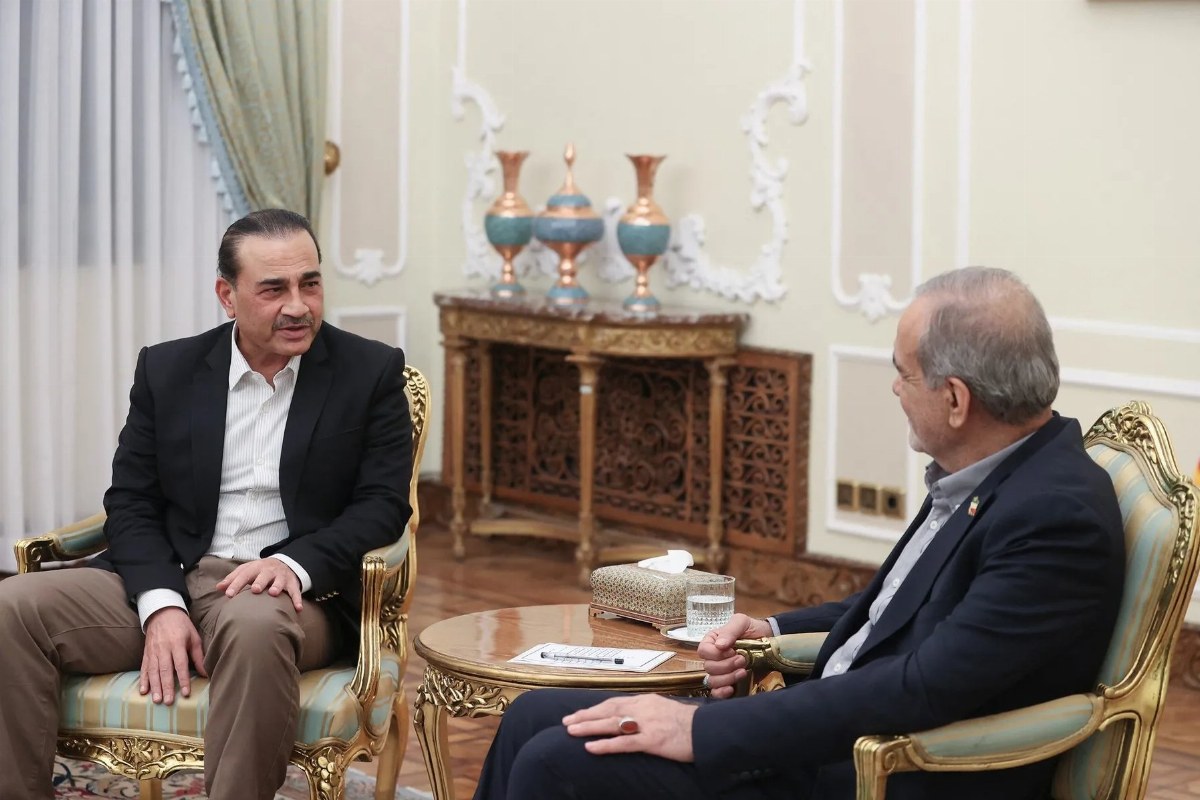
General Asim Munir arrived in Tehran on Monday, accompanied by Pakistan’s Interior Minister Mohsin Naqvi. The Pakistani military stated that this trip is part of Pakistan’s efforts to promote regional peace and stability.
Later that day, the Pakistani military chief, who has established himself as a key intermediary between the U.S. and Iran, met with Iranian President Masoud Pezeshkian, as reported by Iranian state television, according to AFP.
Earlier, a senior Iranian source told Reuters that General Munir’s visit was aimed at bridging the gaps between Iran and the U.S. to prevent the resurgence of war.
In Tehran, Munir also met with Iran’s chief negotiator and Parliament Speaker Mohammad Bagher Ghalibaf, along with Mohsen Rezaei, the Secretary of Iran’s Supreme National Security Council, as previously reported by state television.
Pakistan has played a pivotal mediating role between Washington and Tehran since 2026 and has remained a trading partner of Iran throughout recent confrontations.
Munir is also expected to meet close associates of Iran’s Supreme Leader, Ayatollah Mojtaba Khamenei, according to a Pakistani source.
Another source within the Pakistani government revealed to Reuters that while tensions between the U.S. and Iran will be a central theme of the visit, Munir is also likely to discuss recent attacks by Houthi fighters aligned with Tehran against Saudi Arabia, a close ally of Pakistan, as well as a recent mutual defense agreement signed between Pakistan, Turkey, and Saudi Arabia.
Previous mediation efforts by Pakistan between the U.S. and Iran resulted in the signing of a provisional peace agreement in June. However, the Islamabad Memorandum quickly faltered amid renewed confrontations between Iran and the U.S., which have threatened to escalate into a broader regional conflict.
“There is a trust deficit on both sides,” noted a third Pakistani source regarding the U.S. and Iran, adding that Munir’s goal is to alleviate mutual distrust.
On Monday, the Washington administration reaffirmed its intention to “cut off all economic resources” of Iran and issued a stern warning to countries that continue to support Tehran. However, Iran views the new announcement as a “recognition of the U.S. defeat.”
In a press conference in Washington, U.S. Treasury Secretary Scott Bessent announced a new series of sanctions against Iran targeting sectors deemed “vital” for Tehran, including gold, technology, digital assets, aviation, and maritime transport.